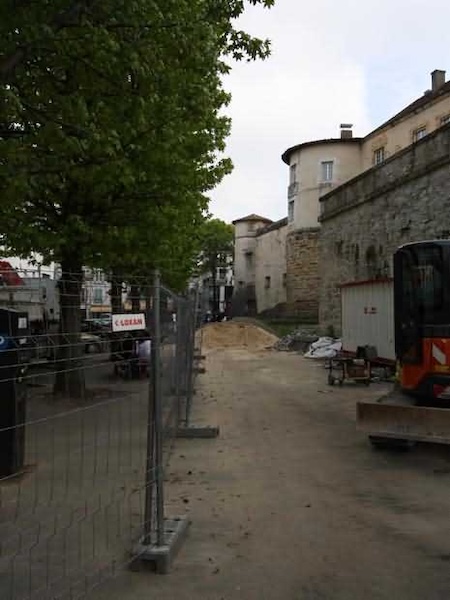
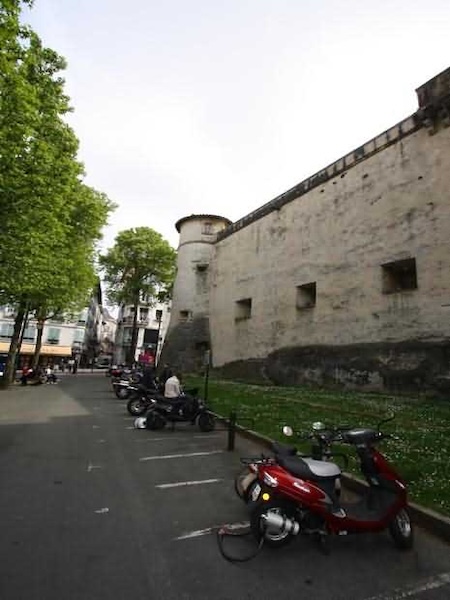
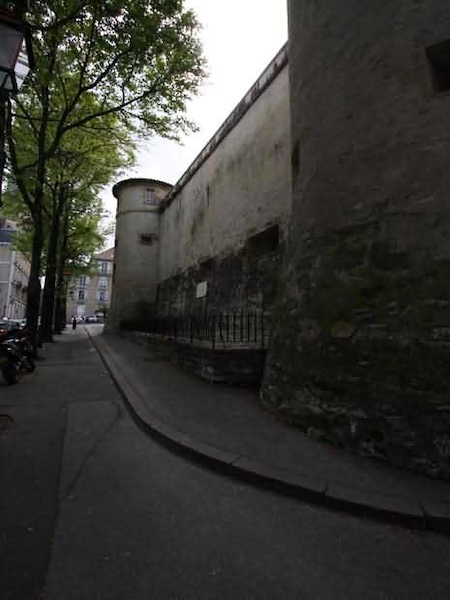


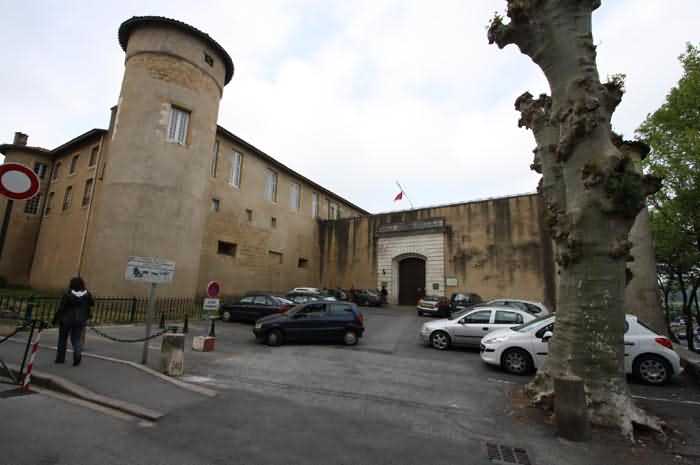

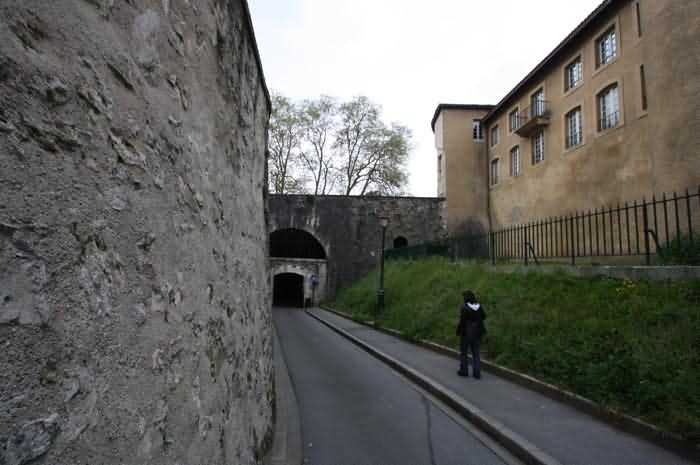
Le Château-Vieux de Bayonne, implanté sur les hauteurs de la confluence de l'Adour et de la Nive, occupe un emplacement stratégique depuis l'Antiquité. Érigé sur les vestiges du castrum romain de Lapurdum, il est remanié aux XIIᵉ et XVᵉ siècles pour servir de forteresse royale. Sa position en fait un point clé du dispositif défensif de la ville, notamment face aux menaces anglaises puis espagnoles. Intégré au système de fortifications de Vauban au XVIIᵉ siècle, il conserve un rôle militaire jusqu'à nos jours, servant encore aujourd'hui de siège au commandement militaire local. Juste pour la beauté des lieux. Il n'entre évidemment pas dans le cadre de cet Index de la fortification française 1874-1914.
Das Château-Vieux von Bayonne, auf den Anhöhen des Zusammenflusses von Adour und Nive gelegen, nimmt seit der Antike eine strategisch wichtige Lage ein. Erbaut auf den Überresten des römischen Castrum von Lapurdum, wurde es im 12. und 15. Jahrhundert zu einer königlichen Festung umgebaut. Seine Lage machte es zu einem wichtigen Punkt im Verteidigungssystem der Stadt, insbesondere gegen englische und später spanische Bedrohungen. Im 17. Jahrhundert in Vaubans Befestigungssystem integriert, spielt es bis heute eine militärische Rolle und dient noch immer als Hauptquartier des örtlichen Militärkommandos. Allein schon wegen der Schönheit des Ortes. Es ist offensichtlich nicht in diesem Index der französischen Befestigungsanlagen 1874–1914 enthalten.
Het Château-Vieux van Bayonne, gelegen op de hoogten van de samenvloeiing van de Adour en de Nive, bekleedt al sinds de oudheid een strategische positie. Gebouwd op de resten van het Romeinse castrum van Lapurdum, werd het in de 12e en 15e eeuw verbouwd tot koninklijke vesting. Door zijn ligging was het een sleutelpunt in het verdedigingssysteem van de stad, met name tegen Engelse en later Spaanse bedreigingen. Geïntegreerd in Vaubans vestingsysteem in de 17e eeuw, vervult het tot op de dag van vandaag een militaire rol en dient het nog steeds als hoofdkwartier van de lokale militaire leiding. Alleen al vanwege de schoonheid van de plek. Het is uiteraard niet opgenomen in deze Index van Franse Vestingwerken 1874-1914.
The Château-Vieux of Bayonne, located on the heights of the confluence of the Adour and Nive rivers, has occupied a strategic location since Antiquity. Built on the remains of the Roman castrum of Lapurdum, it was remodeled in the 12th and 15th centuries to serve as a royal fortress. Its position made it a key point in the city's defensive system, particularly against English and then Spanish threats. Integrated into Vauban's fortification system in the 17th century, it retains a military role to this day, still serving as the headquarters of the local military command. Just for the beauty of the place. It is obviously not included in this Index of French Fortification 1874-1914.
Zámek Château-Vieux v Bayonne, ležící na soutoku řek Adour a Nive, zaujímá strategickou polohu již od starověku. Byl postaven na pozůstatcích římského hradu Lapurdum a ve 12. a 15. století byl přestavěn, aby sloužil jako královská pevnost. Jeho poloha z něj učinila klíčový bod v obranném systému města, zejména proti anglickým a poté španělským hrozbám. V 17. století byl integrován do Vaubanova opevňovacího systému a dodnes si zachovává vojenskou roli a stále slouží jako sídlo místního vojenského velení. Už jen pro krásu místa. V tomto rejstříku francouzského opevnění 1874-1914 samozřejmě není zahrnut.
