
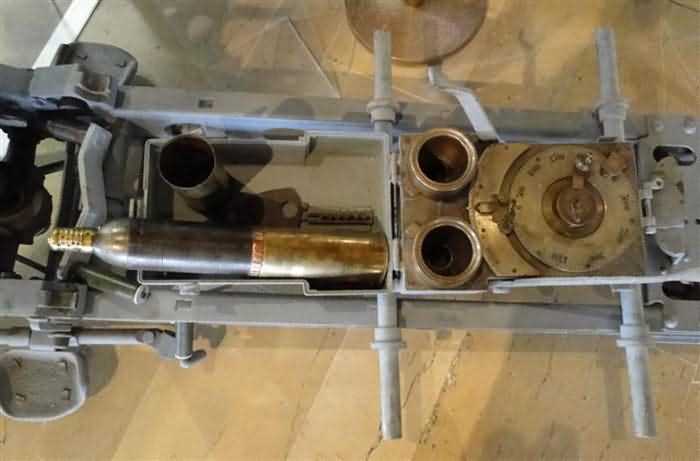
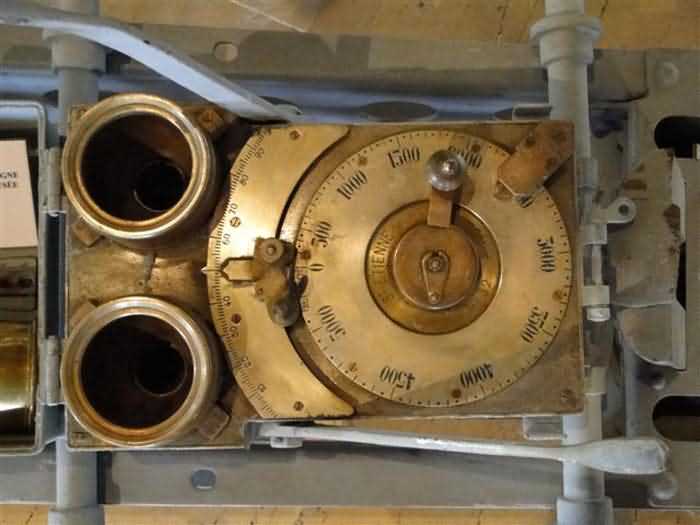
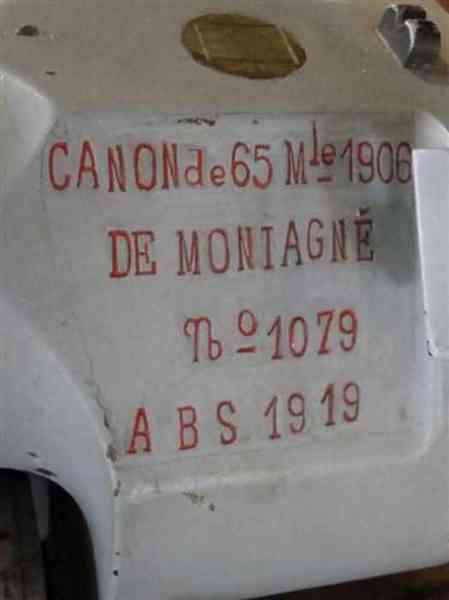

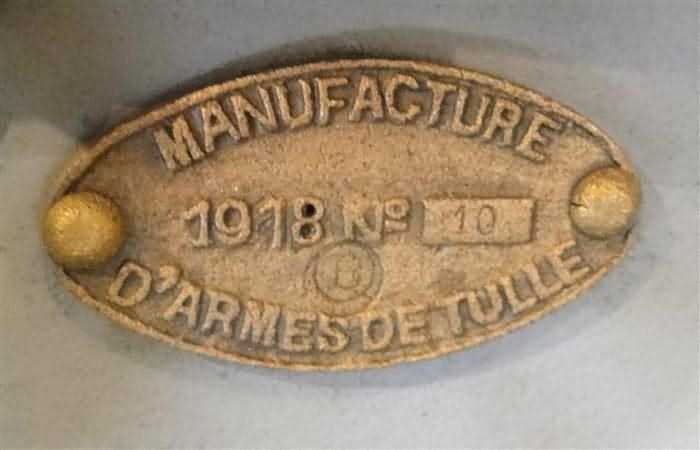
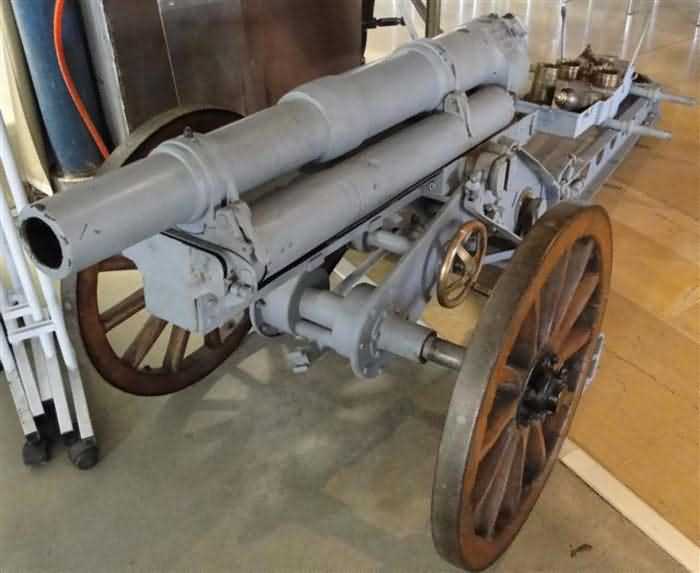
Dans le contexte du système Séré de Rivières et de l'évolution de l'armement jusqu'en 1918, le canon de 65 mm modèle 1906 de montagne illustre parfaitement l'adaptation pragmatique des matériels existants aux besoins de la fortification. Conçu à l'origine comme une pièce légère et démontable pour l'artillerie de montagne, sa mobilité et sa maniabilité en firent une solution appréciée pour renforcer les ouvrages fortifiés, où il pouvait être déployé rapidement sur des positions improvisées pour appuyer la défense rapprochée. Le spécimen de 1918 manufacturé à Tulle et aujourd'hui exposé au musée de Draguignan témoigne de la longévité opérationnelle de ce calibre et de l'effort industriel poursuivi durant la Grande Guerre pour maintenir en première ligne des matériels robustes et éprouvés, capables de servir tant en position statique dans les forts qu'en appui mobile sur le front.
Im Kontext des Séré-de-Rivières-Systems und der Waffenentwicklung bis 1918 veranschaulicht der 65 mm Berggeschütz Modell 1906 perfekt die pragmatische Anpassung vorhandener Materialien an die Bedürfnisse der Befestigung. Ursprünglich als leichtes und demontierbares Geschütz für die Gebirgsartillerie konzipiert, machten seine Mobilität und Handhabbarkeit ihn zu einer geschätzten Lösung zur Verstärkung befestigter Werke, wo er schnell auf improvisierten Stellungen eingesetzt werden konnte, um die Nahverteidigung zu unterstützen. Das 1918 in Tulle gefertigte und heute im Museum von Draguignan ausgestellte Exemplar zeugt von der operationellen Langlebigkeit dieses Kalibers und der während des Großen Krieges fortgesetzten industriellen Anstrengung, robuste und bewährte Materialien an der Front zu halten, die sowohl in statischer Position in den Forts als auch in mobiler Unterstützung an der Front dienen konnten.
In de context van het Séré de Rivières-systeem en de evolutie van de bewapening tot 1918, illustreert het 65 mm bergkanon model 1906 perfect de pragmatische aanpassing van bestaande materialen aan de behoeften van de vestingbouw. Oorspronkelijk ontworpen als een licht en demonteerbaar stuk voor de bergartillerie, maakten zijn mobiliteit en handelbaarheid hem tot een gewaardeerde oplossing om versterkte werken te versterken, waar hij snel op geïmproviseerde posities kon worden ingezet om de nabijverdediging te ondersteunen. Het exemplaar van 1918 vervaardigd in Tulle en tegenwoordig tentoongesteld in het museum van Draguignan getuigt van de operationele levensduur van dit kaliber en de industriële inspanning die tijdens de Grote Oorlog werd voortgezet om robuuste en beproefde materialen aan het front te houden, in staat om zowel in statische positie in de forten als in mobiele ondersteuning aan het front te dienen.
In the context of the Séré de Rivières system and the evolution of weaponry until 1918, the 65 mm mountain gun model 1906 perfectly illustrates the pragmatic adaptation of existing materials to the needs of fortification. Originally designed as a light and dismantlable piece for mountain artillery, its mobility and maneuverability made it an appreciated solution for reinforcing fortified works, where it could be rapidly deployed on improvised positions to support close defense. The 1918 specimen manufactured in Tulle and now exhibited at the Draguignan museum testifies to the operational longevity of this caliber and the industrial effort continued during the Great War to maintain robust and proven materials on the front line, capable of serving both in static position in the forts and in mobile support on the front.
V kontextu systému Séré de Rivières a vývoje výzbroje do roku 1918 dokonale ilustruje horský kanon 65 mm model 1906 pragmatické přizpůsobení existujícího materiálu potřebám opevnění. Původně navržen jako lehký a rozebíratelný kus pro horské dělostřelectvo, jeho mobilita a ovladatelnost z něj učinily ceněné řešení pro posílení opevněných děl, kde mohl být rychle nasazen na improvizovaných pozicích k podpoře blízké obrany. Exemplář z roku 1918 vyrobený v Tulle a dnes vystavený v muzeu v Draguignanu svědčí o operační dlouhověkosti této ráže a průmyslovém úsilí pokračujícím během Velké války o udržení robustního a osvědčeného materiálu na frontové linii, schopného sloužit jak ve statické pozici v pevnostech, tak v mobilní podpoře na frontě.
