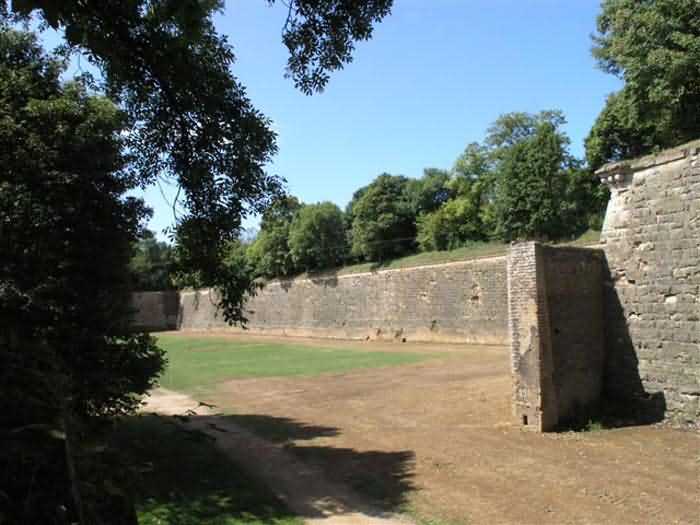
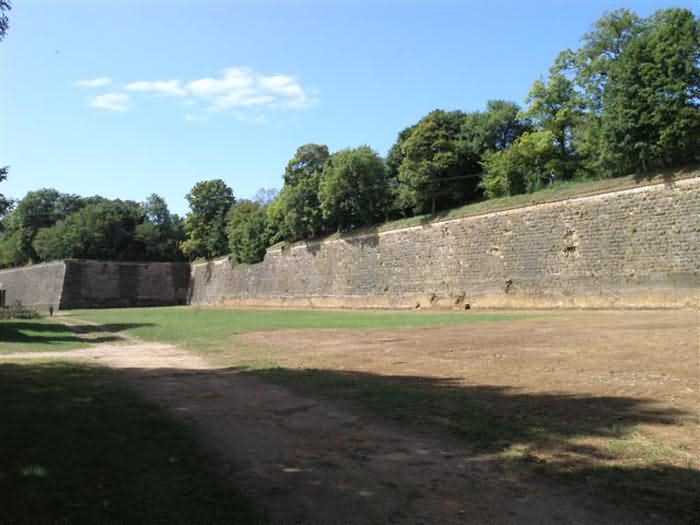
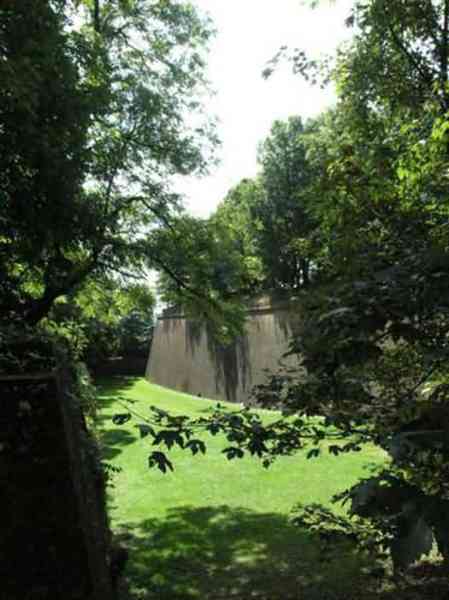
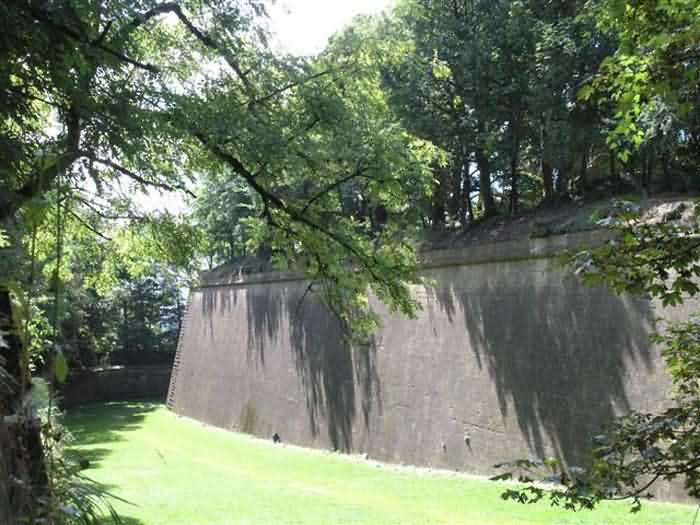
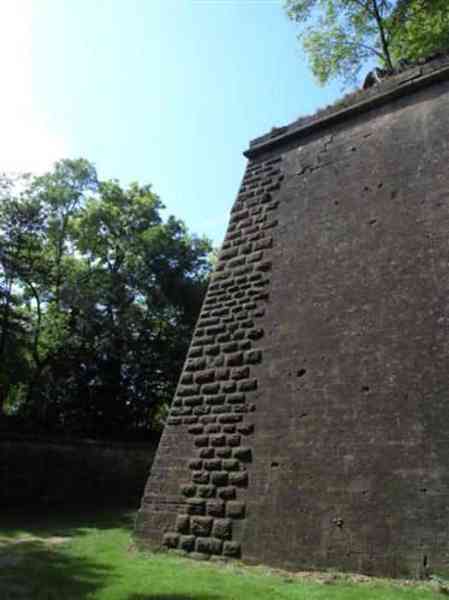
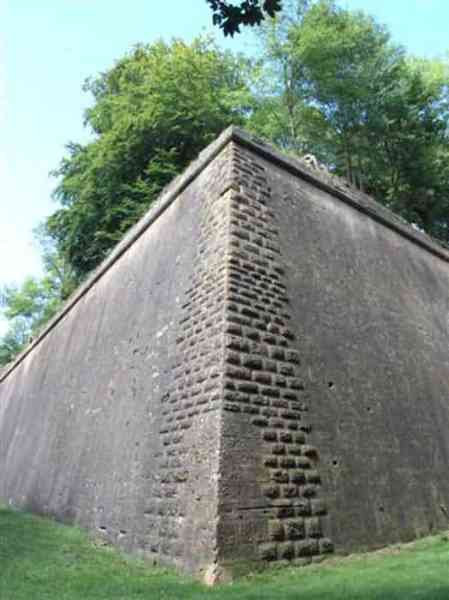
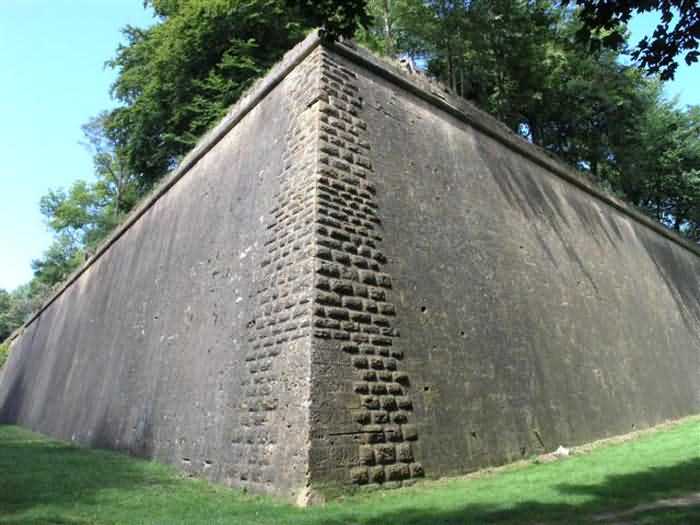
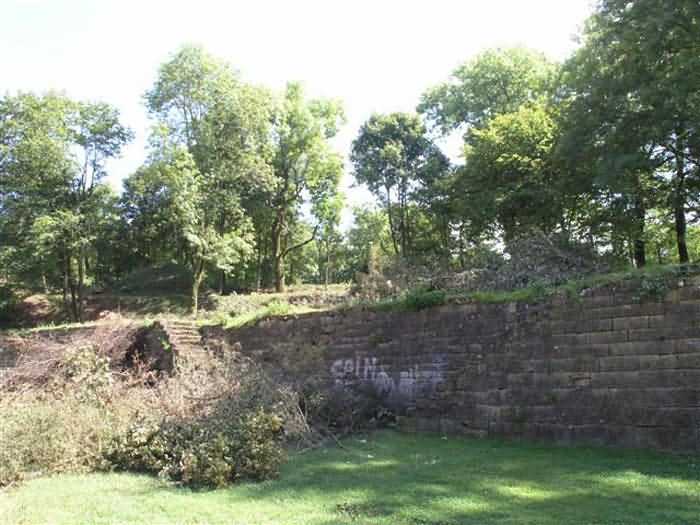
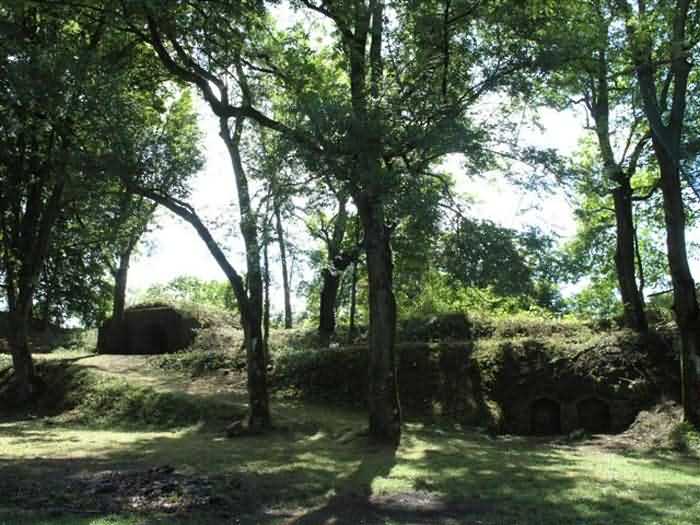
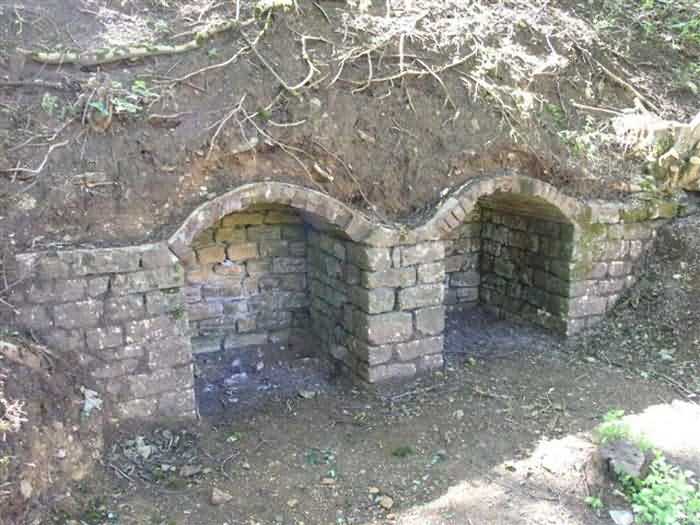
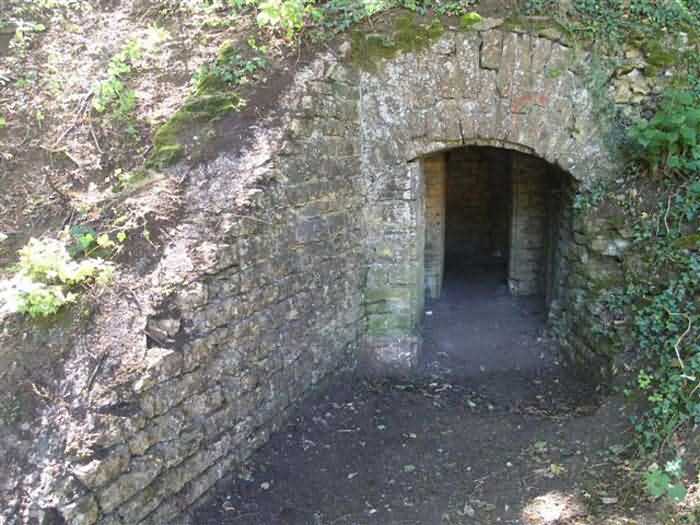
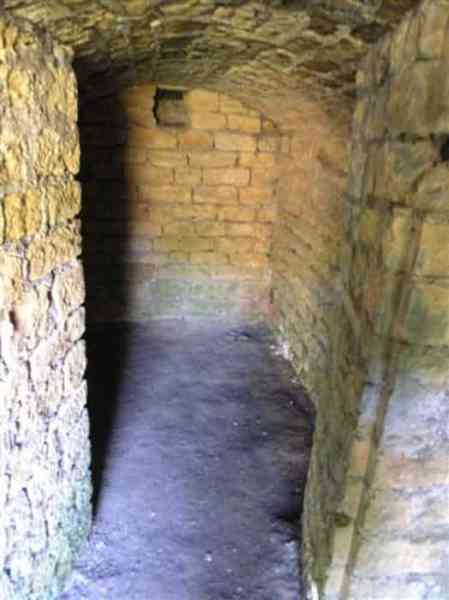
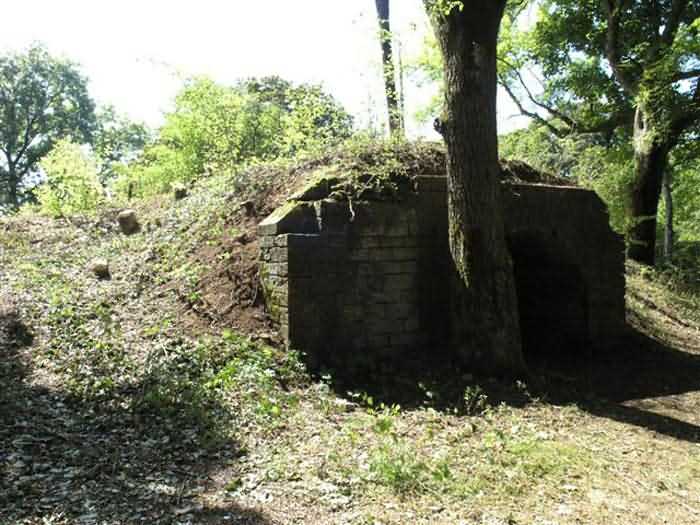
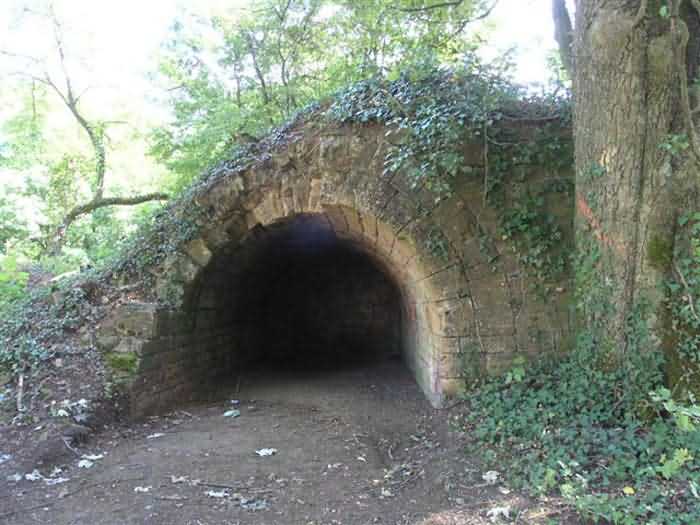
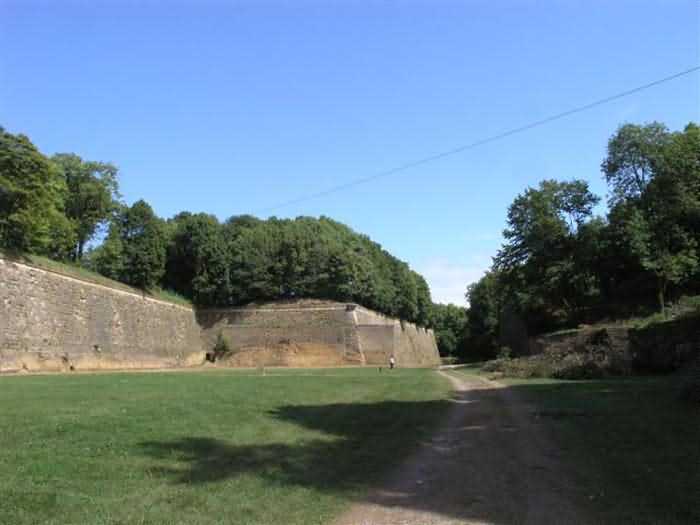
Nord du dépt 54 (Meurthe-et-Moselle), place de Longwy. La courtine I–II, reliant les bastions du Bourg et Notre-Dame, constituait un élément essentiel du système bastionné mis en place par Vauban. Elle formait un segment défensif continu, flanqué par les bastions adjacents et appuyé sur un fossé large, garantissant ainsi la cohérence de la ligne de feu. Ce type d’ouvrage illustre le souci d’intégrer fortification et terrain, afin de créer une barrière homogène contre toute approche ennemie. Bien que la défense active ait été déplacée vers les forts détachés du système Séré de Rivières après 1871, la courtine conserva une valeur tactique en liant les structures anciennes et en complétant le dispositif global de la place.
Norden des Départements 54 (Meurthe-et-Moselle), Festung Longwy. Die Kurtine I–II, die die Bastionen du Bourg und Notre-Dame verband, war ein wesentliches Element des von Vauban entwickelten Bastionensystems. Sie bildete einen durchgehenden Verteidigungsabschnitt, flankiert von den benachbarten Bastionen und gestützt auf einen breiten Graben, wodurch die Kohärenz der Feuerlinie gesichert wurde. Diese Art von Werk verdeutlicht das Bemühen, Befestigung und Gelände zu verbinden, um eine homogene Sperre gegen Angriffe zu schaffen. Obwohl die aktive Verteidigung nach 1871 auf die detachierten Werke des Séré-de-Rivières-Systems verlagert wurde, behielt die Kurtine taktischen Wert, indem sie die älteren Strukturen verband und das Gesamtgefüge der Festung ergänzte.
Noorden van departement 54 (Meurthe-et-Moselle), vesting Longwy. De courtine I–II, die de bastions du Bourg en Notre-Dame verbond, vormde een essentieel onderdeel van het door Vauban ontworpen bastionsysteem. Ze bestond uit een aaneengesloten verdedigingssegment, geflankeerd door de aangrenzende bastions en ondersteund door een brede gracht, waardoor de samenhang van de vuurlinie werd gewaarborgd. Dit type werk illustreert het streven om vestingbouw en terrein te integreren, zodat een homogene barrière tegen vijandelijke benaderingen ontstond. Hoewel de actieve verdediging na 1871 naar de buitenforten van het Séré de Rivières-systeem werd verplaatst, behield de courtine een tactische waarde door de oudere structuren te verbinden en het geheel van de vesting te vervolledigen.
North of department 54 (Meurthe-et-Moselle), fortress of Longwy. The curtain I–II, linking the Bastions du Bourg and Notre-Dame, was a vital component of Vauban’s bastioned system. It formed a continuous defensive segment, flanked by the adjacent bastions and reinforced by a wide ditch, thus ensuring the coherence of the line of fire. This type of structure illustrates the aim of integrating fortification and terrain to create a homogeneous barrier against enemy approaches. Although active defense shifted to the detached forts of the Séré de Rivières system after 1871, the curtain retained tactical value by connecting older structures and complementing the overall defensive scheme of the fortress.
Sever departementu 54 (Meurthe-et-Moselle), pevnost Longwy. Kurtina I–II, spojující bastiony du Bourg a Notre-Dame, byla klíčovým prvkem bastionového systému vybudovaného Vaubanem. Tvořila souvislý obranný úsek, krytý sousedními bastiony a podepřený širokým příkopem, čímž byla zajištěna soudržnost palebné linie. Tento typ díla dokládá snahu propojit opevnění s terénem a vytvořit homogenní bariéru proti nepřátelskému postupu. Ačkoli byla po roce 1871 aktivní obrana přesunuta do oddělených fortů systému Séré de Rivières, kurtina si zachovala taktickou hodnotu tím, že spojovala starší struktury a doplňovala celkový obranný systém pevnosti.
