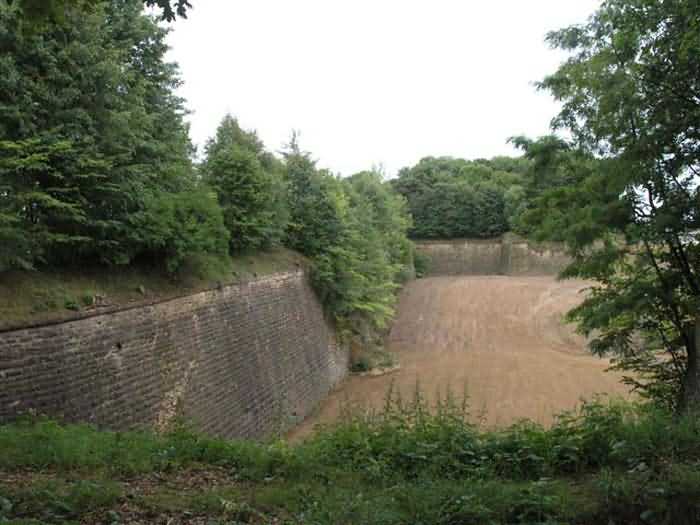
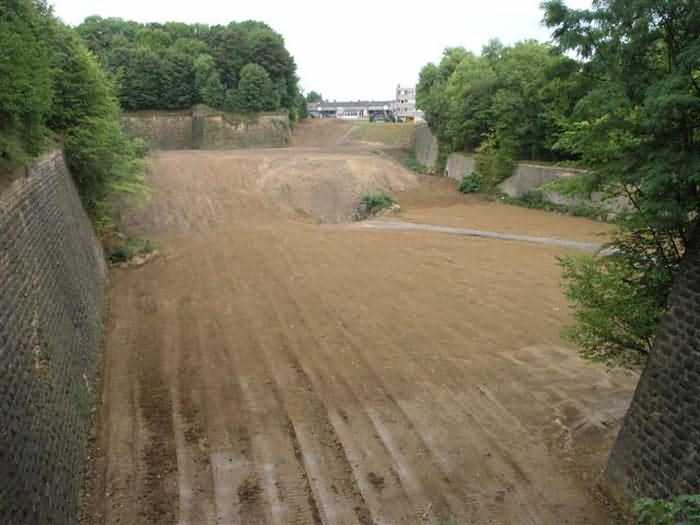
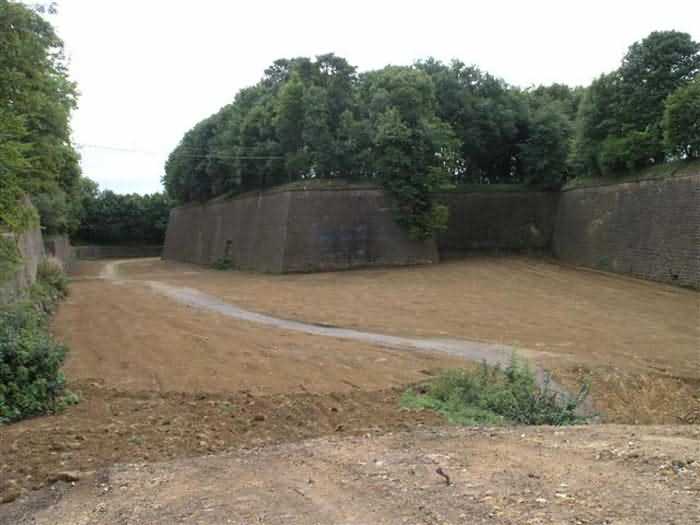
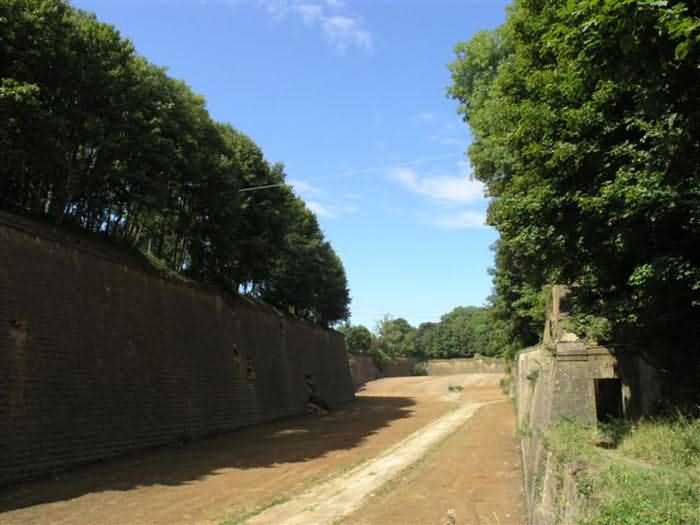

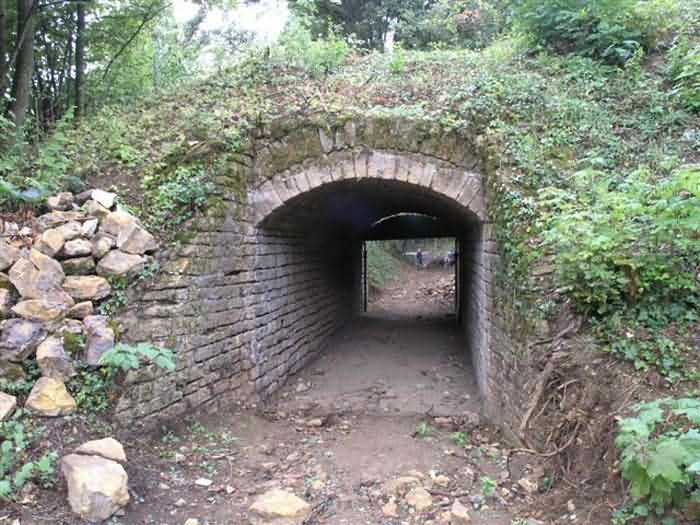
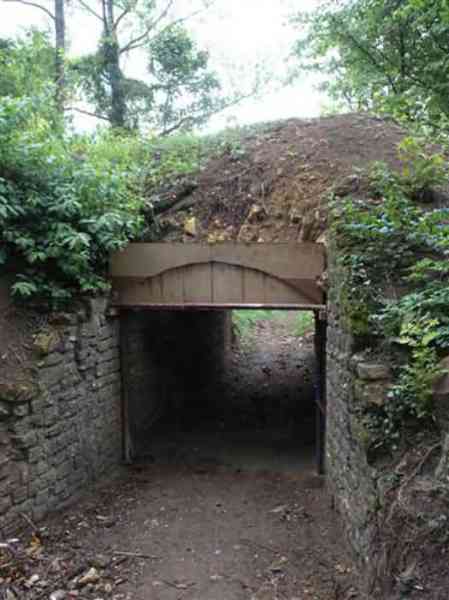
Nord du dépt 54 (Meurthe-et-Moselle), place de Longwy. La courtine II–III, reliant les bastions Notre-Dame et Saint-Martin, constituait un segment stratégique de l’enceinte bastionnée de Vauban. Elle assurait la continuité défensive en permettant le tir croisé depuis les deux bastions et en couvrant le fossé par un feu rasant. Comme toutes les courtines, son rôle était autant de liaison que de protection, créant une ligne homogène et difficile à rompre. Après 1871, l’évolution des techniques d’artillerie et la construction des forts détachés du système Séré de Rivières déplacèrent la ligne de défense active, mais cette courtine conserva une valeur tactique et historique, illustrant la robustesse et la logique géométrique du tracé bastionné de Longwy.
Norden des Départements 54 (Meurthe-et-Moselle), Festung Longwy. Die Kurtine II–III, die die Bastionen Notre-Dame und Saint-Martin verband, war ein strategisches Segment der Vauban’schen Bastionärbefestigung. Sie gewährleistete die Verteidigungskontinuität, indem sie Kreuzfeuer zwischen den beiden Bastionen ermöglichte und den Graben mit flankierendem Feuer abdeckte. Wie alle Kurtinen diente sie sowohl als Verbindungselement als auch als Schutz, wodurch eine homogene und schwer zu durchbrechende Linie entstand. Nach 1871 verlagerten die Weiterentwicklung der Artillerie und der Bau der detachierten Werke des Séré-de-Rivières-Systems die aktive Verteidigungslinie, doch behielt diese Kurtine taktischen und historischen Wert und verdeutlichte die Robustheit der geometrischen Bastionäranlage Longwys.
Noorden van departement 54 (Meurthe-et-Moselle), vesting Longwy. De courtine II–III, die de bastions Notre-Dame en Saint-Martin verbond, vormde een strategisch segment van de door Vauban ontworpen bastiongordel. Ze zorgde voor de verdedigende continuïteit door kruisvuur tussen beide bastions mogelijk te maken en de gracht met flankerend vuur te dekken. Zoals alle courtines had zij zowel een verbindende als een beschermende rol, waardoor een homogene en moeilijk te doorbreken linie ontstond. Na 1871 verplaatsten de ontwikkeling van de artillerie en de bouw van de buitenforten van het Séré de Rivières-systeem de actieve verdedigingslijn, maar deze courtine behield haar tactische en historische waarde en illustreerde de robuustheid van Vaubans geometrische ontwerp.
North of department 54 (Meurthe-et-Moselle), fortress of Longwy. The curtain II–III, linking the Bastions Notre-Dame and Saint-Martin, formed a strategic section of Vauban’s bastioned enceinte. It ensured defensive continuity by allowing crossfire between the two bastions and by covering the ditch with flanking fire. Like all curtains, its role was both to connect and to protect, creating a homogeneous line that was difficult to breach. After 1871, the development of artillery and the construction of the detached forts of the Séré de Rivières system shifted the line of active defense, yet this curtain retained tactical and historical value, illustrating the robustness and geometric logic of Longwy’s bastioned design.
Sever departementu 54 (Meurthe-et-Moselle), pevnost Longwy. Kurtina II–III, spojující bastiony Notre-Dame a Saint-Martin, tvořila strategický úsek Vaubanova bastionového opevnění. Zajišťovala kontinuitu obrany tím, že umožňovala křížovou palbu mezi oběma bastiony a kryla příkop boční palbou. Stejně jako všechny kurtiny měla jak spojovací, tak ochrannou funkci a vytvářela homogenní a obtížně průchodnou linii. Po roce 1871 posunul rozvoj dělostřelectva a výstavba oddělených fortů systému Séré de Rivières aktivní obrannou linii dále do okolí, ale tato kurtina si zachovala taktický i historický význam a dokládala pevnost a geometrickou logiku bastionového plánu Longwy.
La courtine II-III ▼
