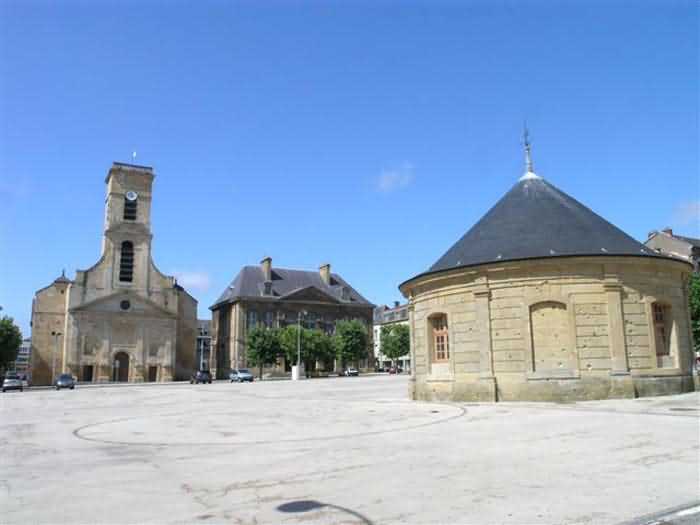


Nord du dépt 54 (Meurthe-et-Moselle), place de Longwy. La grande cour centrale, cœur opérationnel de la place, servait de point de rassemblement pour les troupes, de dépôt de matériel et de manœuvre pour l’artillerie. Entourée par les bastions du Bourg, Notre-Dame, Saint-Martin et du Château, elle permettait une circulation rapide entre les ouvrages et offrait un espace pour les exercices de tir, les réparations et la logistique. Après 1871, alors que les forts détachés du système Séré de Rivières prenaient le relais de la défense active, la cour conserva sa fonction de support et de coordination. Son organisation témoigne de la rigueur des conceptions vaubaniennes et de la manière dont les places bastionnées intégraient zones de combat et zones de service.
Norden des Départements 54 (Meurthe-et-Moselle), Festung Longwy. Der große zentrale Hof bildete das operationelle Herz der Festung und diente als Sammelpunkt für Truppen, Materiallager und Manövrierfläche für die Artillerie. Umgeben von den Bastionen du Bourg, Notre-Dame, Saint-Martin und du Château erlaubte er schnelle Bewegungen zwischen den Werken und bot Raum für Schießübungen, Reparaturen und logistische Tätigkeiten. Nach 1871, als die detachierten Werke des Séré-de-Rivières-Systems die aktive Verteidigung übernahmen, behielt der Hof seine Unterstützungs- und Koordinationsfunktion. Seine Organisation zeigt die Präzision der Vaubanschen Planung und die Integration von Kampf- und Servicebereichen in bastionierte Festungen.
Noorden van departement 54 (Meurthe-et-Moselle), vesting Longwy. De grote centrale binnenplaats vormde het operationele hart van de vesting en diende als verzamelpunt voor troepen, materiaalopslag en manoeuvreerplaats voor het artillerie. Omringd door de bastions du Bourg, Notre-Dame, Saint-Martin en du Château, maakte het snelle verplaatsingen tussen de werken mogelijk en bood het ruimte voor schietoefeningen, reparaties en logistiek. Na 1871, toen de buitenforten van het Séré de Rivières-systeem de actieve verdediging overnamen, behield het hof zijn functie als steun- en coördinatiepunt. De organisatie ervan getuigt van de precisie van Vaubans ontwerp en van de manier waarop bastionforten gevechts- en servicegebieden integreerden.
North of department 54 (Meurthe-et-Moselle), fortress of Longwy. The large central courtyard, the operational heart of the fortress, served as a rallying point for troops, a storage area for equipment, and a maneuver space for artillery. Surrounded by the Bastions du Bourg, Notre-Dame, Saint-Martin, and du Château, it allowed rapid movement between works and provided space for firing drills, repairs, and logistics. After 1871, when the detached forts of the Séré de Rivières system assumed active defense, the courtyard retained its role as a support and coordination area. Its layout reflects the precision of Vauban’s planning and the way bastioned fortresses integrated combat and service zones.
Sever departementu 54 (Meurthe-et-Moselle), pevnost Longwy. Velké centrální nádvoří, operační srdce pevnosti, sloužilo jako shromaždiště jednotek, sklad vybavení a prostor pro manévry dělostřelectva. Obklopeno bastiony du Bourg, Notre-Dame, Saint-Martin a du Château umožňovalo rychlý pohyb mezi objekty a poskytovalo prostor pro střelecké cvičení, opravy a logistiku. Po roce 1871, kdy aktivní obranu převzaly oddělené forty systému Séré de Rivières, si nádvoří zachovalo svou funkci podpory a koordinace. Jeho uspořádání odráží preciznost Vaubanova plánování a způsob, jakým bastionové pevnosti integrovaly bojové a servisní oblasti.
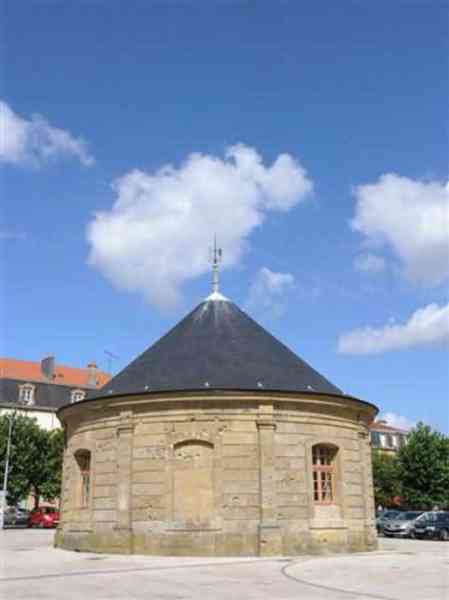
La grande cour centrale et son puits de siège où est actuellement installé l'office du tourisme ▼
