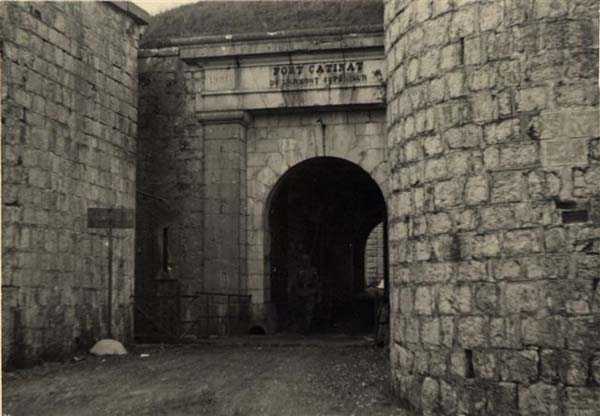
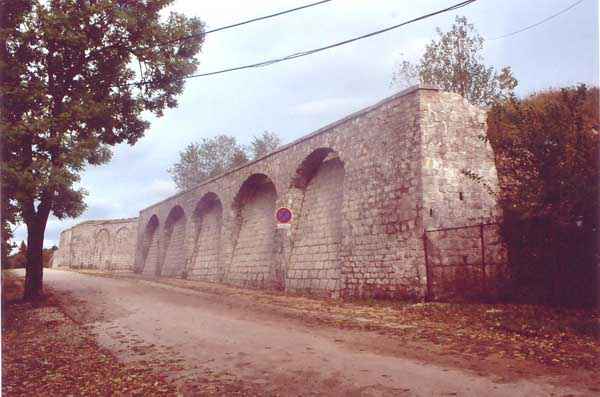

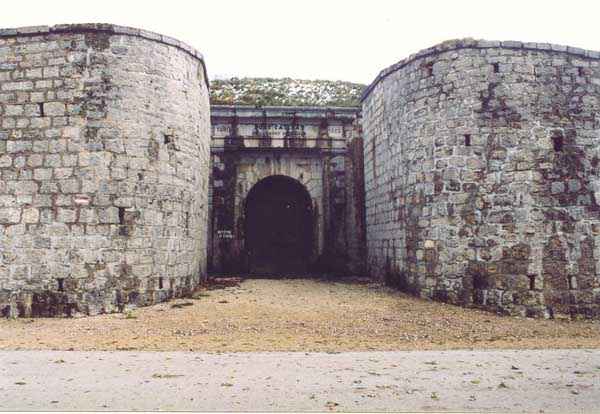
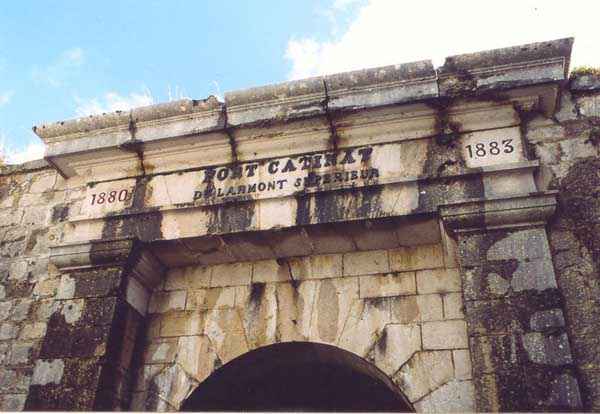
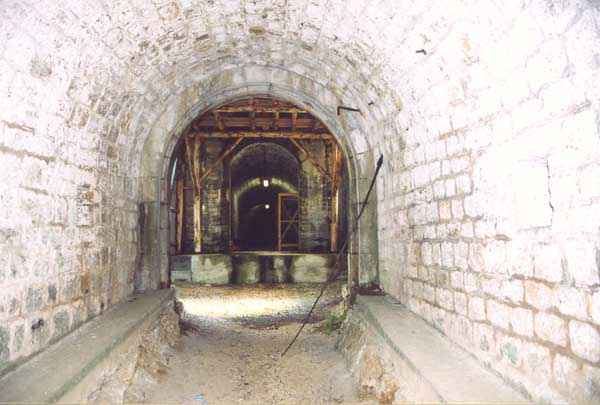
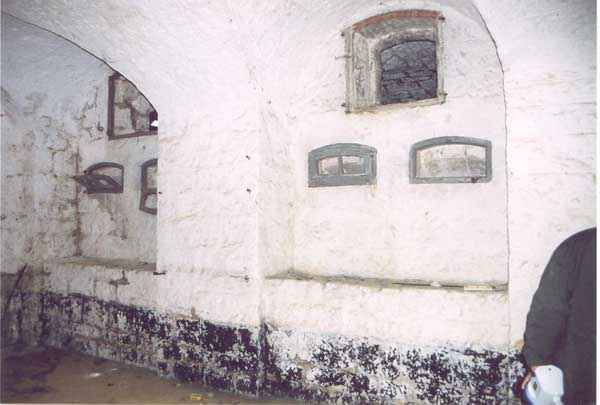

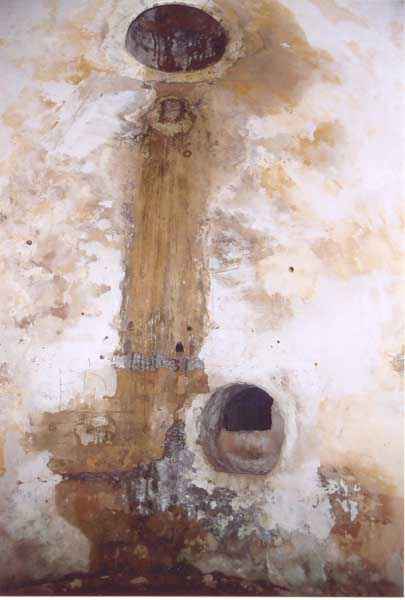
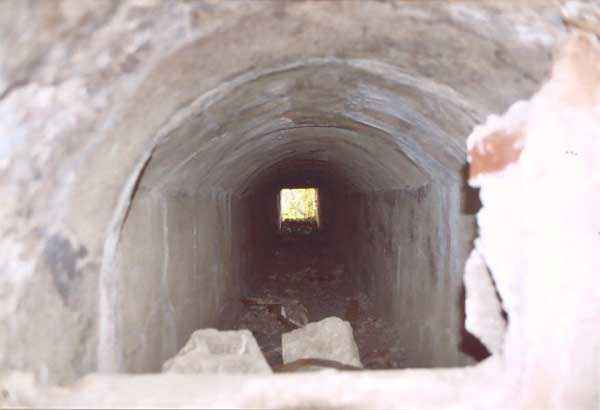
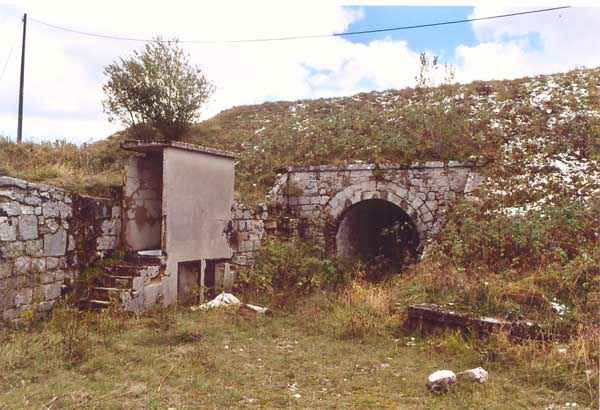

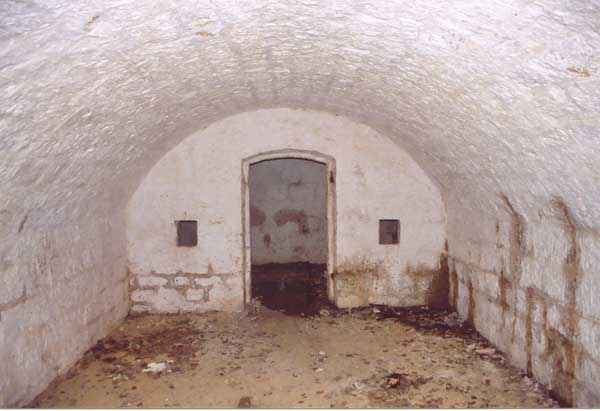
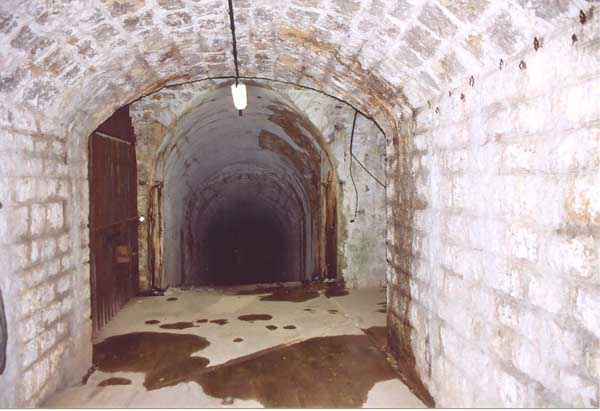
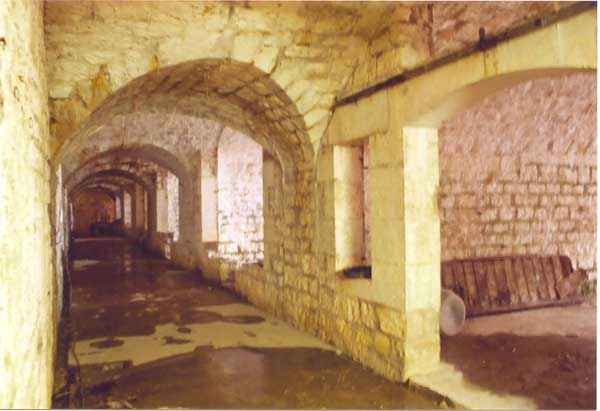
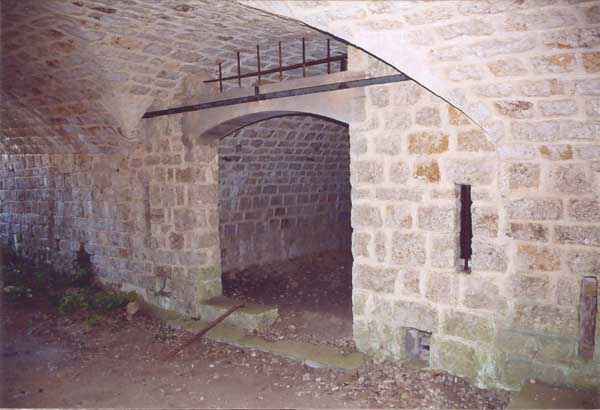
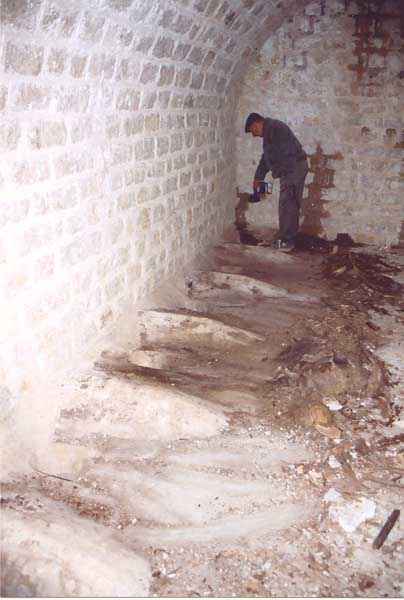
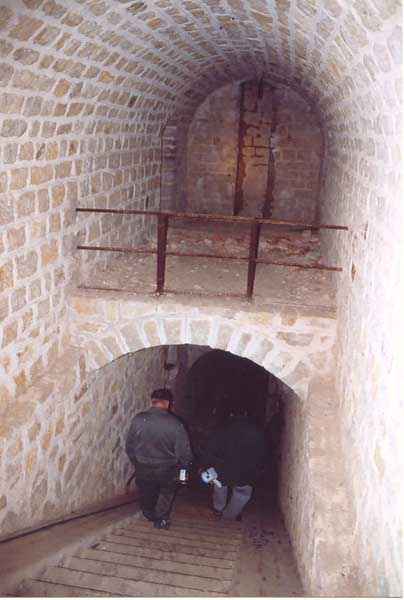
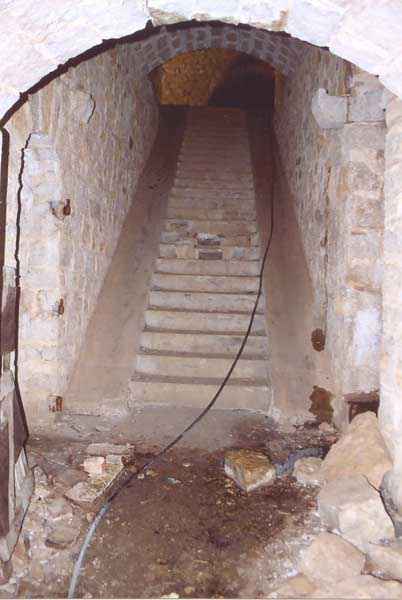
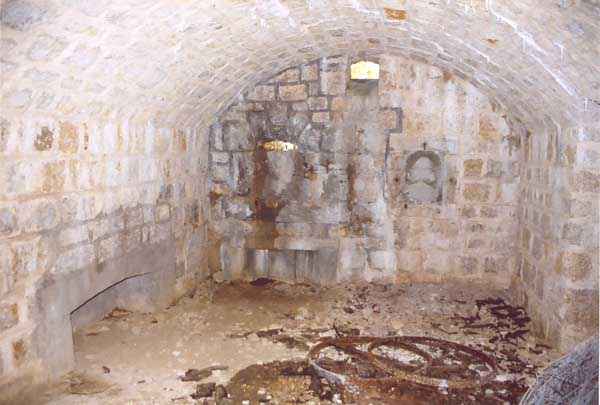
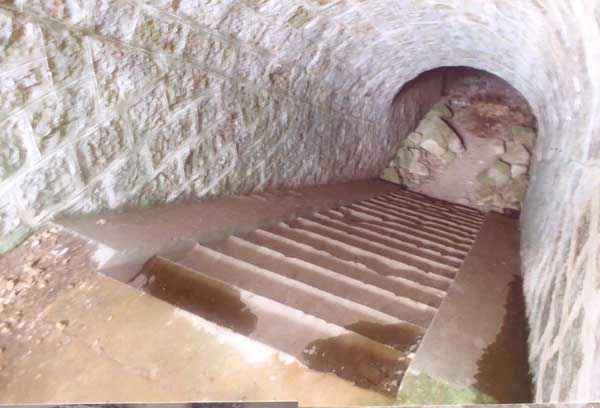
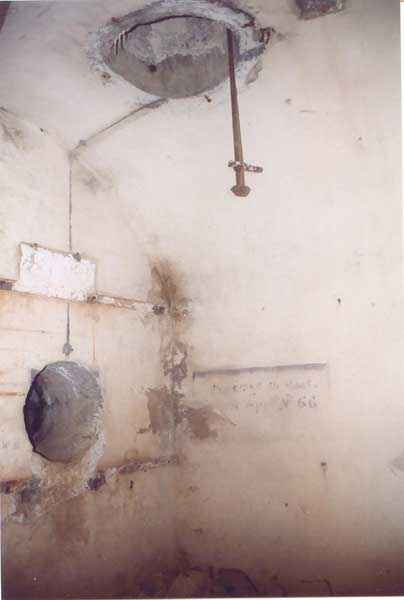
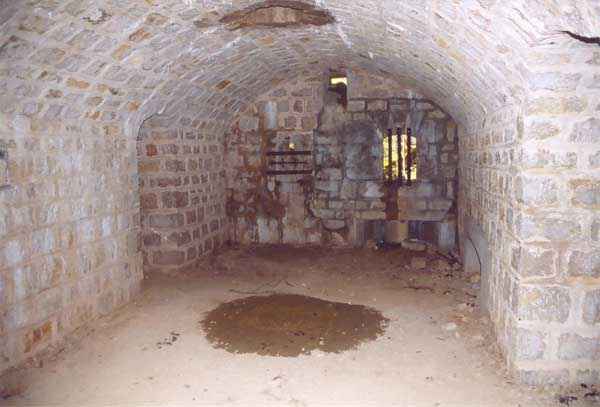
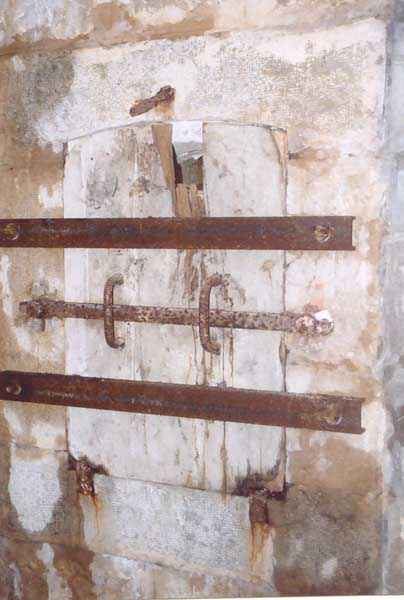
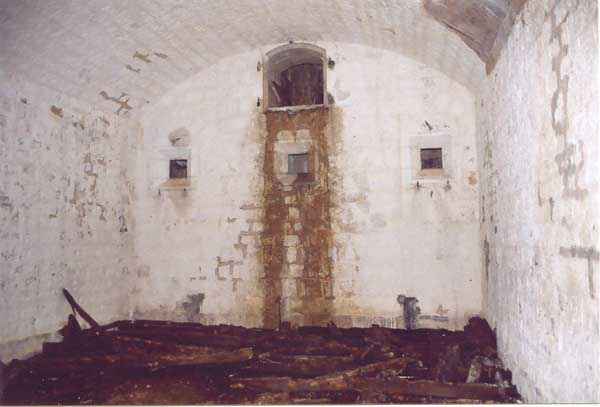
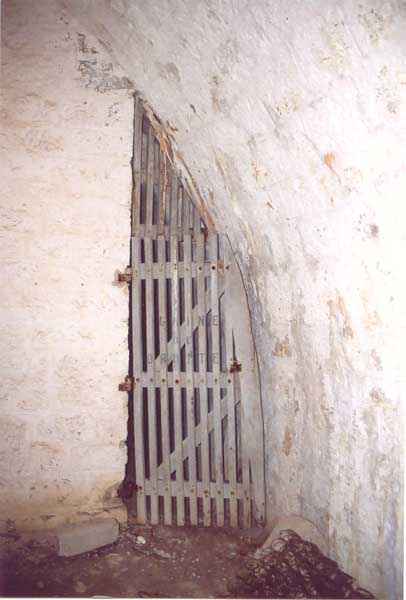
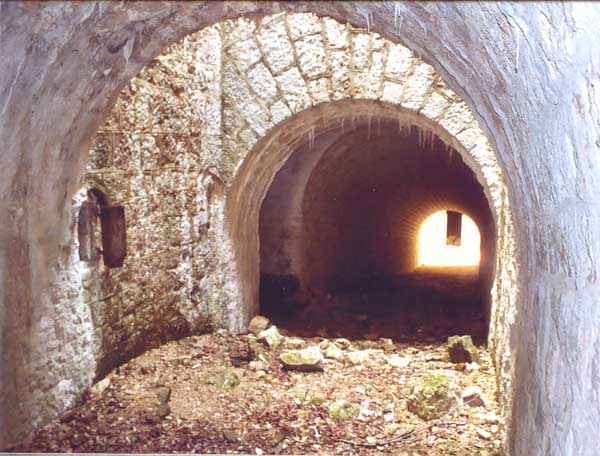
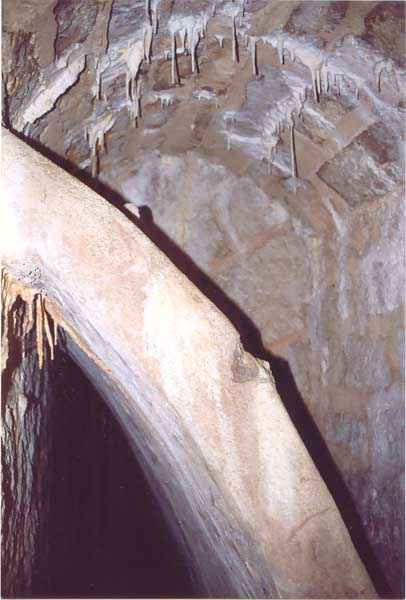
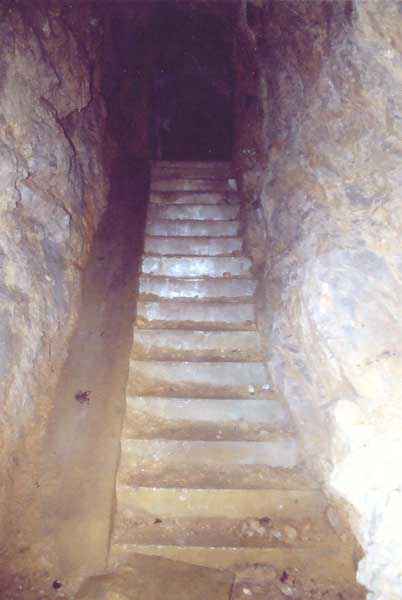
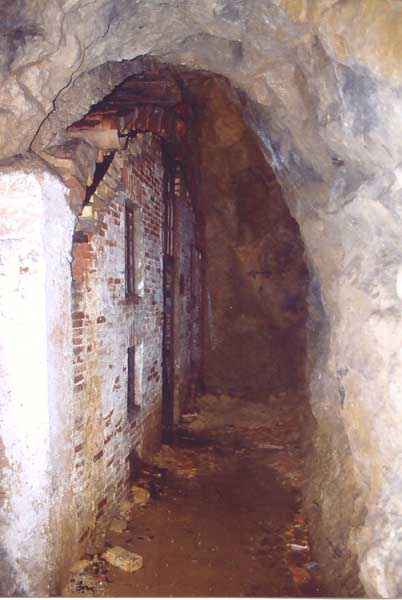
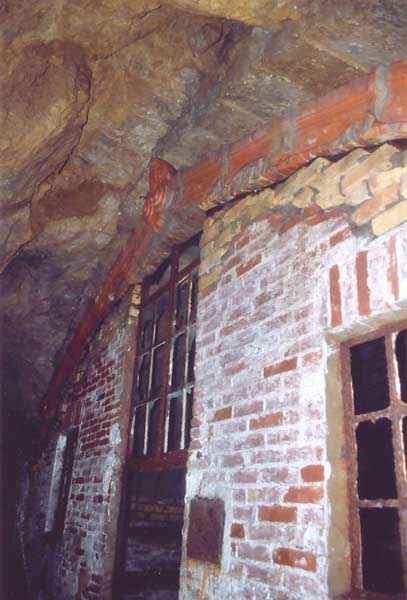
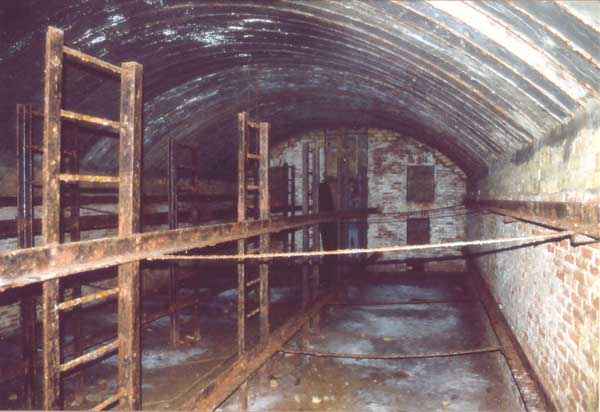
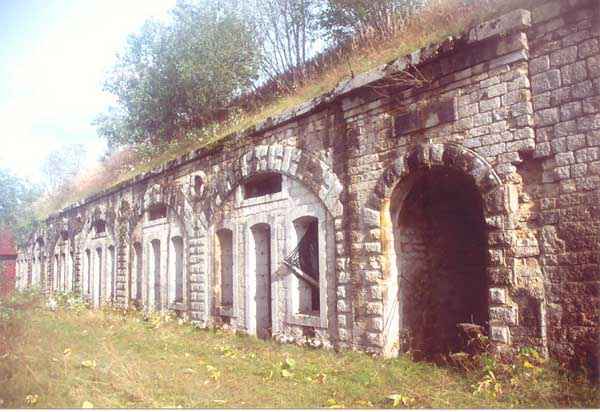
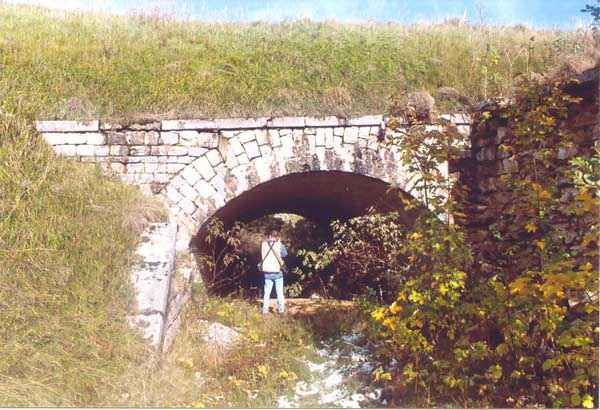

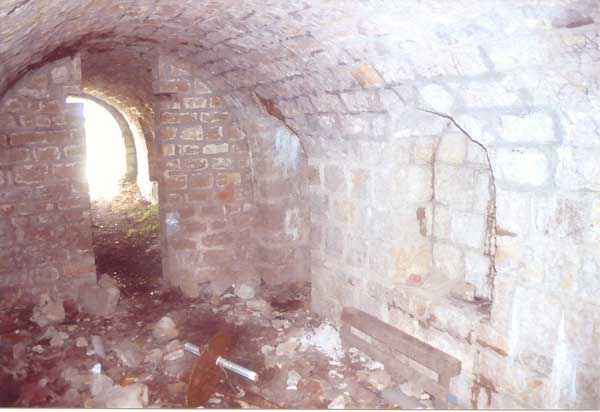
Rideau du Jura, place de Pontarlier, sud de la ville, 1879-1883. 1 170 m alt. Dénommé fort Catinat. D'une forme intermédiaire entre un pentagone écrasé et un vague parallélogramme, il était prévu pour 290 hommes et 17 pièces. Son artillerie était orientée tous azimuts. 2 postes optiques distincts, 1 communiquant avec le fort de Saint-Antoine et l'autre celui de Montfaucon à Besançon. En 1891, on creusa 2 abris sous roc, chacun composé de 2 chambrées pour 60 hommes ; 1 proche de l'entrée du fort, sous l'escarpe et le second sous la contrescarpe du fossé sud. En outre, 2 petits magasins à poudre et 2 ateliers de chargement furent aussi creusés dans le roc. Il protégeait l'axe d'invasion venant de Neuchâtel, empêchant une progression vers Pontarlier, Morteau et Besançon. Une petite batterie annexe (1886) pour 4 canons de 120 mm, à proximité du fort, au sud-ouest. Cette batterie possède deux abris sous roc pour 60 hommes chacun. En 1890, un projet de construction d'une seconde batterie, 700 m au nord-est, sur la crête de la Roche Sarrazine a avorté. Il était prévu de l'armer de 3 × 155 mm et de 2 mortiers de 270 mm. Le fort est loué et ne se visite pas.
Jura-Vorhang, Festung von Pontarlier, südlich der Stadt, 1879-1883. 1 170 M ü M. Genannt Fort Catinat. Von einer Form zwischen einem gestauchten Fünfeck und einem vagen Parallelogramm, war es für 290 Mann und 17 Geschütze vorgesehen. Seine Artillerie war in alle Richtungen orientiert. 2 getrennte optische Posten, 1 in Verbindung mit dem Fort Saint-Antoine und der andere mit dem von Montfaucon in Besançon. 1891 grub man 2 Felsunterstände, jeder bestehend aus 2 Stuben für 60 Mann; 1 nahe dem Forteingang, unter der Eskarpe und der zweite unter der Kontreskarpe des südlichen Grabens. Außerdem wurden 2 kleine Pulvermagazine und 2 Ladewerkstätten ebenfalls in den Felsen gegraben. Es schützte die Invasionsachse von Neuenburg, verhinderte ein Vordringen Richtung Pontarlier, Morteau und Besançon. Eine kleine Annexbatterie (1886) für 4 Geschütze 120 mm, in der Nähe des Forts, südwestlich. Diese Batterie besitzt zwei Felsunterstände für je 60 Mann. 1890 scheiterte ein Bauprojekt einer zweiten Batterie, 700 m nordöstlich, auf dem Grat der Roche Sarrazine. Es war geplant, sie mit 3 × 155 mm und 2 Mörsern 270 mm zu bewaffnen. Das Fort ist vermietet und kann nicht besichtigt werden.
Jura-gordijn, vesting van Pontarlier, zuiden van de stad, 1879-1883. 1 170 m hoogte. Genoemd fort Catinat. Van een tussenvorm tussen een afgeplat vijfhoek en een vaag parallellogram, was het voorzien voor 290 man en 17 stukken. Zijn artillerie was in alle richtingen georiënteerd. 2 afzonderlijke optische posten, 1 communicerend met het fort Saint-Antoine en de andere met dat van Montfaucon in Besançon. In 1891 groef men 2 rotsonderkomens, elk bestaande uit 2 slaapzalen voor 60 man; 1 nabij de ingang van het fort, onder de escarpe en de tweede onder de contrescarpe van de zuidelijke gracht. Bovendien werden 2 kleine kruidmagazijnen en 2 laadatellers eveneens in de rots uitgegraven. Het beschermde de invasie-as komende van Neuchâtel, verhinderde een opmars richting Pontarlier, Morteau en Besançon. Een kleine annexbatterij (1886) voor 4 kanonnen 120 mm, in de nabijheid van het fort, zuidwestelijk. Deze batterij bezit twee rotsonderkomens voor 60 man elk. In 1890 mislukte een bouwproject van een tweede batterij, 700 m noordoostelijk, op de kam van de Roche Sarrazine. Het was gepland ze te bewapenen met 3 × 155 mm en 2 mortieren 270 mm. Het fort is verhuurd en is niet te bezoeken.
Jura Screen, fortress of Pontarlier, south of the town, 1879-1883. 1,170 m alt. Named Fort Catinat. Of a form intermediate between a flattened pentagon and a vague parallelogram, it was planned for 290 men and 17 pieces. Its artillery was oriented in all directions. 2 separate optical posts, 1 communicating with Fort Saint-Antoine and the other with that of Montfaucon in Besançon. In 1891, 2 rock shelters were dug, each composed of 2 quarters for 60 men; 1 near the fort entrance, under the scarp and the second under the counterscarp of the southern ditch. Furthermore, 2 small powder magazines and 2 loading workshops were also dug into the rock. It protected the invasion axis from Neuchâtel, preventing an advance towards Pontarlier, Morteau and Besançon. A small annex battery (1886) for 4 guns of 120 mm, near the fort, to the south-west. This battery has two rock shelters for 60 men each. In 1890, a construction project for a second battery, 700 m north-east, on the ridge of Roche Sarrazine, aborted. It was planned to arm it with 3 × 155 mm and 2 mortars of 270 mm. The fort is rented and cannot be visited.
Jurská clona, pevnost Pontarlier, jih města, 1879-1883. 1 170 m nad mořem. Nazýván fort Catinat. Tvaru mezi zploštělým pětiúhelníkem a neurčitým rovnoběžníkem, byl plánován pro 290 mužů a 17 děl. Jeho dělostřelectvo bylo orientováno do všech směrů. 2 oddělené optické stanice, 1 komunikující s fortem Saint-Antoine a druhá s tím z Montfaucon v Besançon. Roku 1891 byly vyhloubeny 2 podskalní úkryty, každý složený z 2 ubikací pro 60 mužů; 1 blízko vstupu do fortu, pod eskapou a druhý pod kontreskarpou jižního příkopu. Mimo to, 2 malé prachové magazíny a 2 nabíjecí dílny byly také vyhloubeny ve skále. Chránil invazní osu přicházející z Neuchâtelu, bránil postupu směrem k Pontarlier, Morteau a Besançon. Malá přídavná baterie (1886) pro 4 děla 120 mm, v blízkosti fortu, na jihozápadě. Tato baterie má dva podskalní úkryty pro 60 mužů každý. Roku 1890 ztroskotal projekt stavby druhé baterie, 700 m severovýchodně, na hřebeni Roche Sarrazine. Plánovalo se ji vyzbrojit 3 × 155 mm a 2 minomety 270 mm. Fort je pronajímán a není přístupný k prohlídce.
Cité dans : Zitiert in : Geciteerd in: Cited in: Citováno v: Catinat (fort)
