À la fin du XIXe siècle, la Tunisie, par sa position stratégique en Méditerranée, attire la convoitise de plusieurs pays européens, alors en pleine expansion coloniale. C’est, depuis 1574, un pachalik de l’empire ottoman, gouvernée par un bey. La rivalité est particulièrement exacerbée entre la France et l’Italie. Celle-ci souffre de surpopulation, et de nombreux Italiens ont choisi de s’installer de l’autre côté du détroit de Sicile. Pour les dirigeants du jeune royaume d’Italie, qui ne veulent pas être en reste dans la conquête coloniale, la Tunisie constitue donc un objectif prioritaire. Mais la France, qui souhaite avant tout conforter sa présence en Algérie, et assurer la sécurité de ses frontières, craint également que l’installation de l’Italie en Tunisie ne donne à celle-ci le contrôle du bassin oriental de la Méditerranée, et ne contrarie ses intérêts au Levant et en Égypte. Jules Ferry souhaite aller s’emparer en Tunisie de ce qui est, selon lui, la « clé de la maison algérienne ». En avril 1881, prenant pour prétexte la poursuite de tribus pillardes Kroumirs, venant de Tunisie, les troupes françaises passent la frontière. Le bey ne résiste pas, et le 12 mai signe le traité du Bardo, qui fait de la Tunisie un protectorat français. Le gouvernement de Jules Ferry est alors violemment critiqué, tant en France, où les opposants à la politique coloniale sont nombreux, qu’en Europe, et tout particulièrement en Italie, alliée, à partir de 1882, des empires centraux dans la Triple alliance. Elle a, en effet, favorisé l’émigration de nombre de ses ressortissants vers la Tunisie. Elle a, en outre, des vues sur la Tripolitaine, qu’elle acquerra en 1912. Aux opérations de pacification, menées, parfois avec difficultés, jusqu’en 1914, vont succéder, à partir de 1915, la révolte des nomades du Fezzan, dite révolte des Senoussistes. Celle-ci, organisée et armée par des agents turcs et allemands, est dirigée d’abord contre l’Italie, devenue en 1915 l’alliée de la France et de la Grande-Bretagne. Mais elle va gagner le sud de la Tunisie, et une dure campagne va devoir être menée, jusqu’en 1919, occasionnant plus de deux-mille morts dans nos rangs. Il faudra y consacrer dix-sept bataillons, cinq batteries, sept escadrons de cavalerie, une section d’automitrailleuses, et trois escadrilles d’avions. Ces durs combats auront le mérite de démontrer la nécessité de contrôler les points d’eau, les cols et les pistes de montagne, ainsi que celle de fortifier certains postes, avec réduit et points d’appui avancés, comme Tatahouine ou Médenine, afin d’interdire l’accès à la Djeffara par le Dahar.
Avant toute chose, nous tenons à rappeler que, chose évidente, la Tunisie n’est pas la France. Dans ce pays, la fortification contemporaine, fût-elle réduite à l’état de ruine, est considérée, à tort ou à raison, comme faisant toujours partie du domaine militaire, y compris les ouvrages inclus dans une propriété privée. Il convient donc d’observer la plus grande méfiance dans les reconnaissances, sous peine d’ennuis avec la Garde nationale, ou avec les civils, qui n’hésitent pas à la prévenir… © JJM 24/02/2026
Et, il n’y a pas que la fortification française à voir, en Tunisie. Il y a aussi : ▼
Ende des 19. Jahrhunderts zieht Tunesien aufgrund seiner strategischen Lage im Mittelmeer die Begehrlichkeiten mehrerer europäischer Länder auf sich, die sich damals in voller kolonialer Expansion befinden. Es ist seit 1574 ein Paschalik des Osmanischen Reiches, regiert von einem Bey. Die Rivalität ist zwischen Frankreich und Italien besonders ausgeprägt. Letzteres leidet unter Überbevölkerung, und viele Italiener haben sich entschieden, sich auf der anderen Seite der Straße von Sizilien niederzulassen. Für die Führung des jungen Königreichs Italien, das bei der kolonialen Eroberung nicht zurückstehen will, stellt Tunesien daher ein vorrangiges Ziel dar. Aber Frankreich, das vor allem seine Präsenz in Algerien festigen und die Sicherheit seiner Grenzen gewährleisten will, fürchtet auch, dass die Ansiedlung Italiens in Tunesien diesem die Kontrolle über das östliche Mittelmeerbecken verschaffen und seine Interessen in der Levante und in Ägypten beeinträchtigen könnte. Jules Ferry möchte sich in Tunesien dessen bemächtigen, was seiner Meinung nach der « Schlüssel zum algerischen Haus » ist. Im April 1881 überschreiten französische Truppen unter dem Vorwand der Verfolgung von plündernden Kroumir-Stämmen aus Tunesien die Grenze. Der Bey leistet keinen Widerstand und unterzeichnet am 12. Mai den Vertrag von Bardo, der Tunesien zu einem französischen Protektorat macht. Die Regierung von Jules Ferry wird daraufhin heftig kritisiert, sowohl in Frankreich, wo die Gegner der Kolonialpolitik zahlreich sind, als auch in Europa, und ganz besonders in Italien, das ab 1882 mit den Mittelmächten im Dreibund verbündet ist. Es hat nämlich die Auswanderung vieler seiner Staatsangehörigen nach Tunesien begünstigt. Darüber hinaus hat es Ambitionen auf die Tripolitania, die es 1912 erwerben wird. Auf die Befriedungsoperationen, die bis 1914, manchmal mit Schwierigkeiten, durchgeführt wurden, folgt ab 1915 der Aufstand der Nomaden des Fezzan, genannt Senussi-Aufstand. Dieser, von türkischen und deutschen Agenten organisiert und bewaffnet, richtet sich zunächst gegen Italien, das 1915 zum Verbündeten Frankreichs und Großbritanniens geworden ist. Aber er wird sich auf den Süden Tunesiens ausweiten, und es muss bis 1919 ein harter Feldzug geführt werden, der in unseren Reihen mehr als zweitausend Tote fordert. Siebzehn Bataillone, fünf Batterien, sieben Kavallerieschwadronen, eine Abteilung Panzerwagen und drei Fliegerstaffeln müssen dafür eingesetzt werden. Diese harten Kämpfe haben das Verdienst, die Notwendigkeit der Kontrolle von Wasserstellen, Pässen und Gebirgspfaden sowie der Befestigung bestimmter Stützpunkte mit Rückzugsraum und vorgeschobenen Stützpunkten wie Tatahouine oder Médenine zu demonstrieren, um den Zugang zur Djeffara über den Dahar zu verwehren.
Vor allem möchten wir daran erinnern, dass Tunesien, das ist offensichtlich, nicht Frankreich ist. In diesem Land wird die zeitgenössische Befestigung, sei sie auch auf einen Ruinenzustand reduziert, zu Recht oder zu Unrecht als immer noch zum militärischen Bereich gehörig betrachtet, einschließlich der in Privateigentum befindlichen Werke. Es ist daher bei Erkundungen größte Vorsicht geboten, sonst drohen Unannehmlichkeiten mit der Nationalgarde oder mit Zivilisten, die nicht zögern, diese zu verständigen… © JJM 24/02/2026
Und es gibt in Tunesien nicht nur französische Befestigungen zu sehen. Es gibt auch : ▼
Aan het einde van de 19e eeuw trekt Tunesië door zijn strategische ligging in de Middellandse Zee de begeerte van verschillende Europese landen, die zich toen in volle koloniale expansie bevonden. Het is sinds 1574 een pachalik van het Ottomaanse rijk, geregeerd door een bey. De rivaliteit is bijzonder groot tussen Frankrijk en Italië. Dit laatste lijdt onder overbevolking, en veel Italianen hebben ervoor gekozen zich aan de andere kant van de Straat van Sicilië te vestigen. Voor de leiders van het jonge koninkrijk Italië, dat niet wil achterblijven in de koloniale verovering, vormt Tunesië dan ook een prioritaire doelstelling. Maar Frankrijk, dat vooral zijn aanwezigheid in Algerije wil versterken en de veiligheid van zijn grenzen wil waarborgen, vreest ook dat de vestiging van Italië in Tunesië dit de controle over het oostelijke Middellandse Zeegebied zou geven en zijn belangen in de Levant en in Egypte zou doorkruisen. Jules Ferry wil zich in Tunesië meester maken van wat volgens hem de « sleutel tot het Algerijnse huis » is. In april 1881 steken Franse troepen onder het voorwendsel van de achtervolging van plunderende Kroumir-stammen uit Tunesië de grens over. De bey biedt geen weerstand en ondertekent op 12 mei het verdrag van Bardo, dat van Tunesië een Frans protectoraat maakt. De regering van Jules Ferry wordt dan hevig bekritiseerd, zowel in Frankrijk, waar de tegenstanders van het koloniale beleid talrijk zijn, als in Europa, en in het bijzonder in Italië, dat vanaf 1882 met de centralen verbonden is in de Drievoudige Alliantie. Het heeft namelijk de emigratie van tal van zijn onderdanen naar Tunesië bevorderd. Het heeft bovendien zijn zinnen gezet op Tripolitanië, dat het in 1912 zal verwerven. Op de pacificatieoperaties, die tot 1914, soms met moeilijkheden, werden uitgevoerd, zal vanaf 1915 de opstand van de nomaden van de Fezzan volgen, de zogenaamde Senoessi-opstand. Deze, georganiseerd en bewapend door Turkse en Duitse agenten, is eerst gericht tegen Italië, dat in 1915 de bondgenoot van Frankrijk en Groot-Brittannië is geworden. Maar hij zal zich naar het zuiden van Tunesië uitbreiden, en er zal tot 1919 een zware veldtocht moeten worden gevoerd, die meer dan tweeduizend doden in onze gelederen veroorzaakt. Er zullen zeventien bataljons, vijf batterijen, zeven cavalerie-eskadrons, een sectie pantserwagens en drie vliegtuigeskadrillen voor nodig zijn. Deze zware gevechten hebben de verdienste de noodzaak aan te tonen van de controle over waterplaatsen, bergpassen en -paden, alsook van het versterken van bepaalde posten met reduit en vooruitgeschoven steunpunten, zoals Tatahouine of Médenine, om de toegang tot de Djeffara via de Dahar te beletten.
Voor alles willen we eraan herinneren dat, uiteraard, Tunesië niet Frankrijk is. In dit land wordt de hedendaagse fortificatie, al is ze tot een ruïne vervallen, terecht of ten onrechte beschouwd als nog steeds deel uitmakend van het militaire domein, met inbegrip van de werken die zich op privéterrein bevinden. Het is dan ook geboden de grootste omzichtigheid te betrachten bij verkenningen, op straffe van problemen met de Nationale Garde, of met burgers, die niet aarzelen deze te waarschuwen… © JJM 24/02/2026
En er is in Tunesië niet alleen Franse fortificatie te zien. Er is ook : ▼
At the end of the 19th century, Tunisia, due to its strategic position in the Mediterranean, attracts the covetousness of several European countries, then in the midst of colonial expansion. Since 1574, it has been a pashalik of the Ottoman Empire, governed by a bey. Rivalry is particularly exacerbated between France and Italy. The latter suffers from overpopulation, and many Italians have chosen to settle on the other side of the Strait of Sicily. For the leaders of the young kingdom of Italy, who do not want to be left behind in the colonial conquest, Tunisia therefore constitutes a priority objective. But France, which above all wishes to consolidate its presence in Algeria, and ensure the security of its borders, also fears that Italy's establishment in Tunisia would give it control of the eastern Mediterranean basin, and thwart its interests in the Levant and Egypt. Jules Ferry wishes to go and seize in Tunisia what is, according to him, the "key to the Algerian house". In April 1881, using as a pretext the pursuit of plundering Kroumir tribes coming from Tunisia, French troops cross the border. The bey does not resist, and on 12 May signs the Treaty of Bardo, which makes Tunisia a French protectorate. The government of Jules Ferry is then violently criticised, both in France, where opponents of colonial policy are numerous, and in Europe, and most particularly in Italy, allied, from 1882, with the Central Empires in the Triple Alliance. It had, indeed, favoured the emigration of many of its nationals to Tunisia. It also has designs on Tripolitania, which it will acquire in 1912. The pacification operations, carried out, sometimes with difficulty, until 1914, will be followed, from 1915, by the revolt of the nomads of the Fezzan, known as the Senussi Revolt. This revolt, organised and armed by Turkish and German agents, is directed first against Italy, which became an ally of France and Great Britain in 1915. But it will spread to southern Tunisia, and a hard campaign will have to be waged until 1919, causing more than two thousand deaths in our ranks. Seventeen battalions, five batteries, seven cavalry squadrons, a section of armoured cars, and three aircraft squadrons will have to be devoted to it. These harsh fights have the merit of demonstrating the necessity of controlling water points, passes and mountain tracks, as well as fortifying certain posts, with a keep and advanced strongpoints, such as Tataouine or Médenine, in order to deny access to the Djeffara via the Dahar.
First of all, we wish to recall that, obviously, Tunisia is not France. In this country, contemporary fortification, even if reduced to a state of ruin, is considered, rightly or wrongly, as still being part of the military domain, including works included in private property. It is therefore necessary to exercise the greatest caution in reconnaissances, on pain of trouble with the National Guard, or with civilians, who do not hesitate to warn it… © JJM 24/02/2026
And, there is not only French fortification to see in Tunisia. There is also : ▼
Na konci 19. století přitahuje Tunisko svou strategickou polohou ve Středomoří chtivost několika evropských zemí, které se tehdy nacházely v plné koloniální expanzi. Od roku 1574 je pašalíkem Osmanské říše, spravovaným bejem. Rivalita je obzvláště vyhrocená mezi Francií a Itálií. Ta trpí přelidněním a mnoho Italů se rozhodlo usadit se na druhé straně Sicilského průlivu. Pro vůdce mladého Italského království, kteří nechtějí zůstat pozadu v koloniálním dobývání, představuje Tunisko prioritní cíl. Ale Francie, která si především přeje upevnit svou přítomnost v Alžírsku a zajistit bezpečnost svých hranic, se také obává, že by usazení Itálie v Tunisku jí dalo kontrolu nad východní pánví Středomoří a zmařilo její zájmy v Levantě a v Egyptě. Jules Ferry se chce v Tunisku zmocnit toho, co je podle něj « klíčem k alžírskému domu ». V dubnu 1881 překračují francouzská vojska pod záminkou pronásledování drancujících kmenů Kroumirů přicházejících z Tuniska hranici. Bey neklade odpor a 12. května podepisuje smlouvu z Barda, která z Tuniska činí francouzský protektorát. Vláda Julese Ferryho je poté tvrdě kritizována, jak ve Francii, kde je odpůrců koloniální politiky mnoho, tak v Evropě, a zvláště v Itálii, spojence od roku 1882 s ústředními mocnostmi v Trojspolku. Ta totiž podporovala emigraci mnoha svých občanů do Tuniska. Mimo to má zálusk na Tripolsko, které získá v roce 1912. Na pacifikační operace, vedené, někdy s obtížemi, až do roku 1914, naváže od roku 1915 povstání kočovníků z Fezzánu, zvané povstání Senúsíů. Toto povstání, organizované a vyzbrojené tureckými a německými agenty, je namířeno nejprve proti Itálii, která se v roce 1915 stala spojencem Francie a Velké Británie. Ale rozšíří se na jih Tuniska a bude muset být vedeno tvrdé tažení až do roku 1919, které si v našich řadách vyžádá více než dva tisíce mrtvých. Bude mu třeba věnovat sedmnáct praporů, pět baterií, sedm jezdeckých eskadron, sekci obrněných automobilů a tři letky letadel. Tyto tvrdé boje mají zásluhu na prokázání nutnosti kontroly vodních zdrojů, průsmyků a horských cest, stejně jako opevnění některých stanovišť s reduitem a předsunutými opěrnými body, jako je Tatahouine nebo Médenine, aby se zabránilo přístupu do Djeffary přes Dahar.
Především chceme připomenout, že je samozřejmé, Tunisko není Francie. V této zemi je současné opevnění, byť redukované do stavu ruin, považováno, právem či neprávem, za stále součást vojenského majetku, včetně děl zahrnutých do soukromého vlastnictví. Je tedy třeba zachovávat nejvyšší obezřetnost při průzkumech, pod hrozbou potíží s Národní gardou nebo s civilisty, kteří neváhají ji upozornit… © JJM 24/02/2026
A v Tunisku není k vidění jen francouzské opevnění. Je zde také : ▼
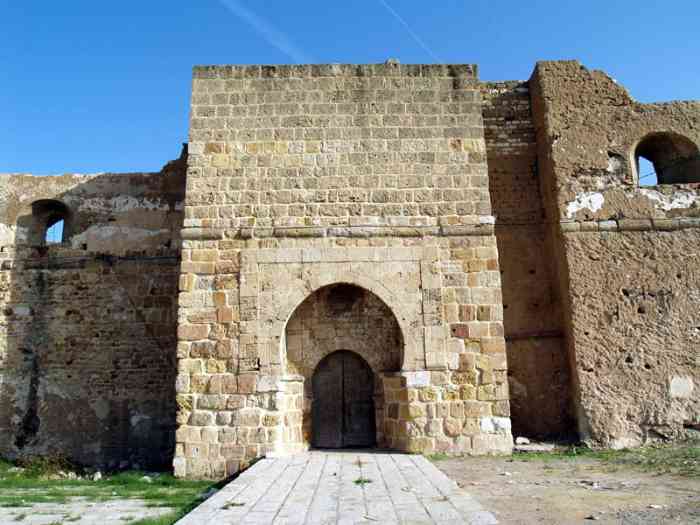
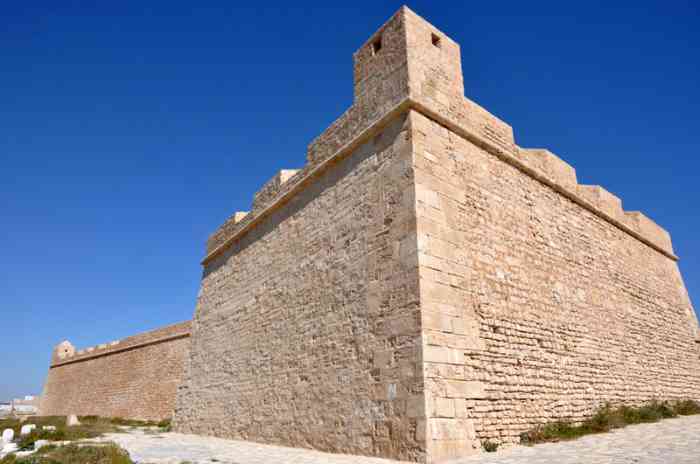
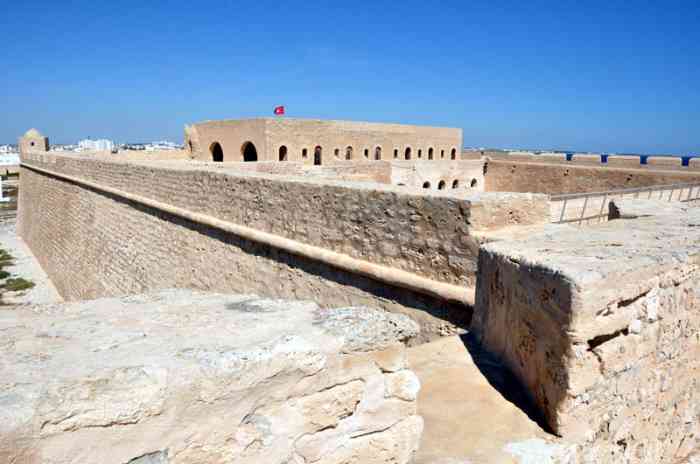
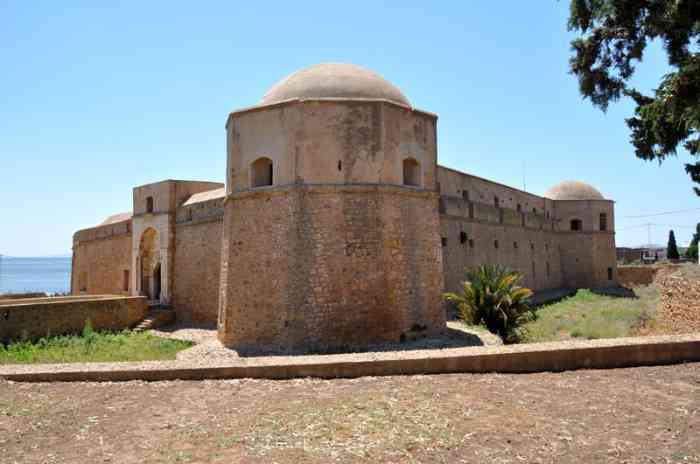
Et de la fortification ancienne : ▼
Und antike Befestigungen : ▼
En antieke fortificatie : ▼
And ancient fortification : ▼
A starověké opevnění : ▼