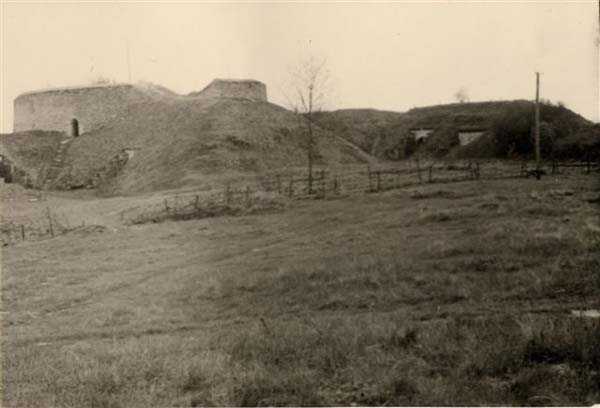
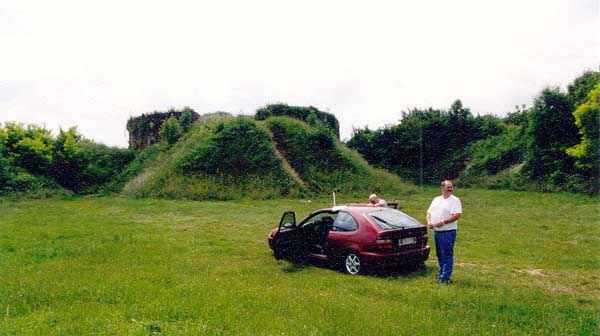
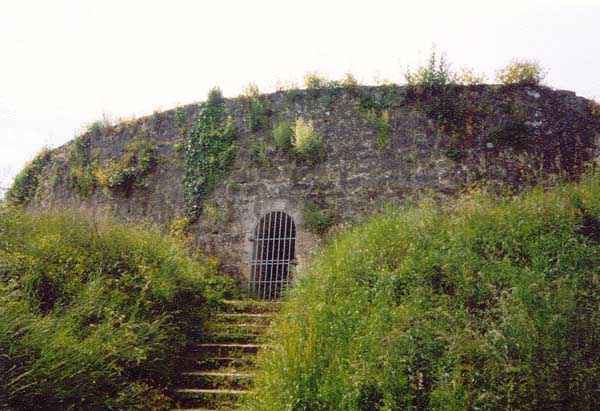
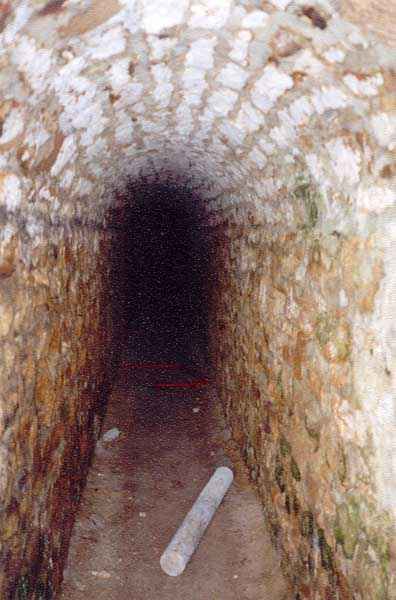
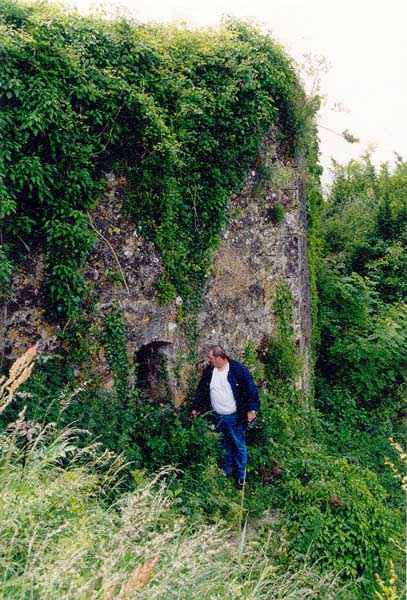
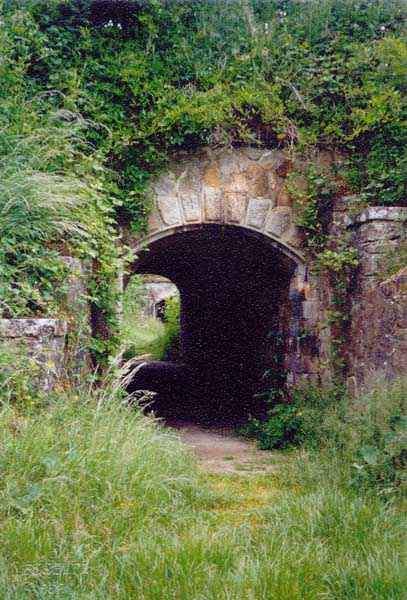
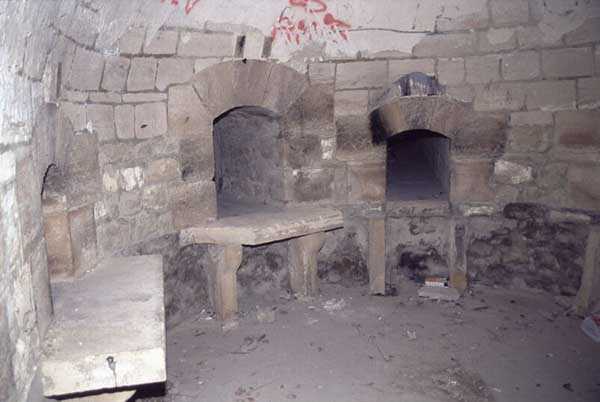
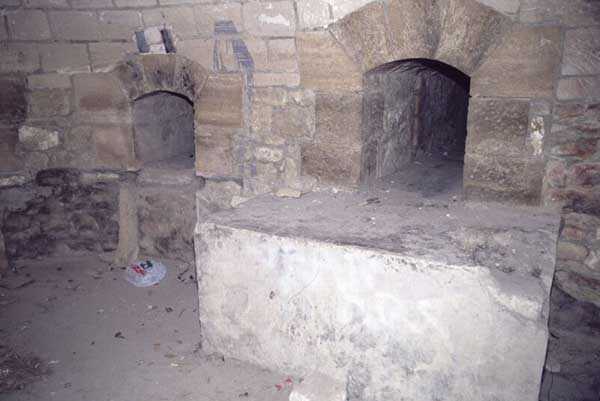
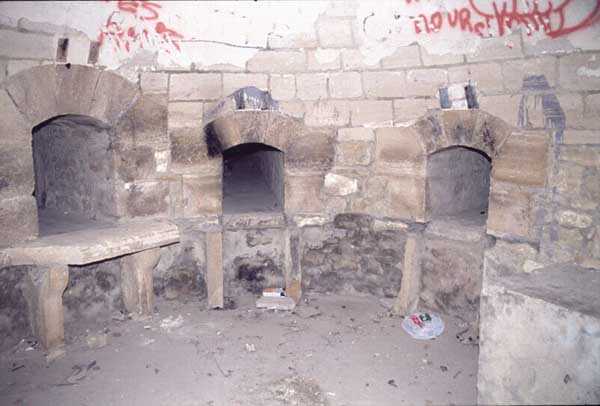
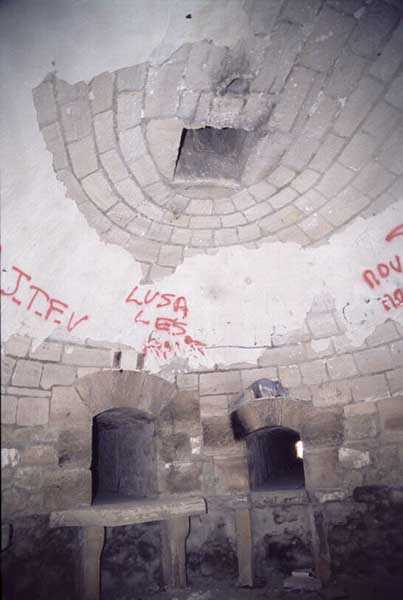
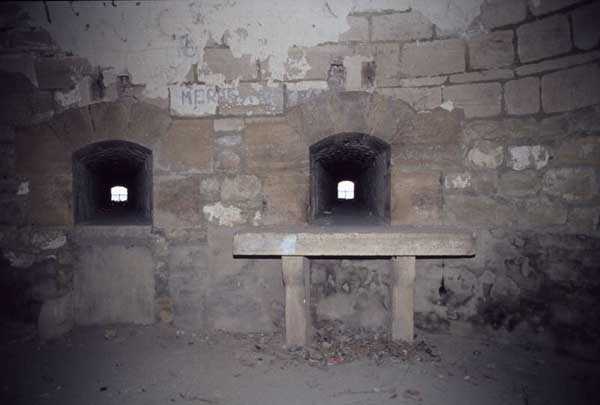

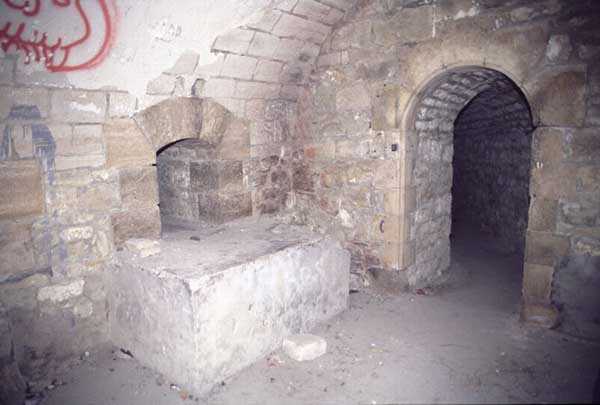
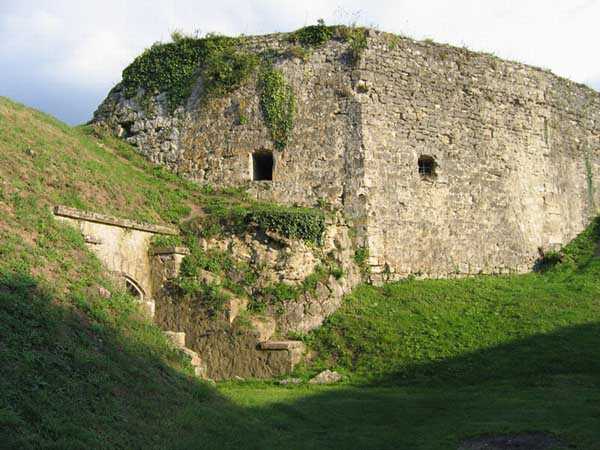
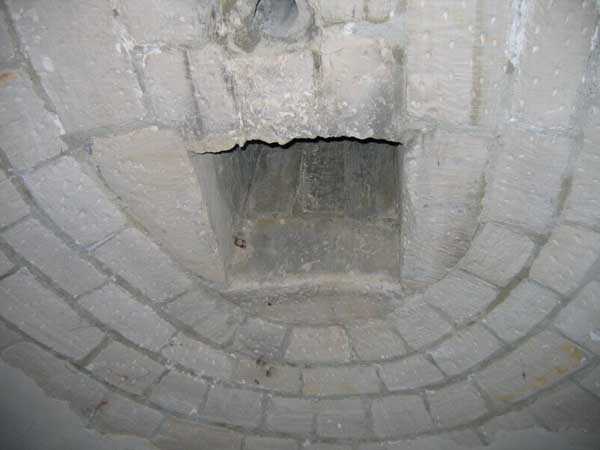
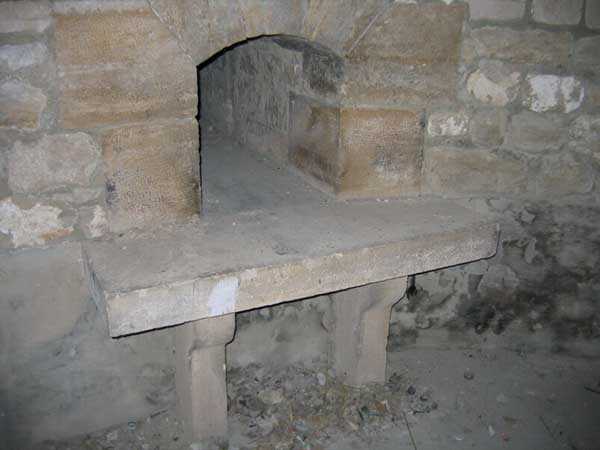
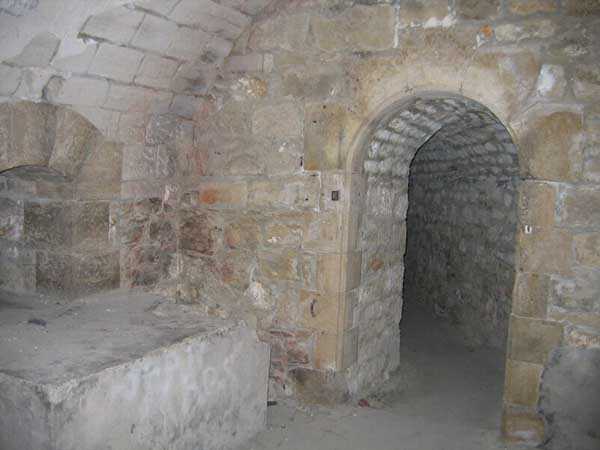
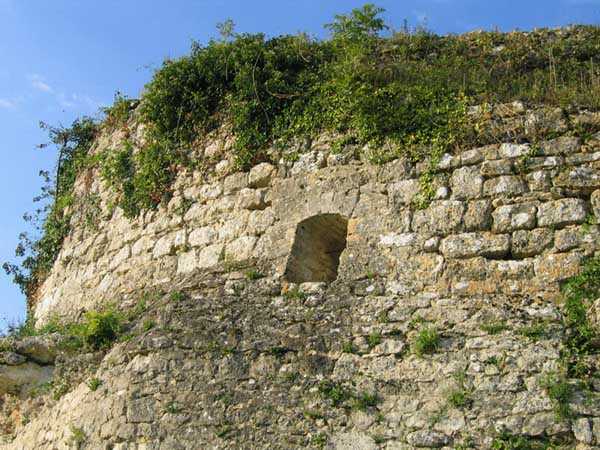
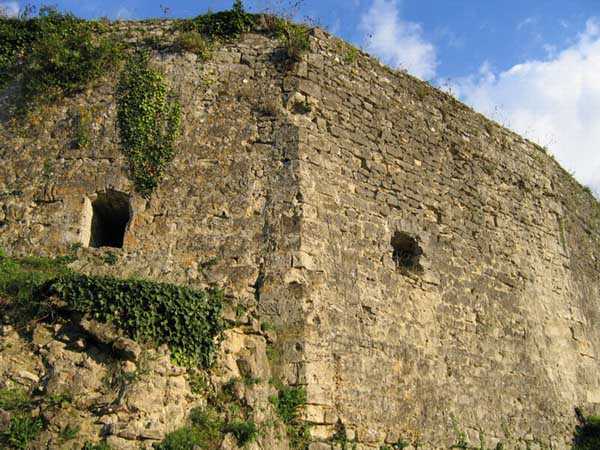
Position La Fère – Laon – Soissons, 1878. Une des 11 batteries du corps de place de Laon. Implantée sur la pointe sud de la butte témoin de Laon, elle est surtout connue pour son poste de communications optiques à cinq directions que l'on a installé au creux d'une épaisse tour ayant jadis supporté un moulin à vent. Les conduits de communications, dont un prévu pour le fort du Mont-de-Joie jamais construit, sont exceptionnellement longs en raison de l'épaisseur même de la tour. Chaque créneau est précédé d'une table en pierre destinée à supporter l'appareillage. Tant à gauche qu'à droite de la tour, on trouve une traverse abri dont le local affecte la forme d'un "L". Chacune dessert deux emplacements de tir soit pour un total de quatre pièces flanquant le nord-est et le nord-ouest. Un passage en tunnel sous la tour du poste optique facilite la communication entre les deux positions de tir. Devenue terrain de jeu pour les enfants des habitations proches, la batterie est peu ou prou entretenue et la végétation contenue. Seul le poste optique est barré par une grille cadenassée, sinon, l'accès à la batterie est libre (03/2008).
Stellung La Fère – Laon – Soissons, 1878. Eine der 11 Batterien des Platzkorps von Laon. Auf der Südspitze der Zeugenberg-Anhöhe von Laon errichtet, ist sie vor allem bekannt für ihren optischen Meldestand mit fünf Richtungen, der in einer dicken Turm installiert wurde, der einst eine Windmühle trug. Die Meldekanäle, davon einer für das nie gebaute Fort Mont-de-Joie, sind aufgrund der Dicke des Turms außergewöhnlich lang. Jede Scharte wird von einem Steintisch vorbereitet, der zur Aufnahme der Ausrüstung bestimmt ist. Sowohl links als auch rechts des Turms findet man einen Traversen-Schutzraum, dessen Raum die Form eines "L" annimmt. Jede versorgt zwei Schusstellungen, also insgesamt vier Geschütze, die den Nordosten und Nordwesten flankieren. Ein Tunneldurchgang unter dem Turm des optischen Postens erleichtert die Kommunikation zwischen den beiden Schusstellungen. Zum Spielplatz für Kinder der nahen Wohnungen geworden, wird die Batterie mehr oder weniger instand gehalten und die Vegetation eingedämmt. Nur der optische Posten ist durch ein verschlossenes Gitter versperrt, ansonsten ist der Zugang zur Batterie frei (03/2008).
Positie La Fère – Laon – Soissons, 1878. Een van de 11 batterijen van het plaatselijk korps van Laon. Gevestigd op de zuidpunt van de getuigenheuvel van Laon, is ze vooral bekend om haar optische communicatiepost met vijf richtingen die men heeft geïnstalleerd in de holte van een dikke toren die vroeger een windmolen droeg. De communicatiekanalen, waarvan een voorzien voor het nooit gebouwde fort Mont-de-Joie, zijn uitzonderlijk lang vanwege de dikte van de toren zelf. Elk schietgat wordt voorafgegaan door een stenen tafel bestemd om de apparatuur te ondersteunen. Zowel links als rechts van de toren vindt men een traverse-schuilplaats waarvan de lokalen de vorm van een "L" aannemen. Elk bedient twee schootsopstellingen, zijnde voor een totaal van vier stukken die het noordoosten en noordwesten flankeren. Een doorgang in tunnel onder de toren van de optische post vergemakkelijkt de communicatie tussen de twee schootsopstellingen. Speelterrein geworden voor de kinderen van de nabijgelegen woningen, wordt de batterie min of meer onderhouden en de vegetatie ingedamd. Alleen de optische post is afgesloten door een vergrendeld traliewerk, anders is de toegang tot de batterie vrij (03/2008).
Position La Fère – Laon – Soissons, 1878. One of the 11 batteries of the garrison of Laon. Established on the southern tip of the witness hill of Laon, it is especially known for its five-direction optical communications post that was installed in the hollow of a thick tower that once supported a windmill. The communication conduits, including one intended for the never-built fort of Mont-de-Joie, are exceptionally long due to the very thickness of the tower. Each embrasure is preceded by a stone table intended to support the equipment. Both to the left and right of the tower, there is a traverse shelter whose room takes the shape of an "L". Each serves two firing emplacements, for a total of four pieces flanking the northeast and northwest. A tunnel passage under the tower of the optical post facilitates communication between the two firing positions. Having become a playground for children from nearby homes, the battery is more or less maintained and the vegetation contained. Only the optical post is barred by a padlocked grille, otherwise, access to the battery is free (03/2008).
Postavení La Fère – Laon – Soissons, 1878. Jedna z 11 baterií posádkového sboru Laonu. Umístěna na jižním hrotu svědeckého návrší Laonu, je známa především pro svou optickou spojovací stanici s pěti směry, která byla instalována v prohlubni tlusté věže, jež kdysi nesla větrný mlýn. Spojovací kanály, z nichž jeden určený pro nikdy nepostavený fort Mont-de-Joie, jsou výjimečně dlouhé kvůli samotné tloušťce věže. Každá střílna je předcházena kamenným stolem určeným k podpoře zařízení. Jak nalevo tak napravo od věže se nachází traversa-úkryt, jejíž místnost má tvar "L". Každá obsluhuje dvě střelecká postavení, tedy celkem čtyři děla flankující severovýchod a severozápad. Průchod tunelem pod věží optické stanice usnadňuje komunikaci mezi dvěma střeleckými pozicemi. Stala se hřištěm pro děti z blízkých obydlí, baterie je více či méně udržována a vegetace je potlačena. Pouze optická stanice je zablokována mříží se zámkem, jinak je přístup k baterii volný (03/2008).
Cité dans : Zitiert in : Geciteerd in: Cited in: Citováno v: Saint-Vincent (batterie de)
