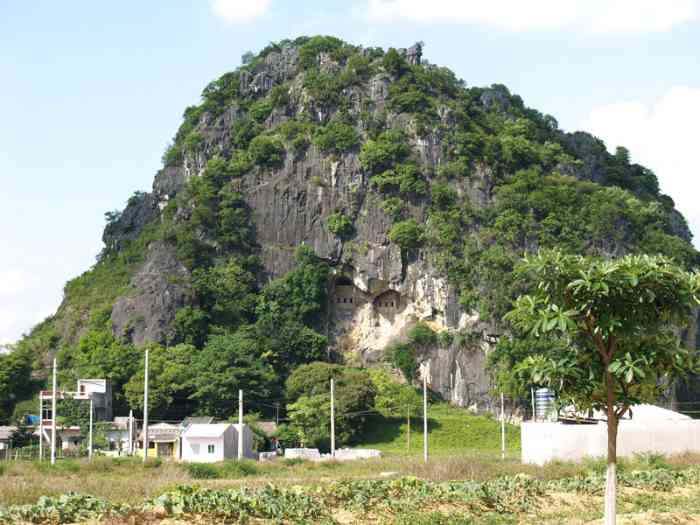
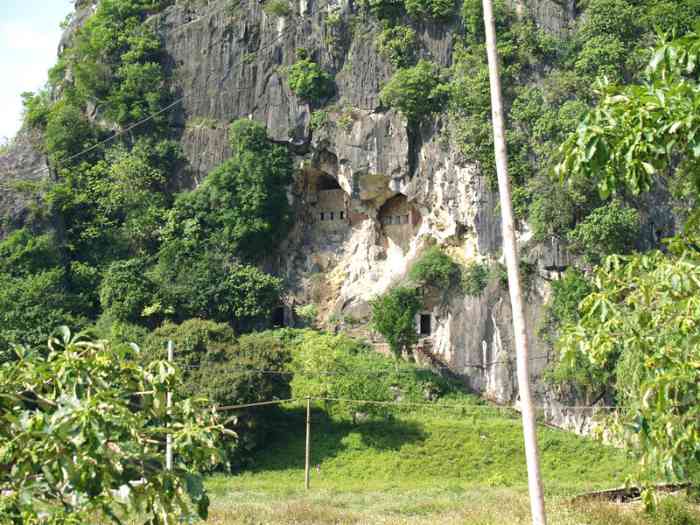
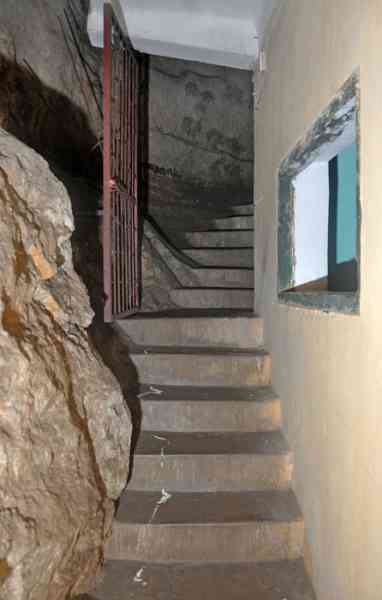
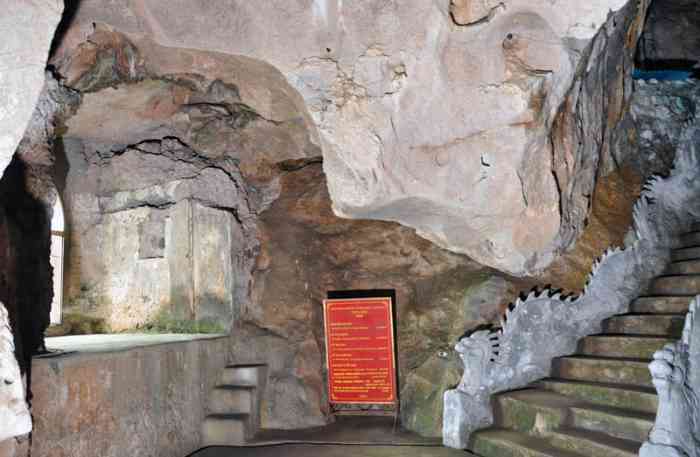
Lang Son Le rocher Van Méou est un chicot calcaire situé à 500 mètres au sud du rocher Na Mon. Il commande la route d’accès au fort Brière de l’Isle. En mars 1945, il est organisé en point d’appui, tenu par une section de la 20e compagnie du 3e RTT, et un peloton de pièce du 4e RAC. Il est commandé par le lieutenant Peroye. Son armement de position comprend un canon de 75 sur affût Mle 1916, quatre mitrailleuses et huit FM. Violemment attaqué le 9 mars, dès le début de l’action, il résiste jusqu’au 10, et se rend à l’imitation du fort Négrier, à 17 heures 30. Le PA est appelé « Fort Lyautey » dans au moins un document en notre possession. L’intérieur est actuellement transformé en temple, et peu de chose rappelle sa vocation guerrière. Der Felsen Van Méou ist ein Kalkfelszahn, der 500 Meter südlich des Felsens Na Mon liegt. Er beherrscht die Zufahrtsstraße zum Fort Brière de l’Isle. Im März 1945 ist er als Stützpunkt organisiert, besetzt von einer Sektion der 20. Kompanie des 3. RTT und einem Geschütz-Zug des 4. RAC. Er wird von Leutnant Peroye kommandiert. Seine Stellungsbewaffnung umfasst eine 75-mm-Kanone auf Lafette Mle 1916, vier Maschinengewehre und acht leichte Maschinengewehre. Am 9. März von Beginn der Aktion an heftig angegriffen, hält er bis zum 10. stand und ergibt sich in Nachahmung des Forts Négrier um 17:30 Uhr. Der Stützpunkt wird in mindestens einem uns vorliegenden Dokument als „Fort Lyautey“ bezeichnet. Das Innere ist heute in einen Tempel umgewandelt, und nur wenig erinnert an seine kriegerische Bestimmung. De rots Van Méou is een kalkstenen rotsblok gelegen op 500 meter ten zuiden van de rots Na Mon. Hij beheerst de toegangsweg naar fort Brière de l’Isle. In maart 1945 is hij georganiseerd als steunpunt, bezet door een sectie van de 20e compagnie van het 3e RTT en een geschutpeloton van het 4e RAC. Hij staat onder bevel van luitenant Peroye. Zijn positiebewapening omvat een 75 mm-kanon op affuit Mle 1916, vier mitrailleurs en acht lichte mitrailleurs. Op 9 maart vanaf het begin van de actie hevig aangevallen, houdt hij stand tot de 10e en geeft zich in navolging van fort Négrier over om 17:30 uur. Het steunpunt wordt in ten minste een ons bekend document „Fort Lyautey“ genoemd. Het interieur is tegenwoordig omgebouwd tot een tempel, en weinig herinnert nog aan zijn krijgsbestemming. Van Méou rock is a limestone pinnacle located 500 metres south of Na Mon rock. It commands the access road to Fort Brière de l’Isle. In March 1945, it is organised as a strongpoint, held by a section of the 20th company of the 3rd RTT, and a gun platoon of the 4th RAC. It is commanded by Lieutenant Peroye. Its position armament comprises one 75 mm gun on mounting Mle 1916, four machine guns and eight light machine guns. Violently attacked on 9 March from the beginning of the action, it resists until the 10th, and surrenders in imitation of Fort Négrier at 17:30 hours. The strongpoint is called “Fort Lyautey” in at least one document in our possession. The interior is now converted into a temple, and little recalls its warlike vocation. Skála Van Méou je vápencový zub nacházející se 500 metrů jižně od skály Na Mon. Ovládá přístupovou cestu k pevnosti Brière de l’Isle. V březnu 1945 je organizována jako opěrný bod, držený sekcí 20. roty 3. pluku RTT a četou kusů 4. pluku RAC. Velí jí poručík Peroye. Výzbroj postavení zahrnuje jeden 75mm kanón na lafetě vz. 1916, čtyři kulomety a osm lehkých kulometů. Dne 9. března od počátku akce prudce napadena, vzdoruje až do 10. a vzdává se po vzoru pevnosti Négrier v 17:30 hodin. Opěrný bod je v alespoň jednom dokumentu v našem držení nazýván „Fort Lyautey“. Interiér je dnes přeměněn na chrám a jen málo připomíná jeho válečné poslání. © JJM 25/04/2026
Cité dans : Zitiert in : Geciteerd in: Cited in: Citováno v: Brière de l'Isle (fort)
