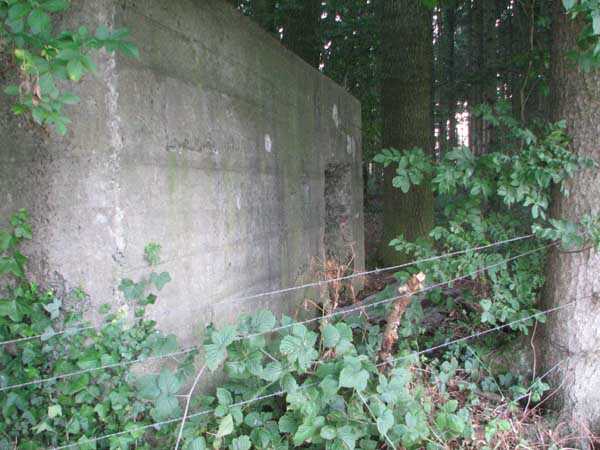
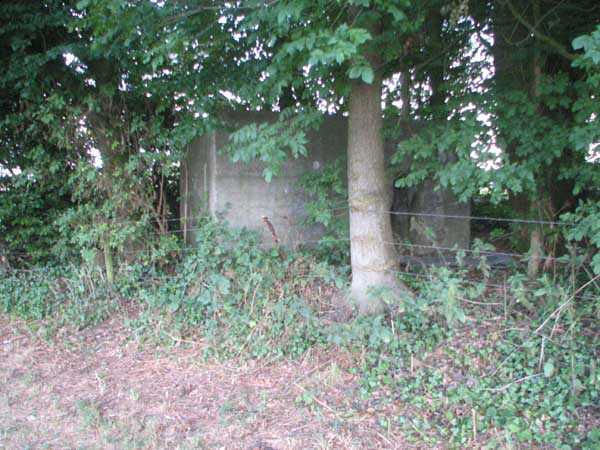
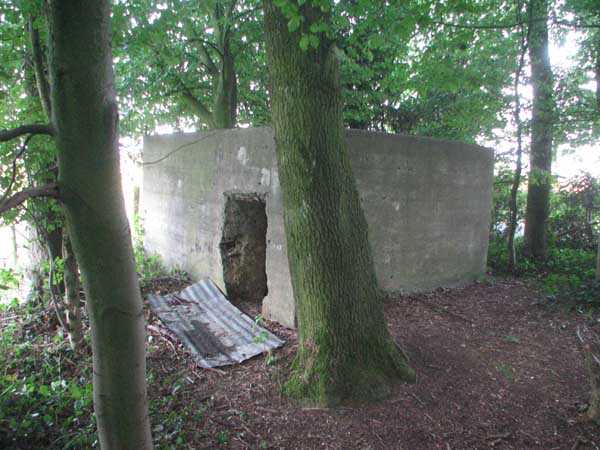
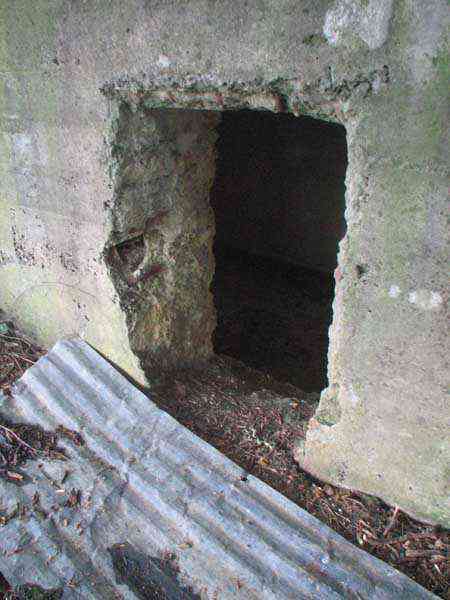
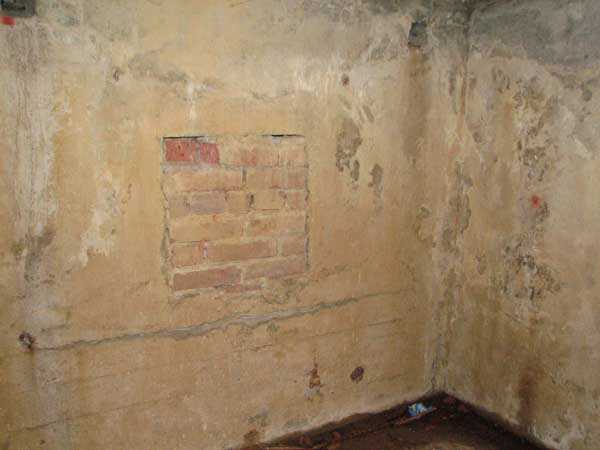
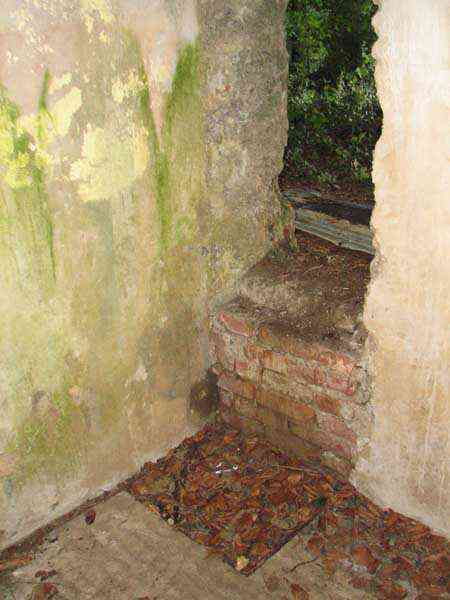
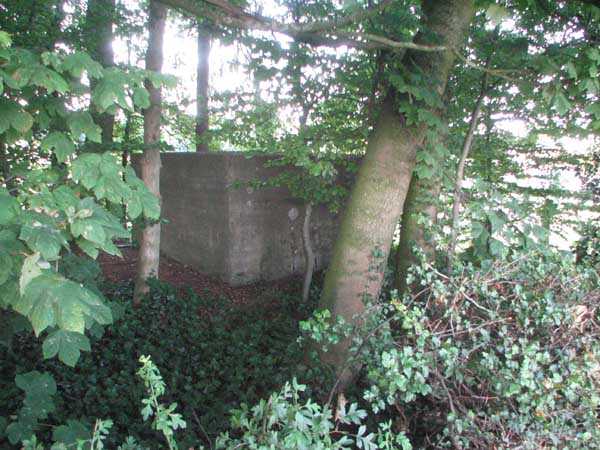
Fortifications belges de la deuxième guerre mondiale, position fortifiée de Liège, première ligne de résistance, position avancée de Henri-Chapelle, abri B de type PA modèle B, 332 m/alt, 3 hommes, une mitrailleuse sur affût Chardome dont il ne reste, a priori, que l'axe du support mais le créneau de tir est muré. Bien que l'entrée soit à l'arrière et à droite comme il se doit pour un modèle B, il semble que l'abri ait été construit sans entrée et que l'entrée ait été percée après sa construction. Il est aussi possible que l'entrée se trouvait ailleurs et qu'elle ait été rebouchée en vue de son déplacement avant le cimentage mais un emplacement antérieur n'est pas visible. Un puisard aussi large que l'entrée s'ouvre juste sous cette dernière. Il est rempli de déchets, de terre et de feuilles mais je n'ai pas imaginé que l'entrée d'origine ait pu se faire par un accès souterrain. La structure de la construction est encore en bon état. On trouve l'abri en quittant le village par la rue de Verviers et en remontant le premier chemin privé à droite de la route jusqu'au bosquet.
Belgische Festungen des Zweiten Weltkriegs, befestigte Stellung Lüttich, erste Widerstandslinie, vorgeschobene Stellung von Henri-Chapelle, B-Unterstand vom Typ PA Modell B, 332 M/ü. M., 3 Mann, ein Maschinengewehr auf Chardome-Lafette, von der a priori nur die Achse der Unterstützung übrig bleibt, aber die Schießscharte ist zugemauert. Obwohl der Eingang sich wie bei einem Modell B üblich hinten und rechts befindet, scheint es, dass der Unterstand ohne Eingang gebaut wurde und der Eingang nach seiner Konstruktion durchbrochen wurde. Es ist auch möglich, dass sich der Eingang anderswo befand und im Hinblick auf seine Verlegung vor der Zementierung verfüllt wurde, aber eine frühere Position ist nicht sichtbar. Ein Sickerschacht, so breit wie der Eingang, öffnet sich direkt unter diesem. Er ist mit Abfällen, Erde und Blättern gefüllt, aber ich habe mir nicht vorstellen können, dass der ursprüngliche Eingang durch einen unterirdischen Zugang hätte erfolgen können. Die Struktur der Konstruktion ist noch in gutem Zustand. Man findet den Unterstand, indem man das Dorf über die rue de Verviers verlässt und den ersten Privatweg rechts der Straße bis zum Gehölz hinaufgeht.
Belgische fortificaties van de Tweede Wereldoorlog, versterkte stelling Luik, eerste weerstandslijn, vooruitgeschoven stelling van Henri-Chapelle, B-schuilplaats van type PA model B, 332 m/TAW, 3 man, een machinegeweer op Chardome-affuit waarvan a priori alleen de as van de ondersteuning overblijft maar de schietopening is dichtgemetseld. Hoewel de ingang zoals het hoort voor een model B achteraan en rechts is, lijkt het erop dat de schuilplaats zonder ingang is gebouwd en dat de ingang na de bouw is doorgebroken. Het is ook mogelijk dat de ingang elders was en is dichtgemaakt met het oog op verplaatsing voor het cementeren maar een eerdere locatie is niet zichtbaar. Een even brede infiltratieput als de ingang opent zich er net onder. Hij is gevuld met afval, aarde en bladeren maar ik heb me niet kunnen voorstellen dat de oorspronkelijke ingang via een ondergrondse toegang had kunnen zijn. De structuur van de constructie is nog in goede staat. Men vindt de schuilplaats door het dorp via de rue de Verviers te verlaten en het eerste privépad rechts van de weg op te gaan tot aan het bosje.
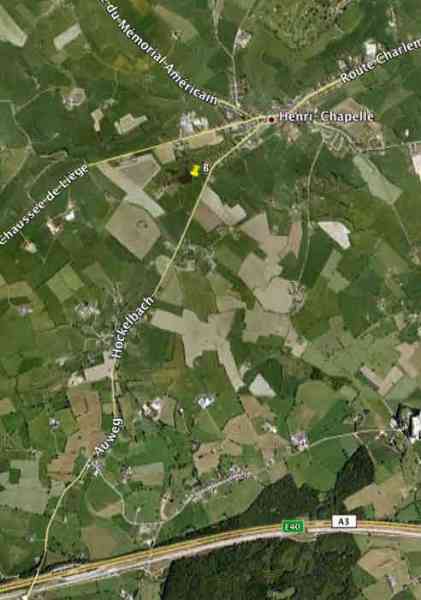
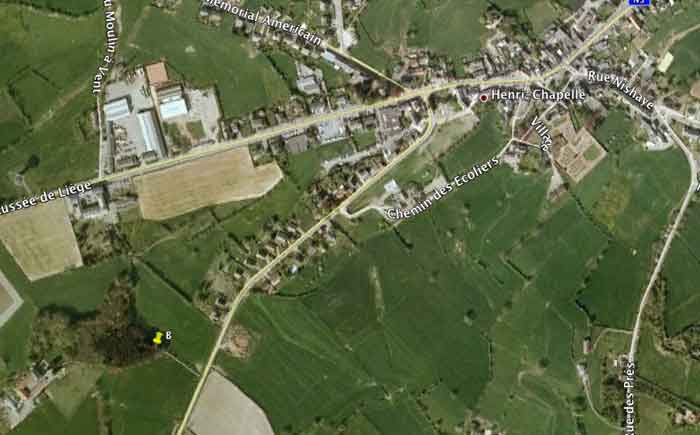
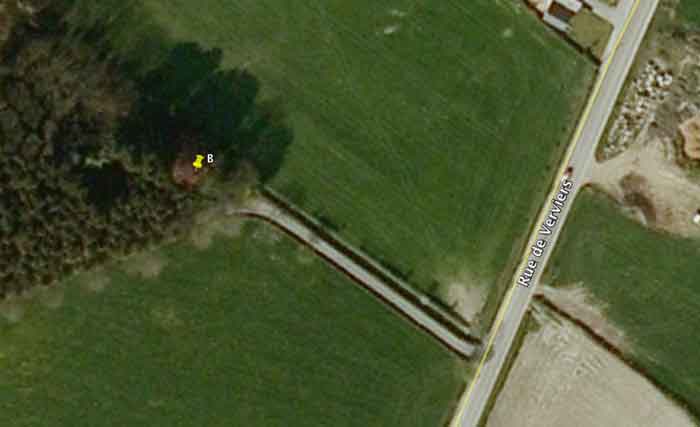
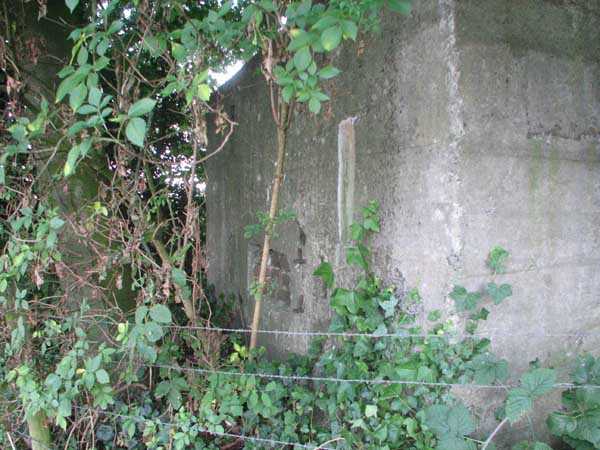
Belgian fortifications of the Second World War, fortified position of Liège, first line of resistance, advanced position of Henri-Chapelle, B shelter of type PA model B, 332 m/asl, 3 men, a machine gun on Chardome mount of which, a priori, only the axle of the support remains but the firing embrasure is walled up. Although the entrance is at the rear and to the right as it should be for a model B, it seems that the shelter was built without an entrance and that the entrance was pierced after its construction. It is also possible that the entrance was elsewhere and that it was filled in with a view to its relocation before cementing but a previous location is not visible. A soakaway as wide as the entrance opens just below it. It is filled with waste, earth and leaves but I did not imagine that the original entrance could have been through an underground access. The structure of the construction is still in good condition. The shelter is found by leaving the village via the rue de Verviers and going up the first private path to the right of the road to the grove.
Belgická opevnění z druhé světové války, opevněná pozice Lutychu, první odporová linie, přední postavení Henri-Chapelle, srub B typu PA model B, 332 m/n. m., 3 muži, jeden kulomet na lafetě Chardome, z něhož a priori zůstává pouze osa podpěry, ale střílna je zazděna. Ačkoli vchod je vzadu a vpravo, jak se u modelu B sluší, zdá se, že srub byl postaven bez vchodu a vchod byl proražen až po jeho výstavbě. Je také možné, že vchod byl jinde a byl zasypán v souvislosti s jeho přemístěním před cementováním, ale předchozí umístění není viditelné. Vsakovací šachta široká jako vchod se otevírá přímo pod ním. Je naplněna odpadem, zeminou a listím, ale nepředstavoval jsem si, že by původní vchod mohl být podzemním přístupem. Konstrukce stavby je stále v dobrém stavu. Úkryt najdete tak, že opustíte vesnici ulicí rue de Verviers a vyjdete první soukromou cestou vpravo od silnice až ke hájku.
