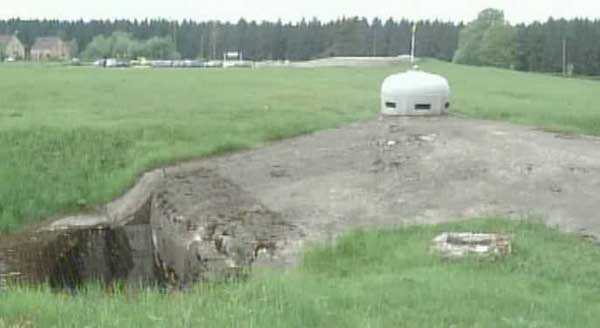
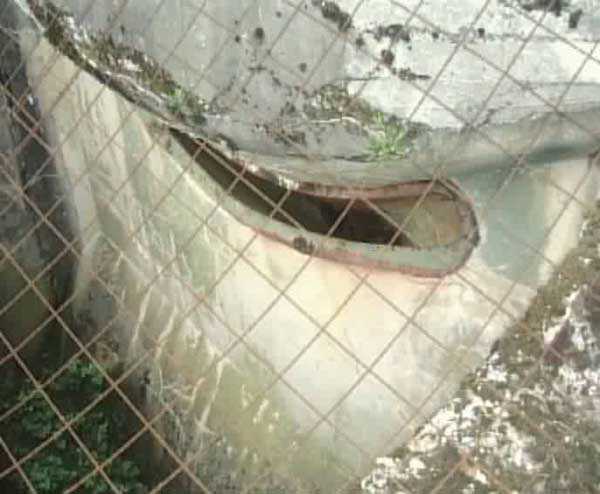
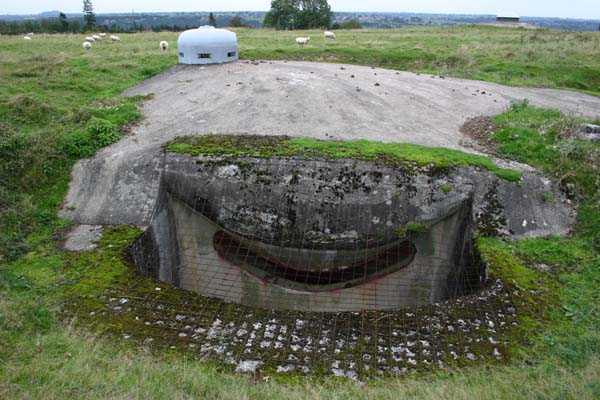
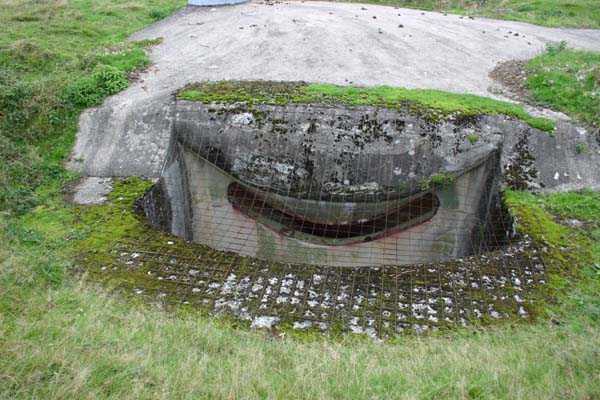
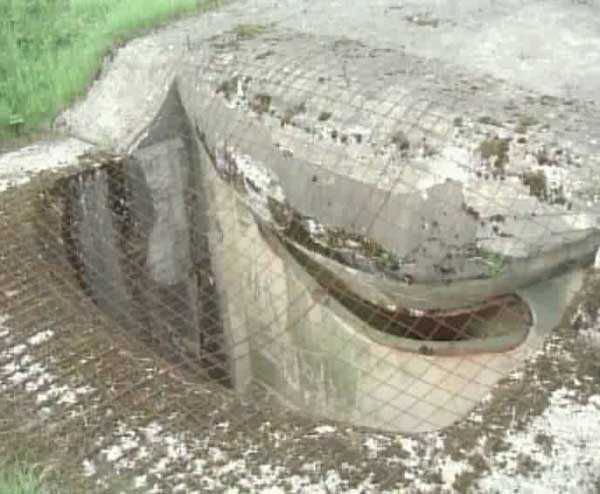
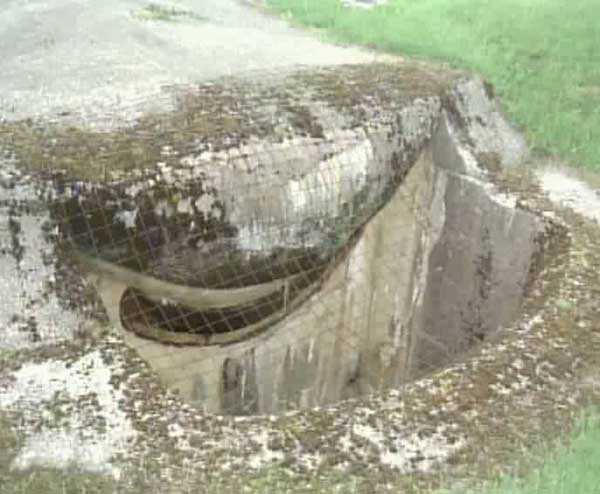
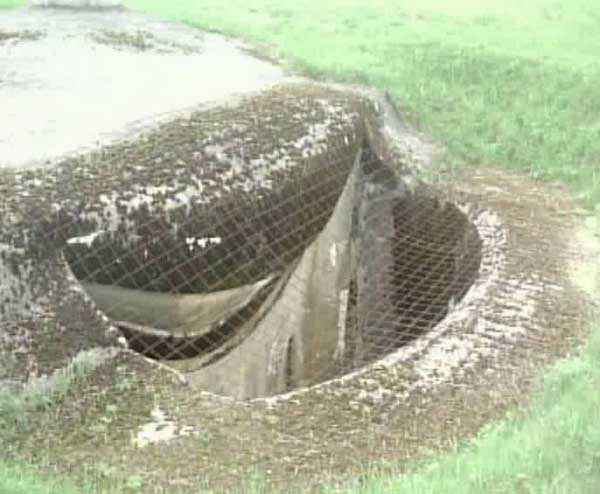
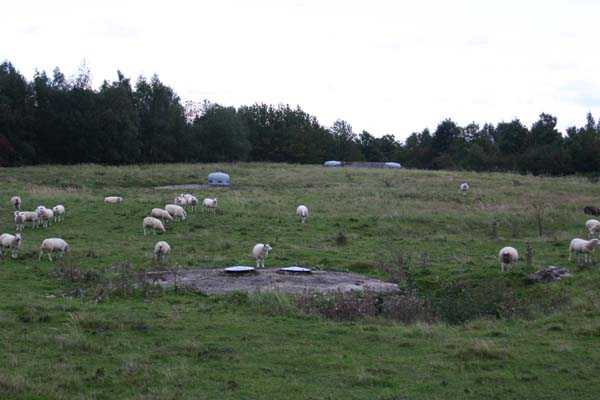
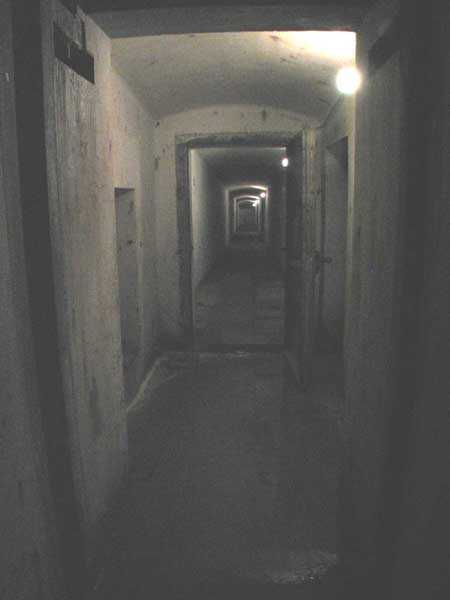
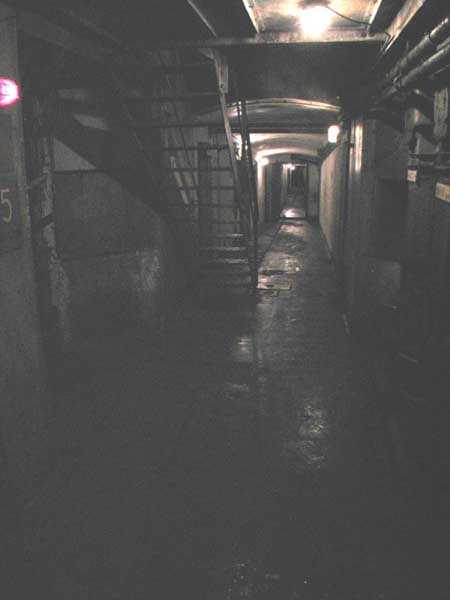
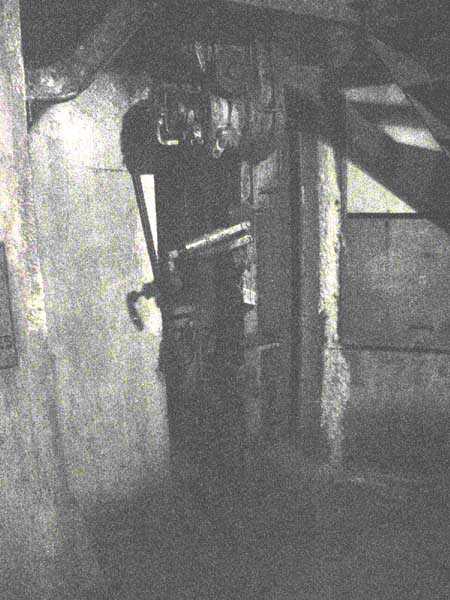
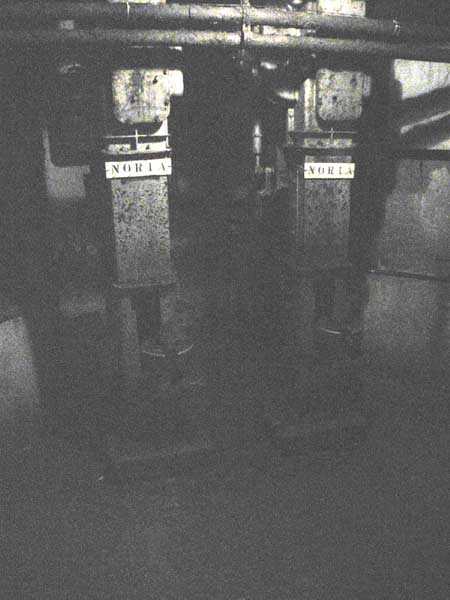
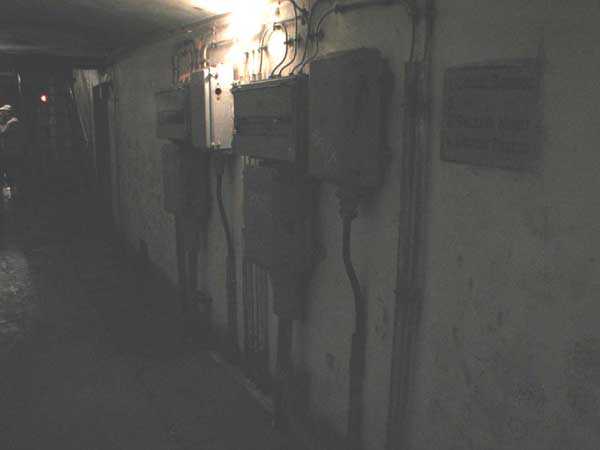
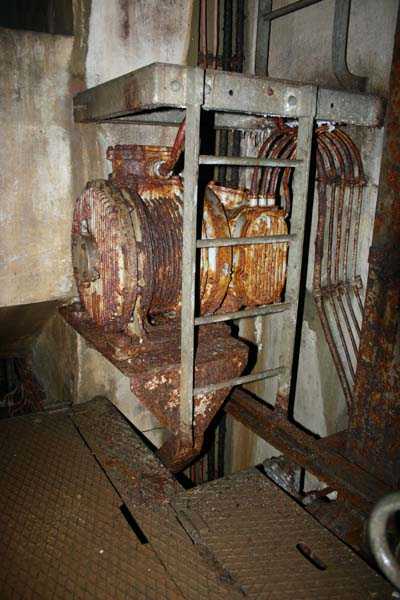
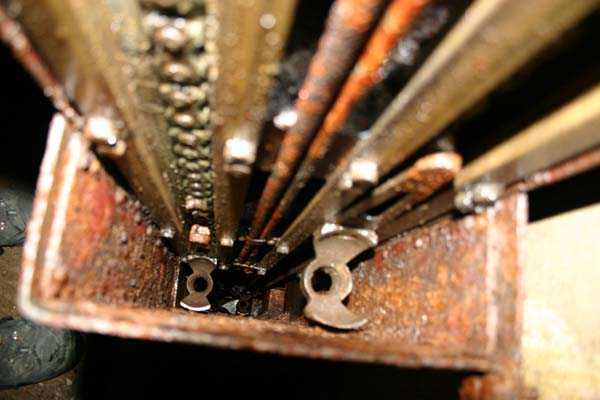
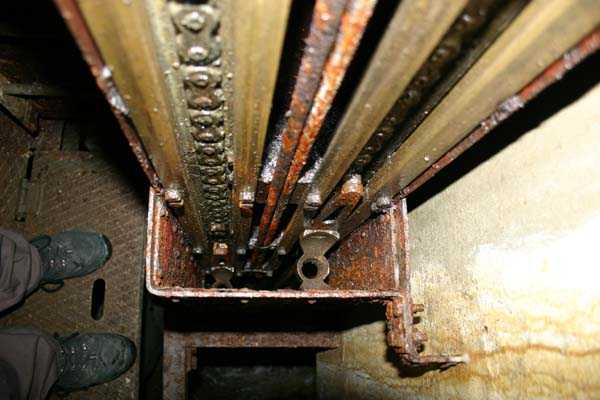
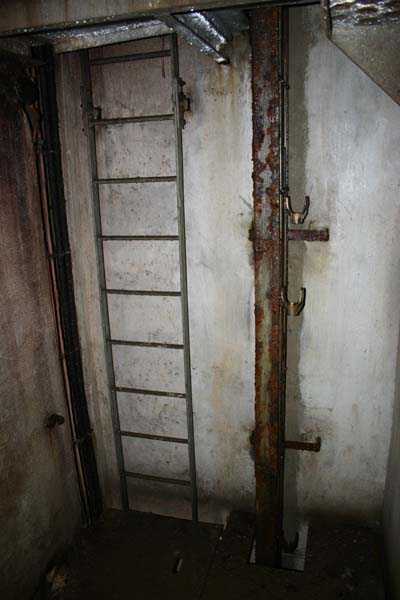
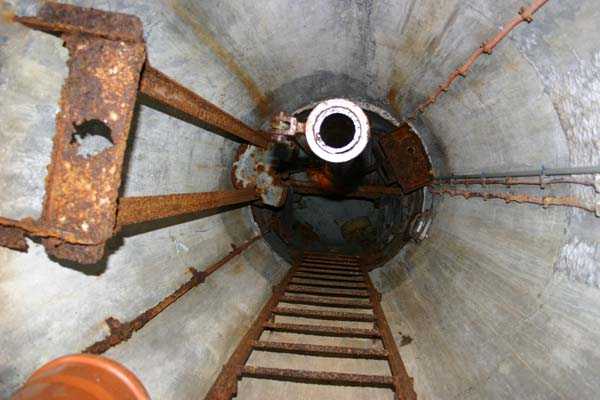
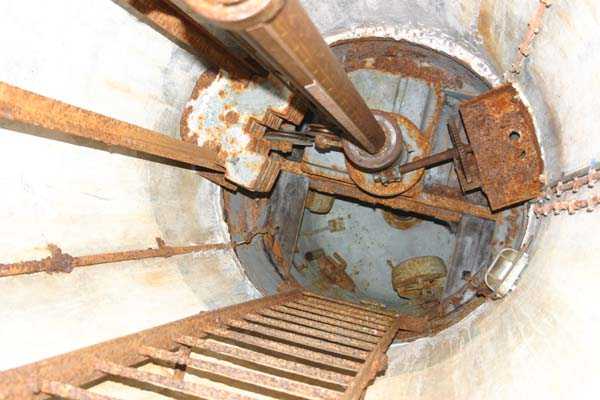
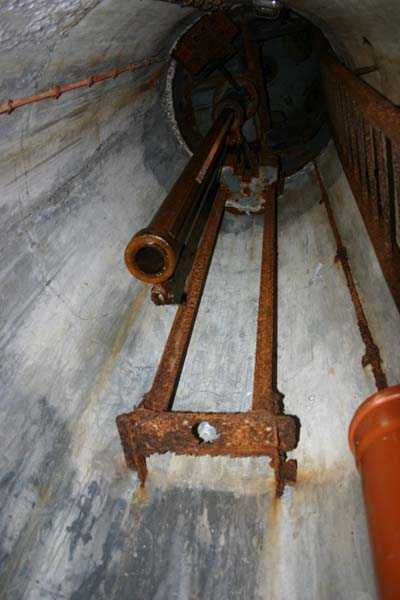
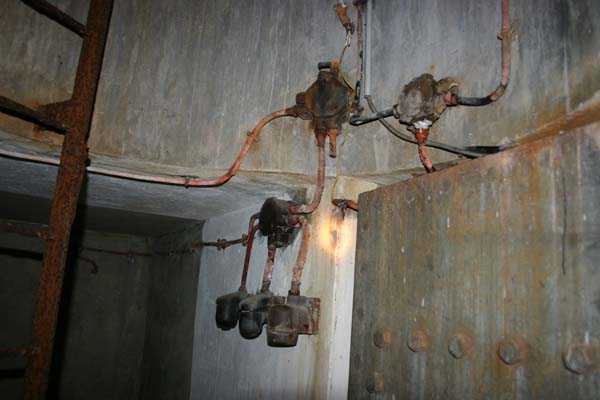
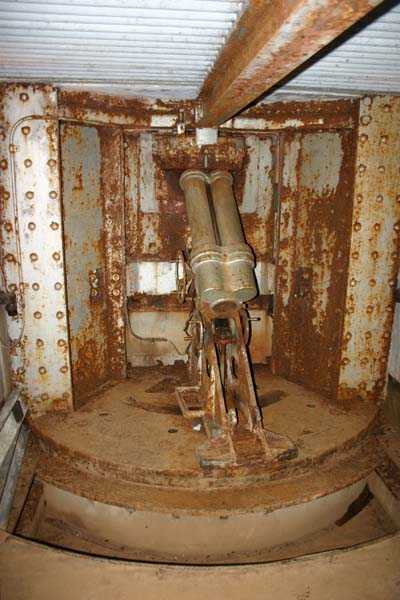
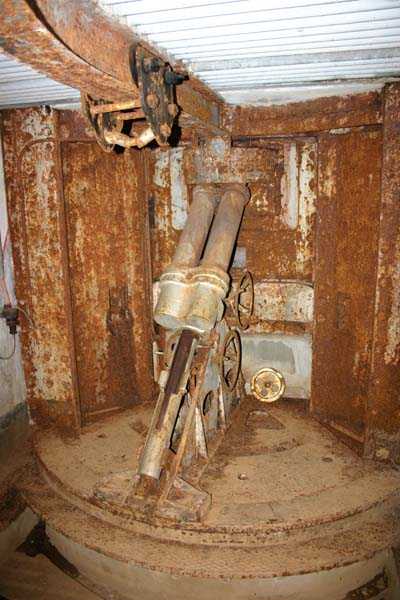
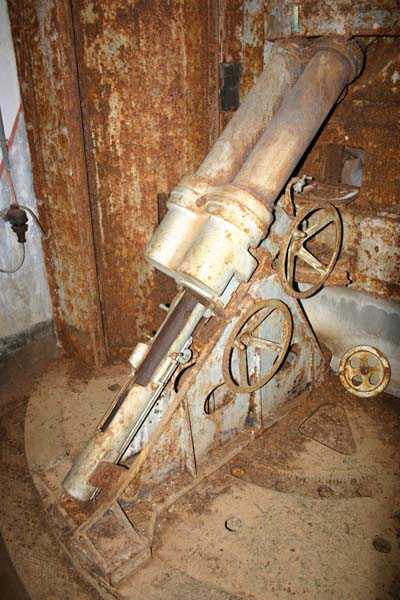
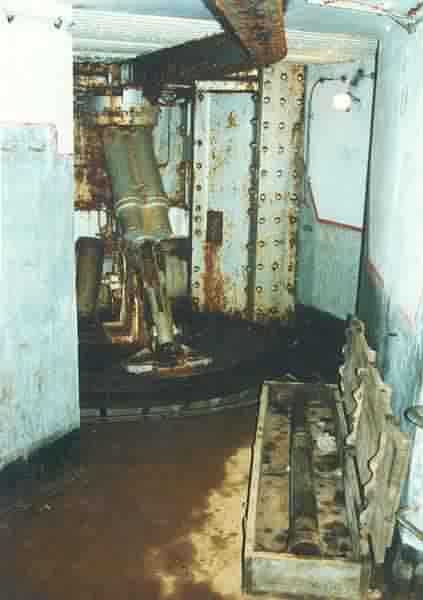
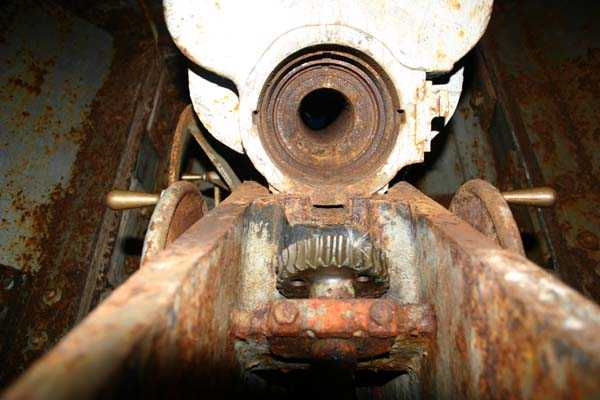
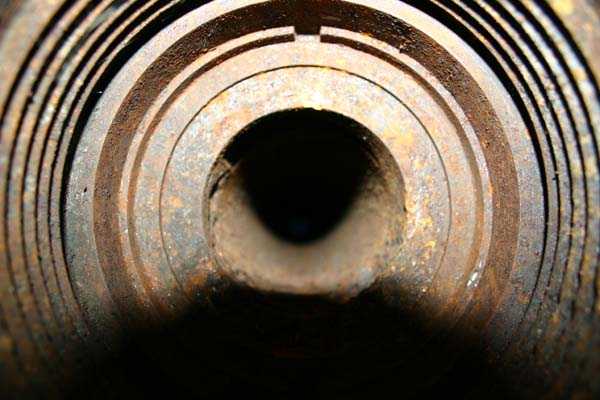
Fortifications belges de la deuxième guerre mondiale, position fortifiée de Liège, première ligne de résistance, fort de Tancrémont, BM. Le bloc mortier existe en deux exemplaires avec légère variante d'implantation et d'orientation des armes pour se conformer à la configuration du terrain. Son faux jumeau se trouve au centre du massif du fort d'Aubin-Neufchâteau. Ce type de bloc de combat était inconnu des troupes allemandes à qui il provoquait une frayeur justifiée. Totalement enterré, à l'exception de la cloche de guet et fusil-mitrailleur à 6 créneaux obturables (Sechschartenturm), il présentait une cible particulièrement difficile à atteindre. Ces trois embrasures en portion de couronne circulaire sont enfouies à l'intérieur d'un profond fossé diamant. Les trois mortiers français de 81 mm dont il est équipé permettent d'envoyer des bombes à une portée comprise entre 300 et 3600 mètres à une cadence de 20 coups minute par tube, les obus étaient fournis par 3 soutes et élevés grâce à 3 norias ou Paternoster. Le BM intervient donc aussi bien dans la défense rapprochée de l'ouvrage que dans les interdictions des vallées lointaines. Il est sous le contrôle du bureau de tir des petites armes.
Belgische Befestigungen des Zweiten Weltkriegs, befestigte Stellung Lüttich, erste Widerstandslinie, Fort von Tancrémont, BM. Der Mörserblock existiert in zwei Exemplaren mit leichten Unterschieden in der Einbettung und Ausrichtung der Waffen, um sich dem Geländeverlauf anzupassen. Sein Zwillingsblock befindet sich im Zentrum des Massivs des Forts Aubin-Neufchâteau. Diese Art Kampfblock war den deutschen Truppen unbekannt und verursachte bei ihnen berechtigte Furcht. Vollständig eingegraben, mit Ausnahme der Beobachtungs- und leichten Maschinengewehr-Glocke mit sechs verschließbaren Scharten (Sechschartenturm), bot er ein besonders schwierig zu treffendes Ziel. Diese drei Scharten in einem Kreisbogenabschnitt sind tief in einem Diamantgraben vergraben. Die drei französischen 81-mm-Mörser, mit denen er ausgestattet ist, ermöglichen das Verschießen von Granaten in einer Reichweite zwischen 300 und 3600 Metern mit einer Kadenz von 20 Schuss pro Minute pro Rohr; die Granaten wurden aus drei Munitionslagern bereitgestellt und mittels drei Noria- oder Paternosteraufzügen nach oben befördert. Der BM kommt daher sowohl in der Nahverteidigung des Werks als auch bei der Fernsperre entfernter Täler zum Einsatz. Er untersteht der Feuerleitstelle der leichten Waffen.
Belgische versterkingen van de Tweede Wereldoorlog, versterkte stelling Luik, eerste weerstandslijn, fort van Tancrémont, BM. De mortierblok bestaat in twee exemplaren met lichte variaties in inplanting en oriëntatie van de wapens om zich aan de terreinconfiguratie aan te passen. Zijn valse tweeling bevindt zich in het centrum van het massief van het fort Aubin-Neufchâteau. Dit type gevechtsblok was onbekend bij de Duitse troepen, bij wie het een gerechtvaardigde vrees veroorzaakte. Volledig ingegraven, met uitzondering van de observatie- en licht machinegeweer-koepel met zes afsluitbare schietgaten (Sechschartenturm), bood hij een bijzonder moeilijk te raken doelwit. Deze drie schietopeningen in een cirkelbooggedeelte zijn begraven in een diepe diamantgracht. De drie Franse 81 mm mortieren waarmee hij is uitgerust, maken het mogelijk bommen te schieten met een bereik tussen 300 en 3600 meter aan een snelheid van 20 schoten per minuut per loop; de granaten werden geleverd door drie munitiebergingen en opgeheven met drie noria's of paternosterliften. De BM treedt dus zowel op in de nabijverdediging van het werk als in het verbieden van verre valleien. Hij staat onder controle van het vuurleidingsbureau van de kleine wapens.
Belgian fortifications of the Second World War, fortified position of Liège, first line of resistance, fort of Tancrémont, BM. The mortar block exists in two copies with slight variations in emplacement and orientation of the weapons to conform to the terrain configuration. Its false twin is located at the centre of the massif of Fort Aubin-Neufchâteau. This type of combat block was unknown to the German troops, to whom it caused justified fear. Completely buried, except for the observation and light machine gun cupola with six closable embrasures (Sechschartenturm), it presented a particularly difficult target to hit. These three embrasures in a circular arc segment are buried inside a deep diamond ditch. The three French 81 mm mortars with which it is equipped can fire bombs at a range between 300 and 3600 metres at a rate of 20 rounds per minute per tube; the shells were supplied from three magazines and raised by three norias or Paternoster lifts. The BM therefore operates both in the close defence of the work and in the interdiction of distant valleys. It is under the control of the small arms fire control room.
Belgické opevnění druhé světové války, opevněná pozice Lutych, první obranná linie, fort Tancrémont, BM. Minometový blok existuje ve dvou exemplářích s lehkými odchylkami v umístění a orientaci zbraní, aby vyhovovaly konfiguraci terénu. Jeho nepravý dvojče se nachází v centrálním masivu fortu Aubin-Neufchâteau. Tento typ bojového bloku byl německým jednotkám neznámý a vzbuzoval v nich oprávněný strach. Zcela zakopaný, s výjimkou pozorovací a lehký kulomet zvonice se šesti uzavíratelnými střílnami (Sechschartenturm), představoval obzvláště obtížný cíl k zasažení. Tyto tři střílny v segmentu kruhové koruny jsou pohřbeny uvnitř hlubokého diamantového příkopu. Tři francouzské 81 mm minomety, kterými je vybaven, umožňují střelbu bomb na dostřel mezi 300 a 3600 metrů rychlostí 20 ran za minutu z každé hlavně; granáty byly zásobovány ze tří skladů a zvedány třemi noriemi nebo paternostery. BM tedy působí jak v blízké obraně objektu, tak v zamezení pohybu ve vzdálených údolích. Je pod kontrolou střeleckého stanoviště lehkých zbraní.
Cité dans : Zitiert in : Geciteerd in: Cited in: Citováno v: Tancrémont - Bloc mitrailleuses (BIII)
