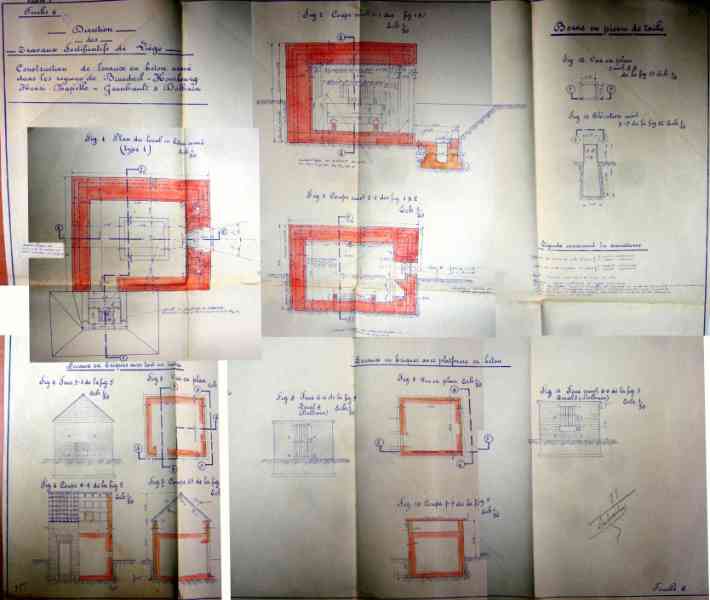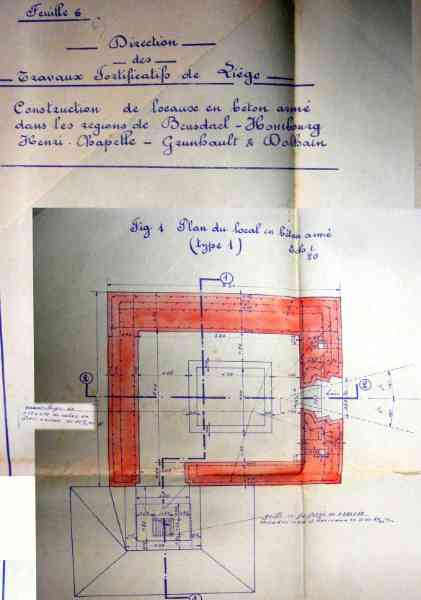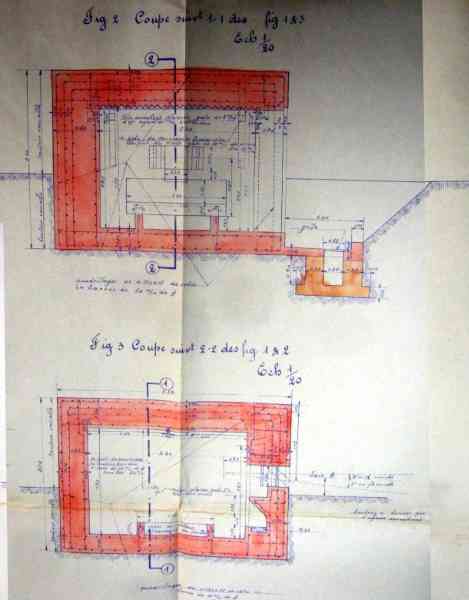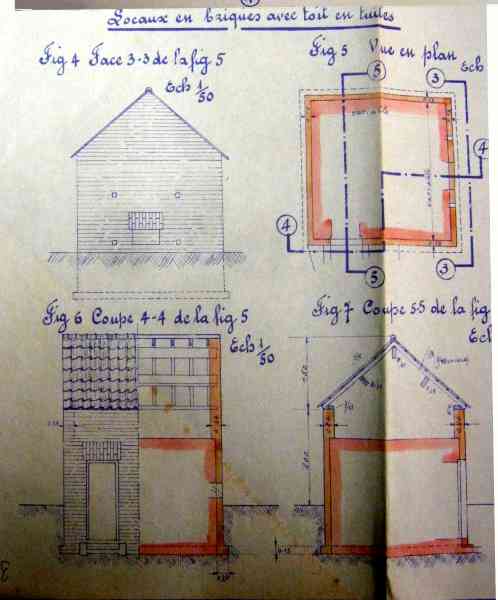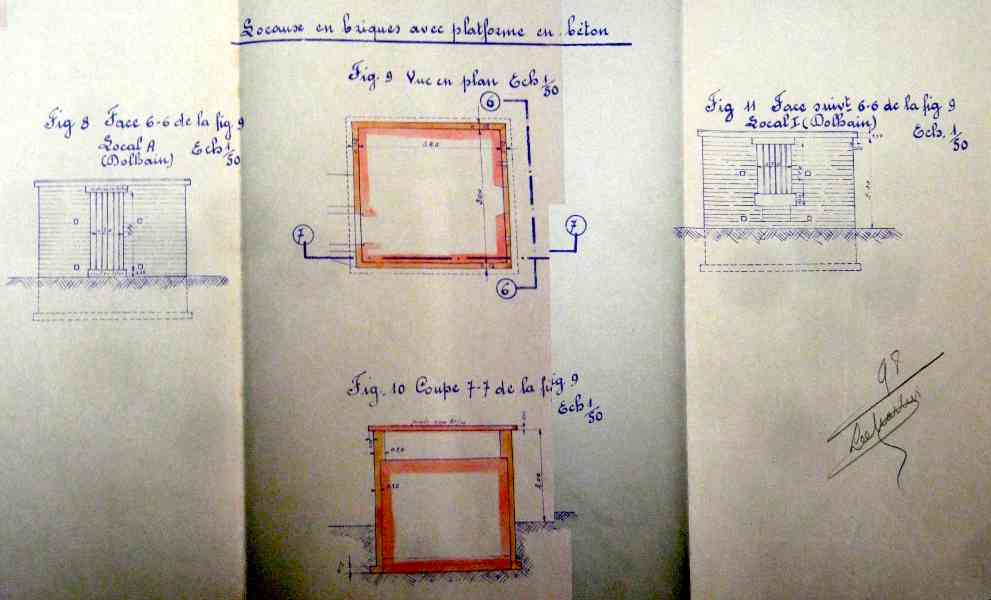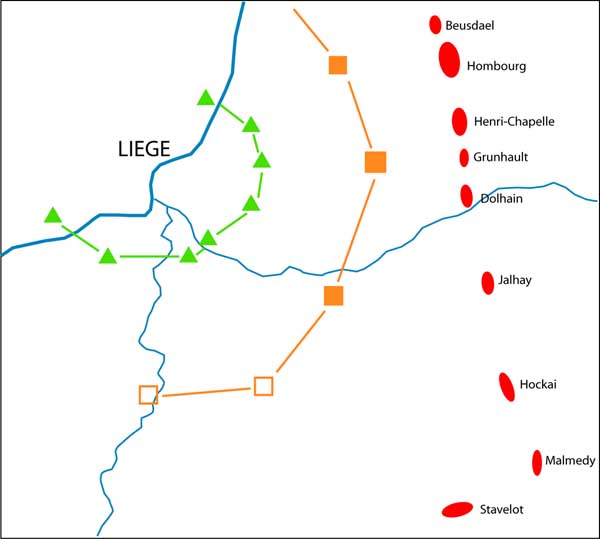
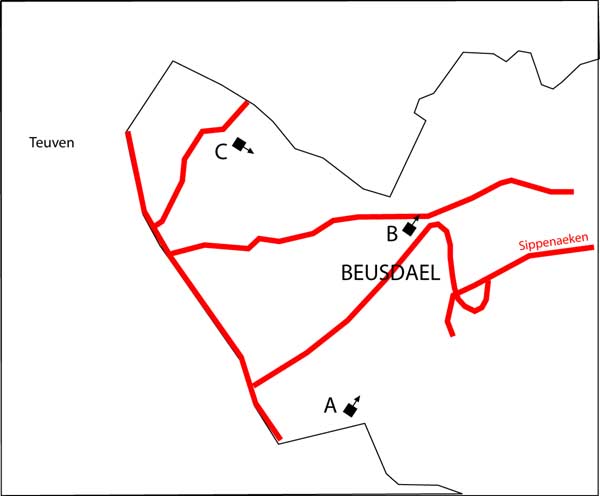
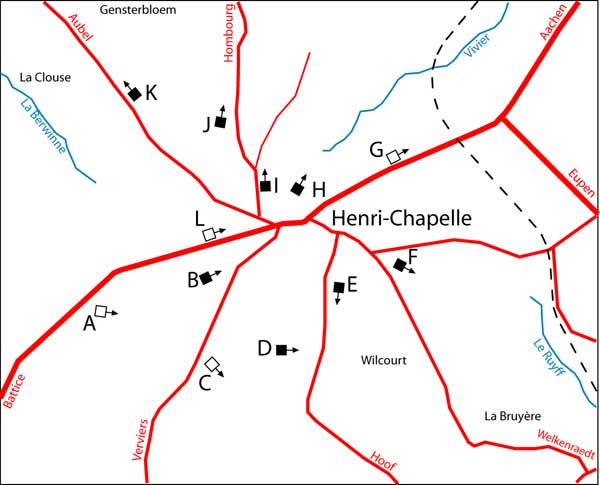
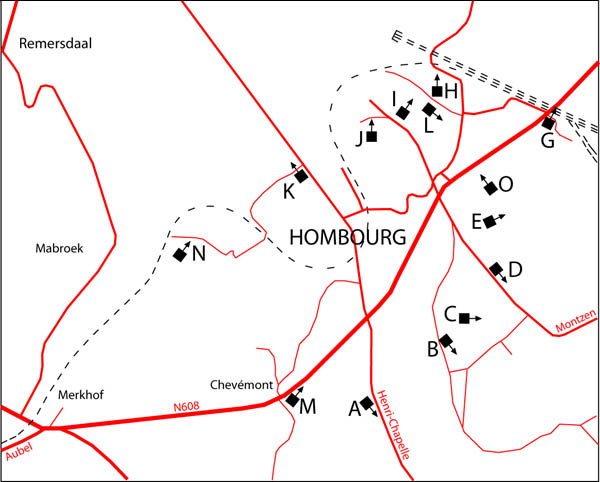
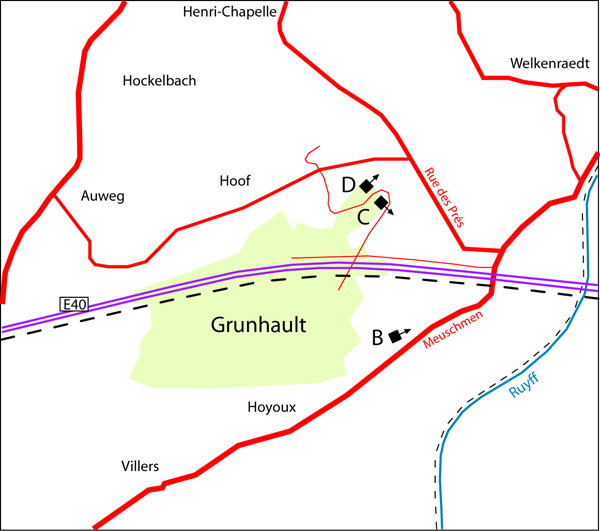
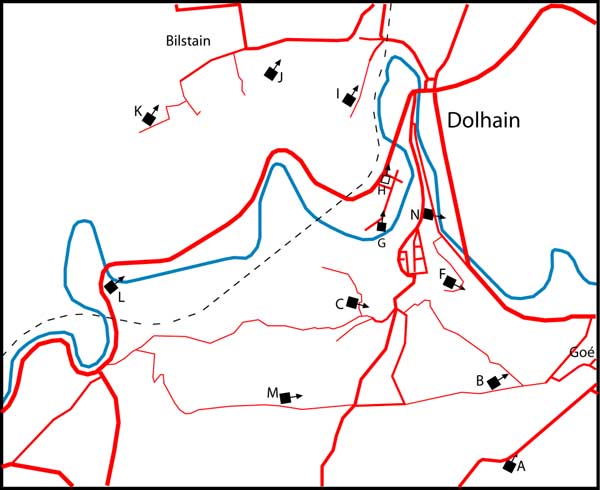
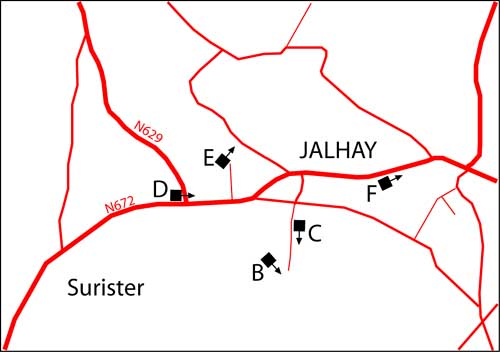
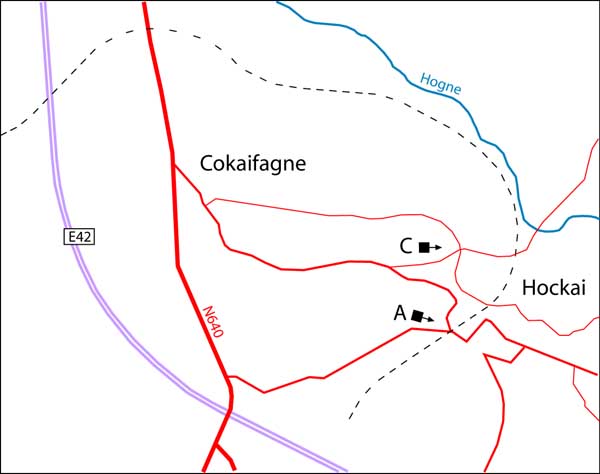
En avant (à l'Est) de la PFL1, 9 positions avancées devaient principalement servir de ligne d'alerte tout en veillant aux incursions d'éléments isolés. Constituée d'abris de 3 x 3 m en béton armé de 80 cm d'épaisseur avec une embrasure frontale pour une mitrailleuse, cette ligne n'était pas en mesure de réellement retarder une offensive importante. Les abris ne se donnaient pas une couverture réciproque et à notre connaissance ils n'étaient pas occupés le 10 mai 1940 au petit matin, les gardes frontières, constituant les troupes d'intervalles avaient en effet reçu l'ordre de se retrancher derrière le canal Albert. La ligne s'étendait de Beusdael à Stavelot en passant par Hombourg, Henri-Chapelle, Grunhault, Dolhain, Jalhay, Hockai et Malmedy.
Vor (östlich) der PFL1 sollten 9 vorgeschobene Stellungen hauptsächlich als Alarmlinie dienen, während sie auf Eindringlinge isolierter Elemente achteten. Bestehend aus Unterständen von 3 x 3 m in Stahlbeton von 80 cm Dicke mit einer frontalen Schießscharte für ein Maschinengewehr, war diese Linie nicht in der Lage, eine bedeutende Offensive wirklich zu verzögern. Die Unterstände gaben sich keine gegenseitige Deckung und nach unserem Wissen waren sie am 10. Mai 1940 in der Frühe nicht besetzt, die Grenzwachen, die die Intervalltruppen bildeten, hatten tatsächlich den Befehl erhalten, sich hinter den Albertkanal zurückzuziehen. Die Linie erstreckte sich von de Beusdael nach Stavelot über Hombourg, Henri-Chapelle, Grunhault, Dolhain, Jalhay, Hockai und Malmedy.
Voor (ten oosten van) de PFL1, moesten 9 vooruitgeschoven posities voornamelijk dienen als alarmlijn terwijl ze waakten voor infiltraties van geïsoleerde elementen. Bestaande uit schuilplaatsen van 3 x 3 m in gewapend beton van 80 cm dikte met een frontale embrasure voor een machinegeweer, was deze lijn niet in staat een belangrijke offensief echt te vertragen. De schuilplaatsen gaven elkaar geen wederzijdse dekking en voor zover wij weten waren ze op 10 mei 1940 in de vroege ochtend niet bezet, de grenswachten, die de intervaltroepen vormden, hadden inderdaad het bevel gekregen zich achter het Albertkanaal terug te trekken. De lijn strekte zich uit van de Beusdael naar Stavelot via Hombourg, Henri-Chapelle, Grunhault, Dolhain, Jalhay, Hockai en Malmedy.
Ahead (to the East) of PFL1, 9 advanced positions were to serve mainly as an alert line while watching for incursions by isolated elements. Consisting of shelters of 3 x 3 m in reinforced concrete 80 cm thick with a frontal embrasure for a machine gun, this line was not capable of really delaying a major offensive. The shelters did not provide mutual cover and to our knowledge they were not occupied on the morning of May 10, 1940, the border guards, constituting the interval troops, had indeed received the order to entrench themselves behind the Albert Canal. The line extended from de Beusdael to Stavelot via Hombourg, Henri-Chapelle, Grunhault, Dolhain, Jalhay, Hockai and Malmedy.
Před (na východ od) PFL1 mělo 9 pokročilých pozic sloužit hlavně jako výstražná linie, zatímco hlídkovalo proti vpádům izolovaných prvků. Skládající se z úkrytů 3 x 3 m v železobetonu tloušťky 80 cm s čelní střílnou pro kulomet, tato linie nebyla schopna skutečně zdržet významnou ofenzívu. Úkryty si neposkytovaly vzájemné krytí a podle našich informací nebyly obsazeny ráno 10. května 1940, pohraniční stráže, tvořící intervalová vojska, skutečně obdržely rozkaz stáhnout se za Albertův kanál. Linie se táhla od de Beusdael po Stavelot přes Hombourg, Henri-Chapelle, Grunhault, Dolhain, Jalhay, Hockai a Malmedy.