

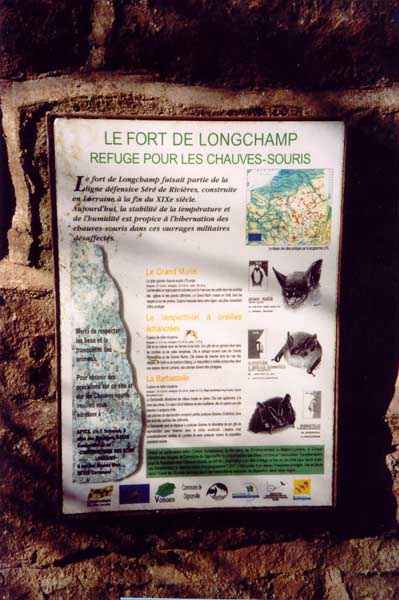
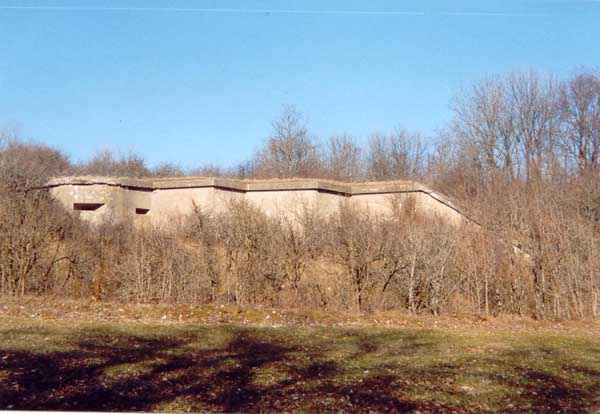

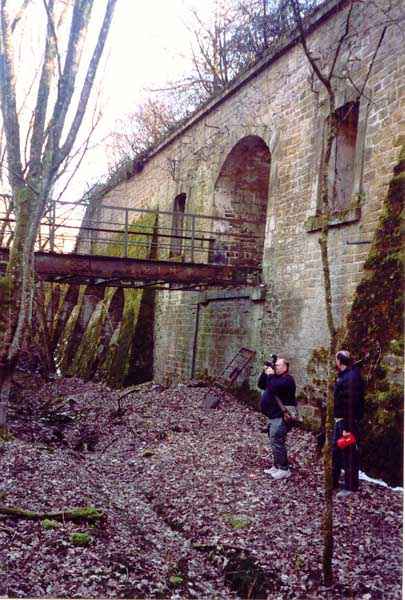

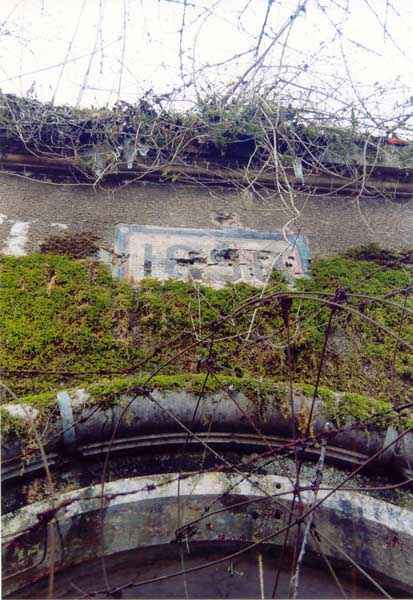


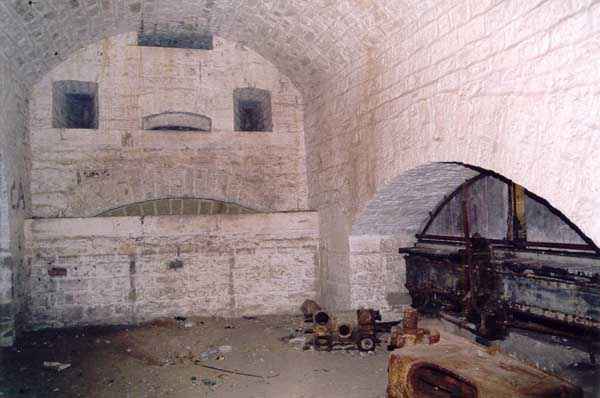


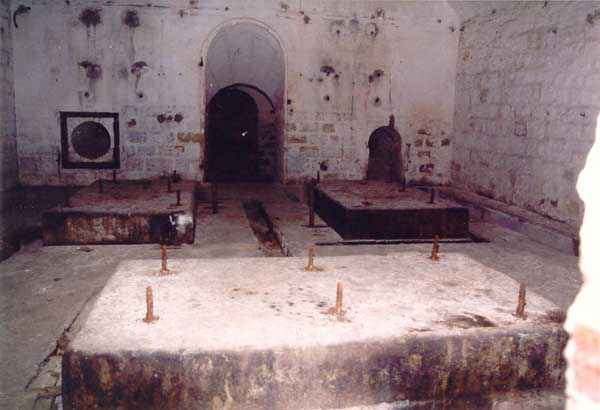

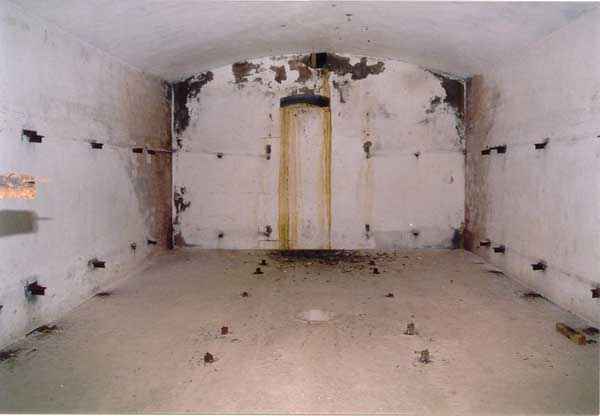
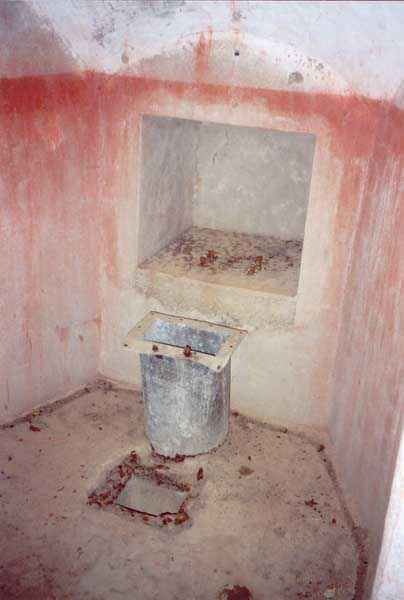
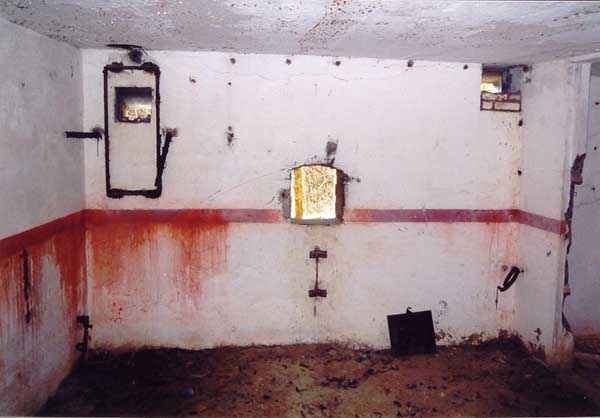


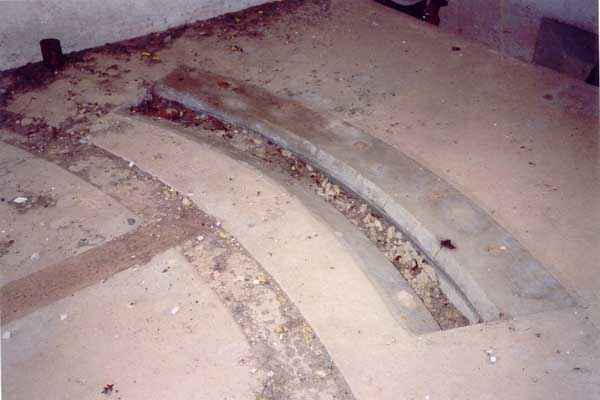
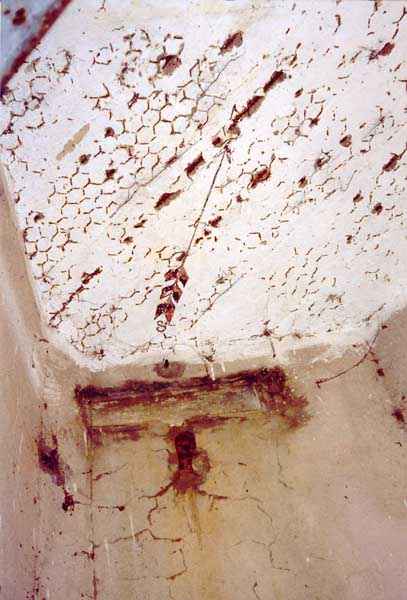
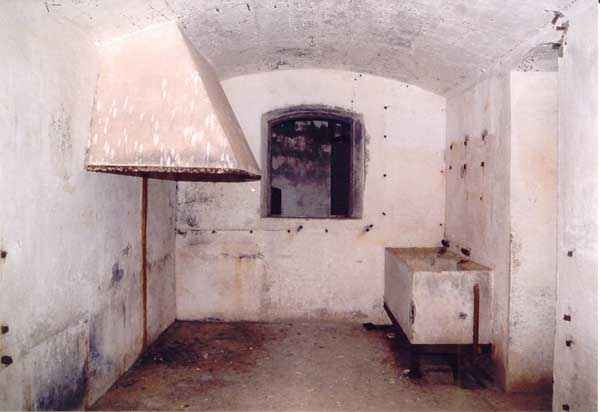

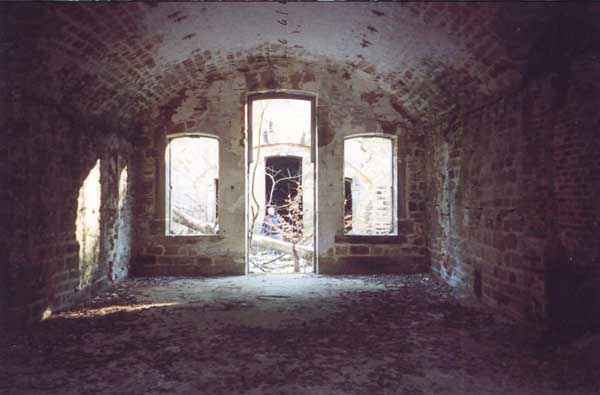


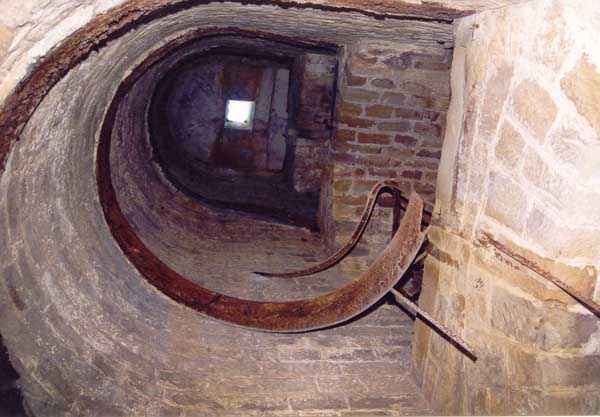
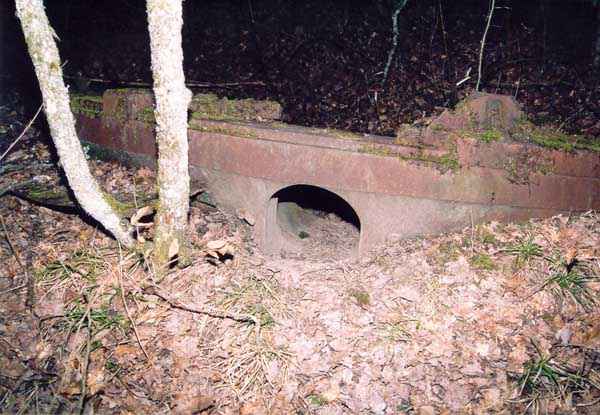
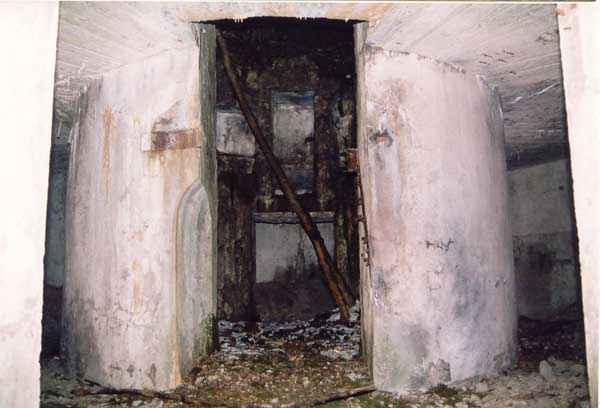
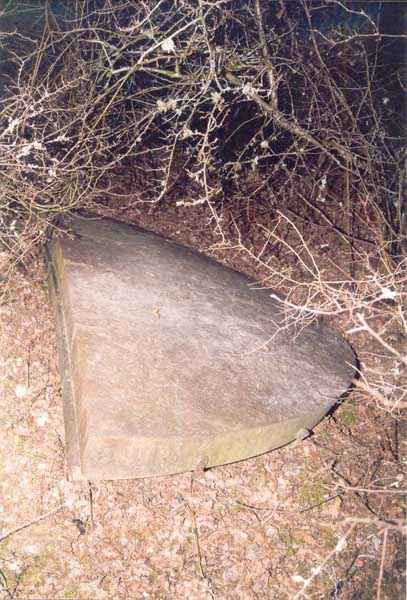
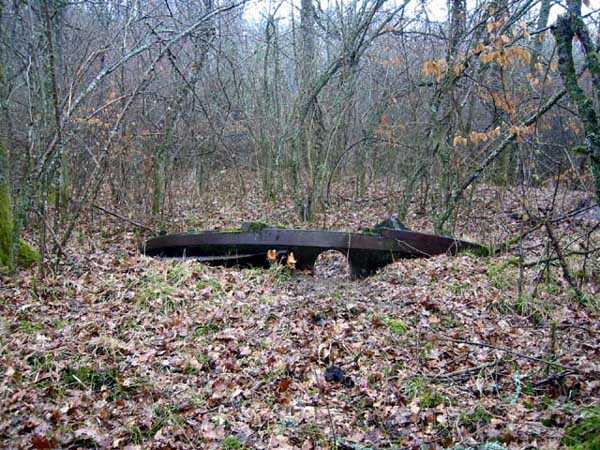
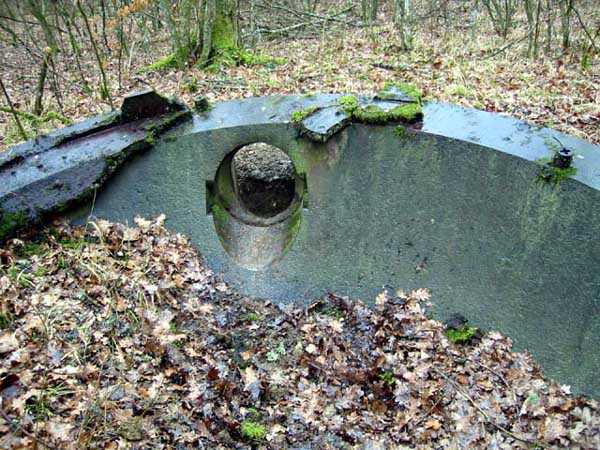


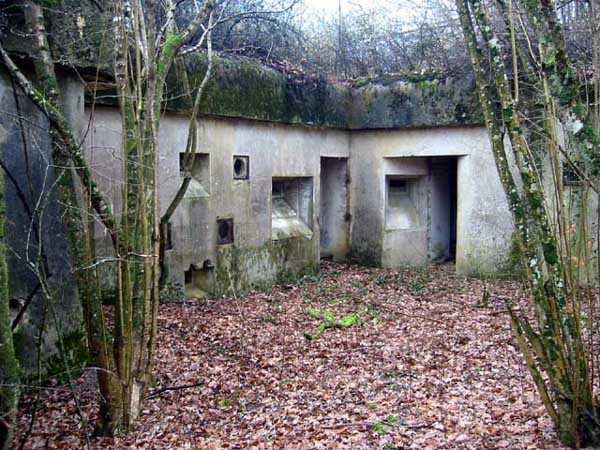
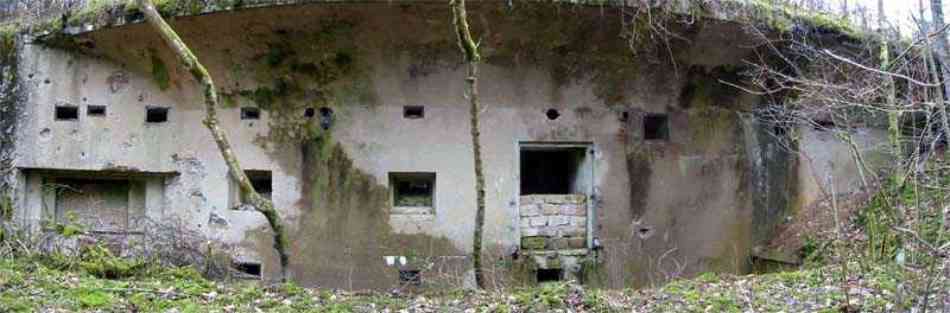
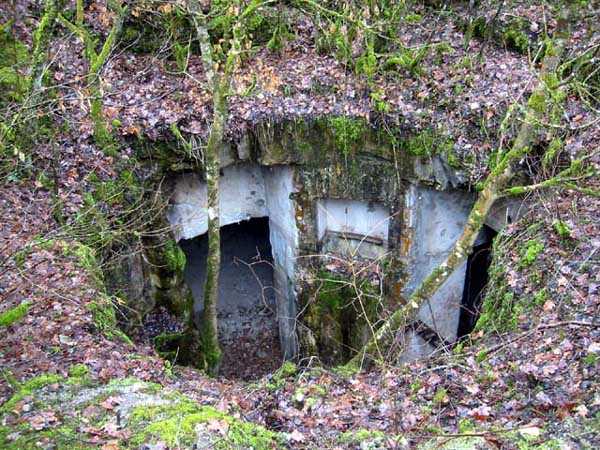

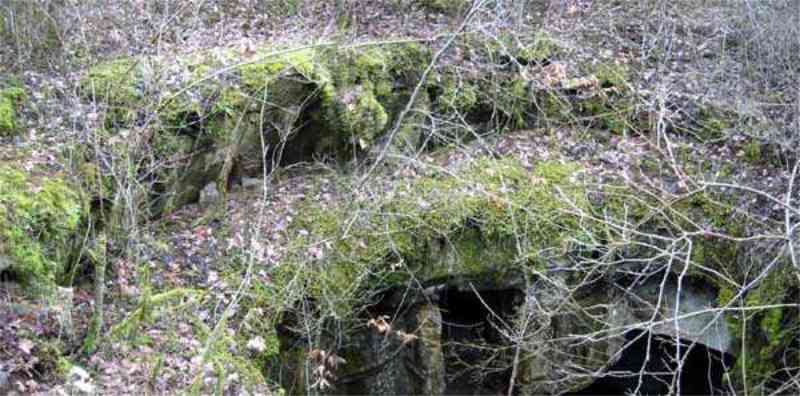
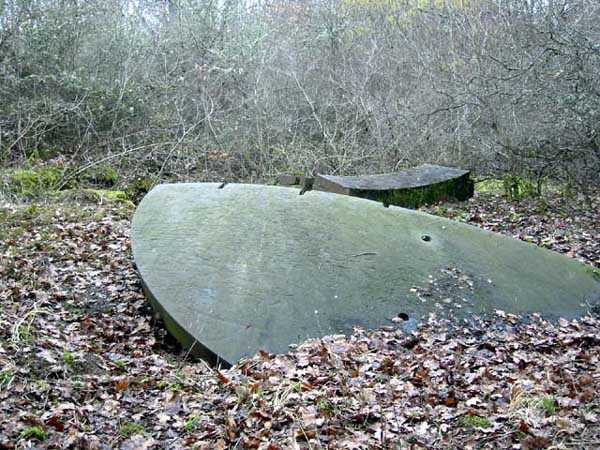
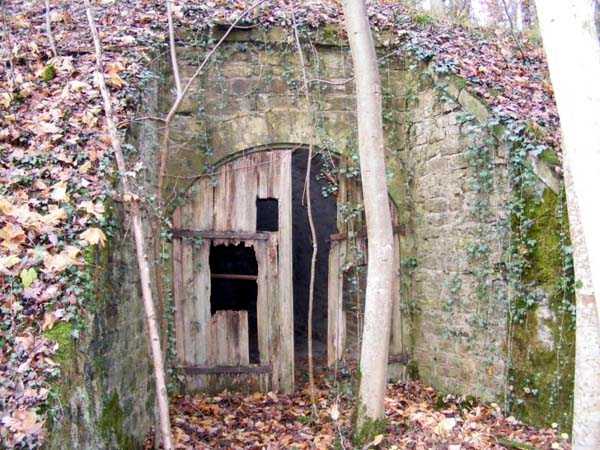
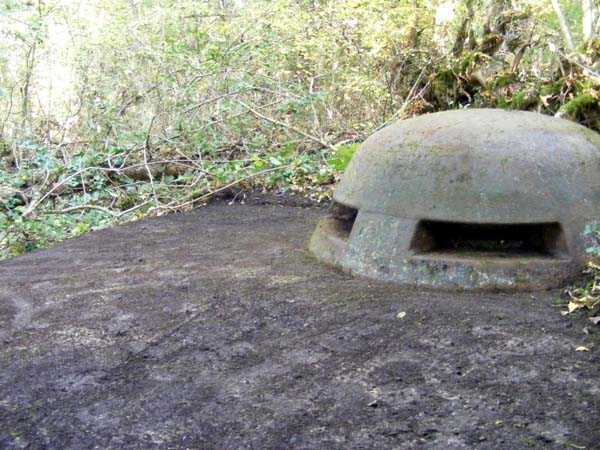

Camp retranché d'Épinal, nord-est de la ville, 1876-1878. 380 m alt. 493 hommes et 38 pièces (immédiatement après sa construction) Dénommé fort Rapp. Pilier nord-est de la place, Longchamp est un grand fort pentagonal dont la défense des fossés était confiée à trois ailerons (saillants II, III et V) et à une caponnière double au saillant IV. La contrescarpe est totalement en arceaux en décharge et un corps de garde attaché à un ravelin précède l’entrée sur la contrescarpe. Son agencement était des plus classiques. Une entrée au centre de la gorge était prolongée par un tunnel jusqu’au centre du fort où se trouve le casernement. Ce dernier aligne douze travées sur un seul niveau séparées en deux lignes de six par le passage en capitale. Devant elles, par delà une cour étroite, on trouve autant de magasins divers. Le magasin à poudre, d’une contenance de 97 tonnes, se trouve à la gauche de cette ligne de magasins. La rue du rempart faisait le tour complet du casernement en suivant parallèlement les différents fronts. Elle desservait douze traverses-abris, dont la moitié enracinées. Deux d’entre-elles étaient tournées vers la gorge. Le fort à peine terminé, on bâtit en arrière de la partie gauche de la caserne, les substructures pour une tourelle Mougin Modèle 1876. Cette dernière aurait été installée en 1880. Ensuite, en 1889-1890, le fort connaîtra ses premiers bétonnages. Ceux-ci consistèrent en la création d’une rampe depuis les glacis à gauche de l’entrée, rampe débouchant sur une poterne en fond de fossé. L’entrée du fort fut enveloppée d’une épaisseur de béton spécial laquelle engloba tous les locaux jusqu’à l’arrière du casernement pour une largeur de l’ordre d’une quinzaine de mètres. Les anciens magasins surmontant les citernes ont été convertis en deux chambrées pour 40 hommes et deux nouveaux locaux aménagés en arrière des corps de garde recevront cette fonction également. Une seconde vague de bétonnage eut lieu en 1896-1897. Cette fois, le béton spécial céda la place au béton armé. On coula une caserne de guerre, au niveau du fossé à droite de l’entrée. Cette caserne comprendra cinq chambrées, une chambre pour sous-officiers et officiers ainsi que des latrines. En capitale, les bétonnages précédents furent prolongés jusqu’au-delà du casernement initial. Plusieurs petits magasins à munitions prendront place sous la nouvelle couverture protectrice. C’est de 1908 à 1914 que le fort connaîtra ses plus grands bouleversements. Il deviendra rien moins que le fort le plus cuirassé de France après Manonviller. La partie droite de la rue du rempart à la gorge sera bétonnée. Entre elle et la caserne de guerre, une liaison sera créée, liaison qui sera surmontée par une casemate de Bourges. Celle-ci passe pour être la plus volumineuse de toutes. Son observatoire est couplé à un second au profit de l'une des batteries cuirassées annexes. Ce second observatoire possède une flèche indiquant le nord peinte au plafond. L’aileron du saillant II sera conservé, mais protégé sur ses arrières par un mur en béton armé. Entre cet aileron et la tourelle Mougin, la rue du rempart sera totalement refondue et partiellement bétonnée. Une casemate de Bourges sera assise avec son mur d’aile braqué sur l’aileron du saillant II, casemate depuis laquelle on pouvait joindre tout en restant à l’abri, un bloc pour une tourelle de mitrailleuses coulé de l’autre côté de la gaine d’accès à l’aileron. Sur la droite de cette tourelle, on a créé un abri de piquet et installé un observatoire cuirassé pour la tourelle Mougin. En capitale, relié aux bétonnages de 1896-97 et détruisant au passage l’unique casemate à tir indirect que comptait le fort, on a construit un bloc pour une tourelle de 75 Modèle 05 avec ses locaux correspondants. Communiquant avec ce bloc, en arrière du front II-III, on a installé un observatoire cuirassé destiné au commandement. L’aileron du saillant III a été remplacé par un coffre double de contrescarpe. Toujours raccordée aux bétonnages de 1986-97, une galerie bétonnée suit le tracé de l’ancien couloir de circulation à l’arrière de la partie droite du casernement. Cette galerie dessert une tourelle de mitrailleuses en arrière du saillant IV puis passe sous le fossé. Arrivée sous la contrescarpe, un diverticule part sur sa droite lequel, après avoir franchi une distance de plus de deux cent mètres, donne dans un ouvrage monobloc abritant deux tourelles de 155 C. Quelques mètres au-delà de ce carrefour de galeries, un escalier remonte quelque peu et la galerie d’accès au coffre simple de contrescarpe remplaçant la caponnière double se présente sur la gauche. La galerie principale continue encore droit devant elle jusqu’à une batterie cuirassée pour une tourelle de 155 R. Enfin, l’ancienne crête d’artillerie est désormais convertie en parapet d’infanterie. Peu ou prou transformés, quatre des traverses-abris sont conservées. Si l’on comptabilise les cuirassements, cela nous donne 4 tourelles de 155 mm (dont 1 tourelle Mougin Modèle 1876, 1 tourelle Galopin 155 R et 2 tourelles 155 C), 1 tourelle de 75, 2 tourelles de mitrailleuses, 9 observatoires cuirassés et deux guérites observatoires lesquelles sont placées en arrière des saillants I et V. Nous avons visité ce fort en février 2003. L'entrée en béton spécial est monumentale. Elle a conservé son pont roulant escamotable et le corps de garde de gauche arbore quelques graffitis de la Première Guerre mondiale. Le chronogramme au fronton de l'entrée est réalisé en mosaïque. Les casemates de Bourges, à l’instar de leurs consoeurs spinaliennes, ont été modifiées dans l’Entre-deux-guerres ; à savoir qu’une de leurs chambres de tir devait pouvoir abriter un canon de 75 Modèle 1897, mais sur affût de campagne. Le magasin à poudre est ogival et doublé d’une mince cloison de briques. Le four à pain est dans un triste état, mais ses parties métalliques traînent, intactes, sur le sol. Signalons encore, dans le casernement, un puits à lumière pourvu de carreaux de faïence blancs de dimensions inhabituelles : 36 × 25 cm. Globalement, le fort est en bon état malgré le passage des récupérateurs de métaux. Les batteries cuirassées annexes ont également été ferraillées, mais il reste au moins une calotte de tourelle de 155 C retournée en arrière de son bloc. Cette batterie cuirassée pour deux tourelles de 155 C sera la seule à être opérationnelle en 1914. D’autres importants morceaux des cuirassements de ces deux annexes gisent encore ça et là. Peu de distance au nord-est de la batterie cuirassée de pour une tourelle de 155 R, se trouvait un autre bloc bétonné, non relié au fort. Il consistait en un abri de section avec une guérite observatoire et l’observatoire cuirassé (inclus dans le total des 9 OC) de la batterie des tourelles de 155 C. Cet observatoire cuirassé, du modèle 3, a échappé aux ferrailleurs. Sans conteste, ce fort méritait mieux que les trois petites heures dont nous disposions. Il comprend deux autres batteries annexes (est et ouest) accolées au fort pour, respectivement, 7 et 6 pièces. Tel qu’il apparaissait en 1914, c'était une véritable préfiguration des futurs ouvrages de la ligne Maginot. Le fort est désormais fermé par le Conservatoire des Sites Lorrains au profit des Chiroptères.
Verschanztes Lager von Épinal, nordöstlich der Stadt, 1876–1878. 380 m ü. M. 493 Mann und 38 Geschütze (unmittelbar nach seiner Erbauung). Genanntes Fort Rapp. Longchamp, der nordöstliche Pfeiler des Platzes, ist ein großes fünfeckiges Fort, dessen Verteidigung der Gräben drei Flügeln (Vorsprünge II, III und V) und einer doppelten Kaponniere am Vorsprung IV anvertraut war. Die Kontereskarpe besteht vollständig aus Reliefbögen und vor dem Eingang auf der Kontereskarpe befindet sich ein an ein Ravelin angebautes Wachhaus. Die Anlage war sehr klassisch. Ein Eingang in der Mitte der Schlucht wurde durch einen Tunnel bis zur Mitte des Forts verlängert, wo sich die Kaserne befindet. Letztere weist zwölf Joche auf einer Ebene auf, die durch den Kapitellgang in zwei Reihen zu je sechs Jochen getrennt sind. Davor, hinter einem schmalen Hof, liegen ebenso viele verschiedene Lager. Das Pulvermagazin mit einer Kapazität von 97 Tonnen liegt links von dieser Lagerreihe. Die Wallstraße verlief einmal rund um die Kaserne und folgte parallel den verschiedenen Fronten. Sie bediente zwölf Schutzübergänge, von denen die Hälfte eingegraben war. Zwei davon lagen zur Schlucht hin. Das Fort war kaum fertiggestellt, als hinter dem linken Teil der Kaserne die Unterbauten für einen Turm Mougin Modell 1876 errichtet wurden. Dieser Turm dürfte 1880 installiert worden sein. Dann, in den Jahren 1889–1890, wurde das Fort erstmals betoniert. Dabei wurde eine Rampe vom Glacis links vom Eingang angelegt, die zu einem Ausfalltor am Grund des Grabens führte. Der Eingang zum Fort wurde mit einer Schicht aus Spezialbeton umhüllt, die alle Räumlichkeiten bis zur Rückseite der Kaserne umschloss und etwa 15 Meter breit war. Die alten Lager über den Zisternen wurden in zwei Baracken für 40 Mann umgebaut, und auch zwei neue Räume hinter den Wachhäusern wurden zu diesem Zweck genutzt. Eine zweite Betonierungswelle fand 1896–1897 statt. Diesmal wurde der Spezialbeton durch Stahlbeton ersetzt. Auf Höhe des Grabens rechts vom Eingang wurde eine Kriegsbaracke gegossen. Diese Baracke sollte fünf Baracken, einen Raum für Unteroffiziere und Offiziere sowie Latrinen umfassen. In der Hauptstadt wurde die vorherige Betonierung über die ursprünglichen Baracken hinaus erweitert. Unter der neuen Schutzhülle sollten mehrere kleine Munitionslager untergebracht werden. Von 1908 bis 1914 erlebte das Fort seine größten Umwälzungen. Es sollte nach Manonviller das am stärksten gepanzerte Fort Frankreichs werden. Die rechte Seite der Wallstraße an der Schlucht wird betoniert. Zwischen ihr und den Kasernen entsteht eine Verbindung, die von einer Bourges-Kasematte überragt wird. Diese gilt als die größte von allen. Ihr Observatorium ist mit einem zweiten verbunden, das einer der angeschlossenen Panzerbatterien dient. An der Decke dieses zweiten Observatoriums ist ein Nordpfeil aufgemalt. Der Flügel des Frontbogens II bleibt erhalten, wird aber auf der Rückseite durch eine Stahlbetonmauer geschützt. Zwischen diesem Flügel und dem Turm von Mougin wird die Wallstraße komplett neu gestaltet und teilweise betoniert. Een Bourges-kazemat zal staan met de vleugelmuur gericht op de vleugel van saillant II, een kazemat van waaruit men beschut kon komen, een blok voor een machinegeweertoren gegoten aan de andere kant van de toegangsschacht naar de vleugel. Rechts van deze toren werd een piketschutting gecreëerd en een gepantserde observatiepost voor de Mougin-toren geïnstalleerd. In de hoofdstad, verbonden met de betonstort van 1896-97 en waarbij de enige indirecte vuurkazemat van het fort werd vernietigd, werd een blok voor een 75 Model 05-toren gebouwd met de bijbehorende ruimte. In verbinding met dit blok, achter de fronten van II-III, werd een gepantserde observatiepost voor de commandopost geïnstalleerd. De vleugel van saillant III werd vervangen door een dubbele contrescarp-box. Nog steeds verbonden met de betonstort van 1986-97, volgt een betonnen galerij de route van de oude circulatiecorridor achter het rechterdeel van de kazerne. Deze galerij bedient een machinegeweertoren achter saillant IV en loopt vervolgens onder de gracht door. Aangekomen onder de contrescarp, verlaat een divertikel zich aan de rechterkant, dat na een afstand van meer dan tweehonderd meter uitmondt in een gebouw van één blok met twee 155 C-torens. Een paar meter voorbij deze kruising van galerijen stijgt een trap lichtjes en verschijnt links de toegangsgalerij naar de enkele contrescarp-box die de dubbele caponnière vervangt. De hoofdgalerij loopt rechtdoor naar een pantserbatterij voor een 155 R-toren. Ten slotte is het oude artilleriewapen nu omgebouwd tot een infanterieparapet. Min of meer getransformeerd zijn vier van de schuilplaatstraversen bewaard gebleven. Als we de bepantsering meerekenen, krijgen we 4 155 mm-torens (waaronder 1 Mougin Model 1876-toren, 1 Galopin 155 R-toren en 2 155 C-torens), 1 75-toren, 2 machinegeweertorens, 9 gepantserde observatieposten en twee observatieposten die achter de saillanten I en V zijn geplaatst. We bezochten dit fort in februari 2003. De ingang van speciaal beton is monumentaal. De intrekbare rolbrug is behouden en het linker wachthuis toont wat graffiti uit de Eerste Wereldoorlog. Het chronogram op het fronton van de ingang is gemaakt van mozaïek. De kazematten van Bourges werden, net als hun Spinaliaanse tegenhangers, in het interbellum aangepast; namelijk dat een van hun vuurkamers een 75 Model 1897-kanon moest kunnen huisvesten, maar dan op een veldonderstel. Het kruitmagazijn is spitsboogvormig en bekleed met een dunne bakstenen wand. De broodoven verkeert in een erbarmelijke staat, maar de metalen onderdelen liggen intact op de vloer. Ook vermeldenswaard is in de kazerne een lichtschacht met witte aardewerken tegels van ongebruikelijke afmetingen: 36 × 25 cm. Over het algemeen verkeert het fort in goede staat, ondanks de passage van metaalrovers. De bijgebouwde pantserbatterijen zijn eveneens gesloopt, maar er is nog minstens één 155 C-koepelkap bewaard gebleven, teruggedraaid achter het blok. Deze pantserbatterij met twee 155 C-koepels zal de enige zijn die in 1914 operationeel zal zijn. Andere belangrijke stukken van de bepantsering van deze twee bijgebouwen liggen hier en daar nog. Iets ten noordoosten van de pantserbatterij met een 155 R-koepel bevond zich nog een betonnen blok, dat niet met het fort verbonden was. Het bestond uit een sectieschuilplaats met een observatiepost en het gepantserde observatorium (inbegrepen in het totaal van 9 OC) van de batterij met 155 C-koepels. Dit gepantserde observatorium, model 3, ontsnapte aan de schroothandelaren. Dit fort verdiende ongetwijfeld beter dan de drie korte uren die we hadden. Het omvat twee andere aanbouwbatterijen (oost en west) die aan het fort zijn bevestigd, respectievelijk voor 7 en 6 stuks. Zoals het er in 1914 uitzag, was het een ware voorbode van de toekomstige werken van de Maginotlinie. Het fort is nu gesloten door het Conservatoire des Sites Lorrains ten behoeve van de Chiroptera.
Verschansd kamp van Épinal, ten noordoosten van de stad, 1876-1878. 380 m hoogte. 493 manschappen en 38 kanonnen (direct na de bouw). Fort Rapp genoemd. De noordoostelijke pijler van het plein, Longchamp, is een groot vijfhoekig fort waarvan de verdediging van de grachten was toevertrouwd aan drie vleugels (salienten II, III en V) en een dubbele caponnière bij saillant IV. De contrescarp is volledig in reliëfbogen uitgevoerd en een wachthuisje, bevestigd aan een ravelijn, gaat de ingang op de contrescarp vooraf. De indeling was zeer klassiek. Een ingang in het midden van de kloof werd door een tunnel verlengd naar het midden van het fort, waar de kazerne zich bevindt. Deze laatste omvat twaalf traveeën op één niveau, gescheiden in twee rijen van zes door de kapiteelpassage. Voor hen, voorbij een smalle binnenplaats, bevinden zich evenzoveel verschillende magazijnen. Het kruitmagazijn, met een capaciteit van 97 ton, bevindt zich links van deze rij magazijnen. De walstraat liep volledig om de kazerne heen en volgde de verschillende fronten parallel. Hij bediende twaalf schuilplaatsen, waarvan de helft vastgeworteld was. Twee daarvan waren gericht op de kloof. Het fort was nauwelijks voltooid toen de onderbouw voor een Mougin Model 1876-toren achter het linkerdeel van de kazerne werd gebouwd. Deze laatste zou in 1880 zijn geïnstalleerd. Vervolgens, in 1889-1890, onderging het fort zijn eerste betonstort. Dit bestond uit de aanleg van een hellingbaan vanaf het glacis links van de ingang, een hellingbaan die leidde naar een achterpoort op de bodem van de gracht. De ingang van het fort was omhuld met een laag speciaal beton, die alle ruimtes tot aan de achterkant van de kazerne omvatte, met een breedte van ongeveer vijftien meter. De oude opslagruimtes boven de waterreservoirs werden omgebouwd tot twee barakken voor 40 man, en twee nieuwe ruimtes achter de wachthuisjes werden eveneens voor dit doel gebruikt. Een tweede golf van betonstorten vond plaats in 1896-1897. Ditmaal maakte het speciale beton plaats voor gewapend beton. Ter hoogte van de gracht rechts van de ingang werd een oorlogsbarak gestort. Deze barak zou vijf barakken omvatten, een ruimte voor onderofficieren en officieren, evenals latrines. In de hoofdstad werd de eerdere betonstort verder doorgetrokken dan de oorspronkelijke barakken. Verschillende kleine munitieopslagplaatsen zouden onder de nieuwe beschermkap worden geplaatst. Van 1908 tot 1914 zou het fort zijn grootste omwentelingen meemaken. Het zal niets minder dan het meest gepantserde fort van Frankrijk worden na Manonviller. De rechterkant van de walstraat bij de kloof wordt gebetonneerd. Tussen deze straat en de oorlogskazerne wordt een verbinding gecreëerd, een verbinding die wordt bekroond door een Bourges-kazemat. Deze wordt beschouwd als de grootste van allemaal. Het observatorium is gekoppeld aan een tweede observatorium ten behoeve van een van de geannexeerde pantserbatterijen. Dit tweede observatorium heeft een pijl die naar het noorden wijst op het plafond geschilderd. De vleugel van saillant II blijft behouden, maar wordt aan de achterzijde beschermd door een muur van gewapend beton. Tussen deze vleugel en de Mougin-toren wordt de walstraat volledig heringericht en gedeeltelijk gebetonneerd. A Bourges casemate will sit with its wing wall pointed at the wing of salient II, a casemate from which one could reach while remaining sheltered, a block for a machine gun turret cast on the other side of the access shaft to the wing. To the right of this turret, a picket shelter was created and an armored observation post installed for the Mougin turret. In the capital, connected to the concreting of 1896-97 and destroying in the process the only indirect fire casemate that the fort had, a block for a 75 Model 05 turret was built with its corresponding premises. Communicating with this block, behind the II-III front, an armored observation post was installed for the command. The wing of salient III was replaced by a double counterscarp box. Still connected to the concreting of 1986-97, a concrete gallery follows the route of the old circulation corridor behind the right part of the barracks. This gallery serves a machine gun turret behind salient IV then passes under the ditch. Arriving under the counterscarp, a diverticulum leaves on its right which, after having covered a distance of more than two hundred meters, opens into a single-block structure housing two 155 C turrets. A few meters beyond this intersection of galleries, a staircase rises slightly and the access gallery to the single counterscarp box replacing the double caponier appears on the left. The main gallery continues straight ahead to an armored battery for a 155 R turret. Finally, the old artillery crest is now converted into an infantry parapet. More or less transformed, four of the shelter traverses are preserved. If we include the armor, this gives us 4 155 mm turrets (including 1 Mougin Model 1876 turret, 1 Galopin 155 R turret and 2 155 C turrets), 1 75 turret, 2 machine gun turrets, 9 armored observation posts and two observation sentry boxes which are placed behind salients I and V. We visited this fort in February 2003. The entrance made of special concrete is monumental. It has retained its retractable rolling bridge and the left guardhouse displays some graffiti from the First World War. The chronogram on the pediment of the entrance is made of mosaic. The casemates of Bourges, like their Spinalian counterparts, were modified in the interwar period; namely that one of their firing chambers had to be able to house a 75 Model 1897 cannon, but on a field carriage. The powder magazine is ogival and lined with a thin brick partition. The bread oven is in a sad state, but its metal parts lie intact on the floor. We should also point out, in the barracks, a light well fitted with white earthenware tiles of unusual dimensions: 36 × 25 cm. Overall, the fort is in good condition despite the passage of metal scavengers. The annexed armored batteries have also been scrapped, but at least one 155 C turret cap remains, turned back behind its block. This armored battery for two 155 C turrets will be the only one to be operational in 1914. Other important pieces of the armor of these two annexes still lie here and there. A short distance northeast of the armored battery for a 155 R turret, there was another concrete block, not connected to the fort. It consisted of a section shelter with an observation sentry box and the armored observatory (included in the total of 9 OC) of the battery of 155 C turrets. This armored observatory, model 3, escaped the scrap dealers. Without a doubt, this fort deserved better than the three short hours we had. It includes two other annex batteries (east and west) attached to the fort for, respectively, 7 and 6 pieces. As it appeared in 1914, it was a true prefiguration of the future works of the Maginot Line. The fort is now closed by the Conservatoire des Sites Lorrains for the benefit of the Chiroptera.
Entrenched camp of Épinal, northeast of the city, 1876-1878. 380 m alt. 493 men and 38 guns (immediately after its construction) Called fort Rapp. Northeast pillar of the square, Longchamp is a large pentagonal fort whose defense of the ditches was entrusted to three wings (salients II, III and V) and a double caponier at salient IV. The counterscarp is entirely in relief arches and a guardhouse attached to a ravelin precedes the entrance on the counterscarp. Its layout was very classic. An entrance in the center of the gorge was extended by a tunnel to the center of the fort where the barracks are located. The latter aligns twelve bays on a single level separated into two lines of six by the capital passage. In front of them, beyond a narrow courtyard, there are as many various stores. The powder magazine, with a capacity of 97 tons, is located to the left of this line of stores. The rampart street ran completely around the barracks, following the different fronts in parallel. It served twelve shelter traverses, half of which were rooted. Two of them faced the gorge. The fort was barely finished when the substructures for a Mougin Model 1876 turret were built behind the left part of the barracks. The latter would have been installed in 1880. Then, in 1889-1890, the fort underwent its first concreting. This consisted of the creation of a ramp from the glacis to the left of the entrance, a ramp leading to a postern gate at the bottom of the ditch. The entrance to the fort was enveloped in a layer of special concrete, which encompassed all the premises up to the rear of the barracks, with a width of around fifteen meters. The old stores above the cisterns were converted into two barracks for 40 men, and two new rooms behind the guardhouses were also used for this purpose. A second wave of concreting took place in 1896-1897. This time, the special concrete gave way to reinforced concrete. A war barracks was poured at the level of the ditch to the right of the entrance. This barracks would include five barracks, a room for non-commissioned officers and officers, as well as latrines. In the capital, the previous concreting was extended beyond the initial barracks. Several small ammunition stores would be placed under the new protective cover. It was from 1908 to 1914 that the fort would experience its greatest upheavals. It will become nothing less than the most armored fort in France after Manonviller. The right-hand side of the rampart street at the gorge will be concreted. Between it and the war barracks, a link will be created, a link that will be surmounted by a Bourges casemate. This one is considered to be the largest of all. Its observatory is coupled with a second one for the benefit of one of the annexed armored batteries. This second observatory has an arrow indicating north painted on the ceiling. The wing of salient II will be preserved, but protected on its rear by a reinforced concrete wall. Between this wing and the Mougin turret, the rampart street will be completely redesigned and partially concreted. A Bourges casemate will sit with its wing wall pointed at the wing of salient II, a casemate from which one could reach while remaining sheltered, a block for a machine gun turret cast on the other side of the access shaft to the wing. To the right of this turret, a picket shelter was created and an armored observation post installed for the Mougin turret. In the capital, connected to the concreting of 1896-97 and destroying in the process the only indirect fire casemate that the fort had, a block for a 75 Model 05 turret was built with its corresponding premises. Communicating with this block, behind the II-III front, an armored observation post was installed for the command. The wing of salient III was replaced by a double counterscarp box. Still connected to the concreting of 1986-97, a concrete gallery follows the route of the old circulation corridor behind the right part of the barracks. This gallery serves a machine gun turret behind salient IV then passes under the ditch. Arriving under the counterscarp, a diverticulum leaves on its right which, after having covered a distance of more than two hundred meters, opens into a single-block structure housing two 155 C turrets. A few meters beyond this intersection of galleries, a staircase rises slightly and the access gallery to the single counterscarp box replacing the double caponier appears on the left. The main gallery continues straight ahead to an armored battery for a 155 R turret. Finally, the old artillery crest is now converted into an infantry parapet. More or less transformed, four of the shelter traverses are preserved. If we include the armor, this gives us 4 155 mm turrets (including 1 Mougin Model 1876 turret, 1 Galopin 155 R turret and 2 155 C turrets), 1 75 turret, 2 machine gun turrets, 9 armored observation posts and two observation sentry boxes which are placed behind salients I and V. We visited this fort in February 2003. The entrance made of special concrete is monumental. It has retained its retractable rolling bridge and the left guardhouse displays some graffiti from the First World War. The chronogram on the pediment of the entrance is made of mosaic. The casemates of Bourges, like their Spinalian counterparts, were modified in the interwar period; namely that one of their firing chambers had to be able to house a 75 Model 1897 cannon, but on a field carriage. The powder magazine is ogival and lined with a thin brick partition. The bread oven is in a sad state, but its metal parts lie intact on the floor. We should also point out, in the barracks, a light well fitted with white earthenware tiles of unusual dimensions: 36 × 25 cm. Overall, the fort is in good condition despite the passage of metal scavengers. The annexed armored batteries have also been scrapped, but at least one 155 C turret cap remains, turned back behind its block. This armored battery for two 155 C turrets will be the only one to be operational in 1914. Other important pieces of the armor of these two annexes still lie here and there. A short distance northeast of the armored battery for a 155 R turret, there was another concrete block, not connected to the fort. It consisted of a section shelter with an observation sentry box and the armored observatory (included in the total of 9 OC) of the battery of 155 C turrets. This armored observatory, model 3, escaped the scrap dealers. Without a doubt, this fort deserved better than the three short hours we had. It includes two other annex batteries (east and west) attached to the fort for, respectively, 7 and 6 pieces. As it appeared in 1914, it was a true prefiguration of the future works of the Maginot Line. The fort is now closed by the Conservatoire des Sites Lorrains for the benefit of the Chiroptera.
Opevněný tábor Épinal, severovýchodně od města, 1876-1878. 380 m n. m. 493 mužů a 38 děl (ihned po výstavbě). Nazýval se pevnost Rapp. Longchamp, severovýchodní pilíř náměstí, je velká pětiúhelníková pevnost, jejíž obrana příkopů byla svěřena třem křídlům (výběžky II, III a V) a dvojitému kaponiéru na výběžku IV. Protiskárba je celá z reliéfních oblouků a před vchodem na protiskárbě stojí strážnice připojená k ravelinu. Její uspořádání bylo velmi klasické. Vchod uprostřed rokle byl prodloužen tunelem do středu pevnosti, kde se nacházejí kasárna. Ta tvoří dvanáct zátoček na jedné úrovni, které jsou hlavní chodbou rozděleny do dvou řad po šesti. Před nimi, za úzkým nádvořím, se nachází tolik různých obchodů. Prašný sklad s kapacitou 97 tun se nachází nalevo od této řady skladů. Ulice s valem vedla kompletně kolem kasáren a paralelně sledovala různé fronty. Obsluhovala dvanáct příčníků, z nichž polovina byla zakořeněná. Dva z nich směřovaly do rokle. Pevnost byla sotva dokončena, když byly za levou částí kasáren postaveny spodní konstrukce pro věž Mougin Model 1876. Ta měla být instalována v roce 1880. Poté, v letech 1889-1890, prošla pevnost první betonáží. Ta spočívala ve vytvoření rampy z mírného svahu nalevo od vchodu, rampy vedoucí k zadní bráně na dně příkopu. Vchod do pevnosti byl obložen vrstvou speciálního betonu, která obklopovala všechny prostory až do zadní části kasáren o šířce asi patnáct metrů. Staré sklady nad cisternami byly přeměněny na dvě kasárny pro 40 mužů a k tomuto účelu byly použity i dvě nové místnosti za strážnicemi. Druhá vlna betonáže proběhla v letech 1896-1897. Tentokrát speciální beton ustoupil železobetonu. V úrovni příkopu napravo od vchodu byla vylita válečná kasárna. Tato kasárna měla zahrnovat pět kasáren, místnost pro poddůstojníky a důstojníky a také latríny. V hlavním městě byla předchozí betonáž rozšířena za původní kasárna. Pod novým ochranným krytem mělo být umístěno několik malých muničních skladů. V letech 1908 až 1914 pevnost zažila své největší otřesy. Stane se z ní po Manonvilleru nejpancéřovanější pevností ve Francii. Pravá strana hradební ulice u rokle bude vybetonována. Mezi ní a válečnými kasárnami bude vytvořeno spojení, které bude zakončeno bourgesskou kasematou. Tato je považována za největší ze všech. Jeho pozorovatelna je propojena s druhou pro jednu z připojených obrněných baterií. Tato druhá pozorovatelna má na stropě namalovanou šipku ukazující sever. Křídlo druhého výběžku bude zachováno, ale v zadní části bude chráněno železobetonovou zdí. Mezi tímto křídlem a věží Mougin bude ulice valu kompletně přepracována a částečně vybetonována. Bourgesova kasemata bude stát svou křídelní stěnou namířenou na křídlo salientu II, kasematu, ze které by se dalo dosáhnout a zůstat v krytu, blok pro kulometnou věž odlitou na druhé straně přístupové šachty do křídla. Napravo od této věže byl vytvořen laťkový kryt a pro věž Mougin instalováno obrněné pozorovací stanoviště. V hlavním městě, v souvislosti s betonáží v letech 1896-97 a zničením jediné nepřímé palebné kasematy, kterou pevnost měla, byl postaven blok pro věž 75 Model 05 s odpovídajícími prostory. S tímto blokem bylo za frontou II-III propojeno obrněné pozorovací stanoviště pro velení. Křídlo salientu III bylo nahrazeno dvojitou protiskluzovou bednou. Betonová galerie, stále napojená na betonáž v letech 1986-97, sleduje trasu staré cirkulační chodby za pravou částí kasáren. Tato galerie slouží kulometné věži za výběžkem IV a poté prochází pod příkopem. Po příjezdu pod protiscarpu od ní vpravo odchází divertikl, který po ujetí vzdálenosti více než dvou set metrů ústí do jednoblokové stavby se dvěma věžemi z kulometu 155 C. Několik metrů za touto křižovatkou galerií mírně stoupá schodiště a vlevo se objevuje přístupová galerie k jediné protiscarpové lóži, která nahrazuje dvojitý kaponiér. Hlavní galerie pokračuje rovně k obrněné baterii pro věž z kulometu 155 R. Starý dělostřelecký erb je nyní přeměněn na pěchotní parapet. Čtyři příčné lišty krytu jsou víceméně transformovány a zachovány. Pokud započítáme pancéřování, dostaneme 4 věže ráže 155 mm (včetně 1 věže Mougin Model 1876, 1 věže Galopin 155 R a 2 věží ráže 155 C), 1 věž ráže 75 mm, 2 kulometné věže, 9 obrněných pozorovacích stanovišť a dvě pozorovací strážní budky, které jsou umístěny za výběžky I a V. Tuto pevnost jsme navštívili v únoru 2003. Vchod ze speciálního betonu je monumentální. Zachoval si svůj zatahovací rolovací most a levá strážnice nese graffiti z první světové války. Chronogram na štítu vchodu je vyroben z mozaiky. Kasematy v Bourges, stejně jako jejich spinaliánské protějšky, byly v meziválečném období upraveny; konkrétně jedna z jejich střeleckých komor musela být schopna pojmout kanón ráže 75 Model 1897, ale na polním lafetě. Zásobník prachu je ogivální a obložený tenkou cihlovou přepážkou. Pec na chleba je ve smutném stavu, ale její kovové části leží neporušené na podlaze. Dále bychom měli zmínit světlík v kasárnách obložený bílými kameninovými dlaždicemi neobvyklých rozměrů: 36 × 25 cm. Celkově je pevnost v dobrém stavu, a to i přes průchod kovových mrchožroutů. Připojené obrněné baterie byly také sešrotovány, ale alespoň jedna věžová střecha 155 C zůstala, otočená za svým blokem. Tato obrněná baterie pro dvě věže 155 C bude jediná, která bude v roce 1914 v provozu. Další důležité kusy pancéřování těchto dvou přístavků stále leží tu a tam. Kousek severovýchodně od obrněné baterie pro věž 155 R se nacházel další betonový blok, který nebyl s pevností spojen. Skládal se ze sekčního krytu s pozorovací budkou a obrněné pozorovatelny (zahrnuté v celkovém počtu 9 strážních bodů) baterie věží 155 C. Tato obrněná pozorovatelna, model 3, unikla obchodníkům se šrotem. Tato pevnost si bezpochyby zasloužila něco víc než ty tři krátké hodiny, které jsme měli. Zahrnuje další dvě přístavní baterie (východní a západní) připojené k pevnosti pro 7, respektive 6 kusů. V roce 1914 se jednalo o skutečnou předzvěst budoucích děl Maginotovy linie. Pevnost je nyní uzavřena Konzervatoří Lorrains ve prospěch chiroptera.
Cité dans : Zitiert in : Geciteerd in: Cited in: Citováno v: Rapp (fort), Tourelles cuirassées Galopin mle 1907 pour 1 canon de 155 R, Les tourelles type GF4 Mle 1899, Boucherante (batterie de la), Les casemates de Bourges, Autres cuirassements (observatoires, guérites, phares), Tourelles cuirassées Mle 1876 du commandant Mougin, Sainte-Limon (batterie de), Saint-Adrien (batteries de), Golbey (batteries de), Tourelle DF 2 x 75 mm
