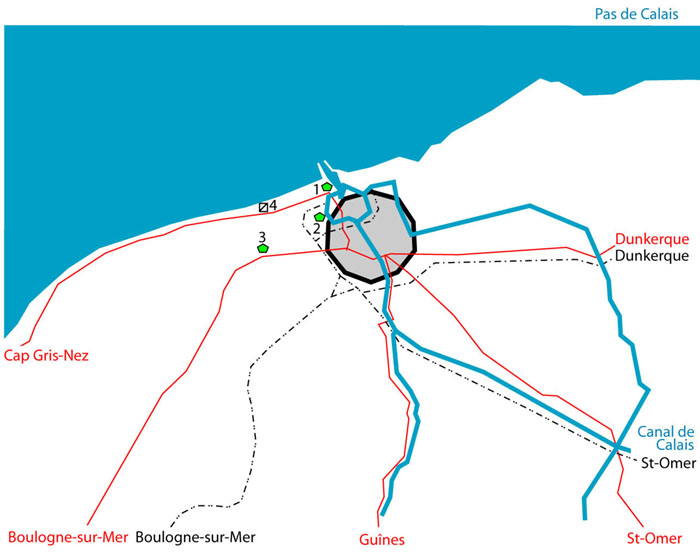
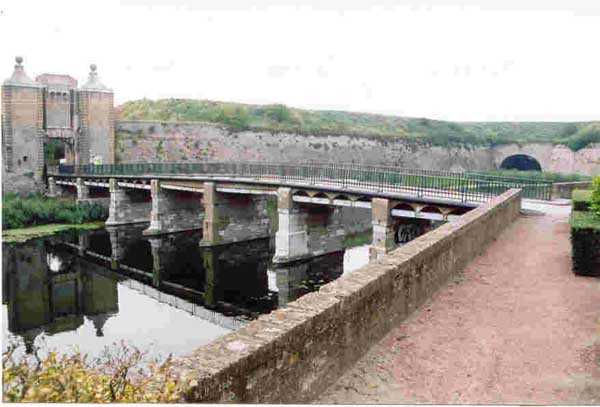
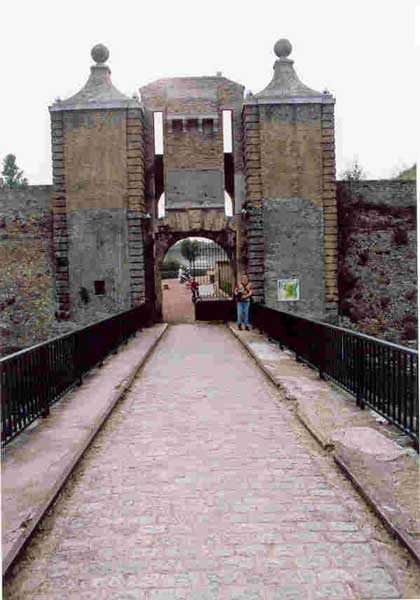

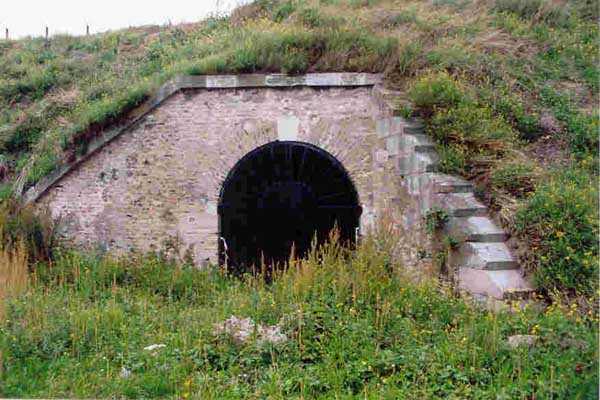
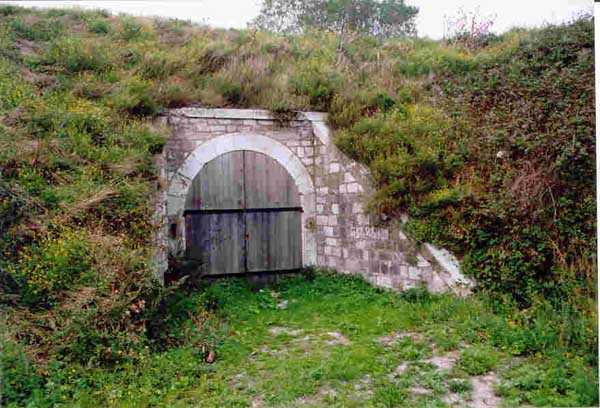
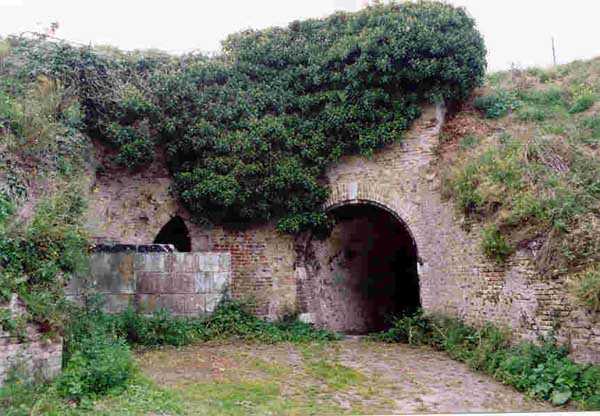

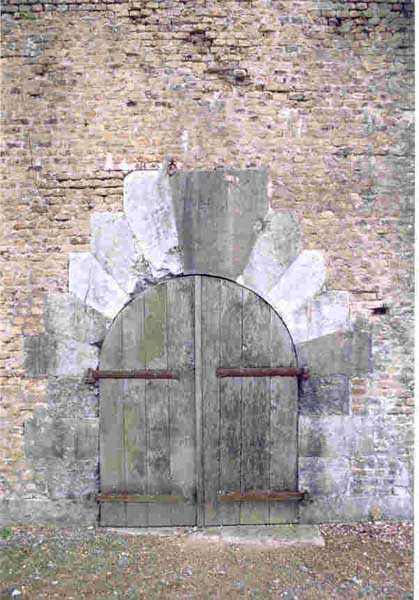


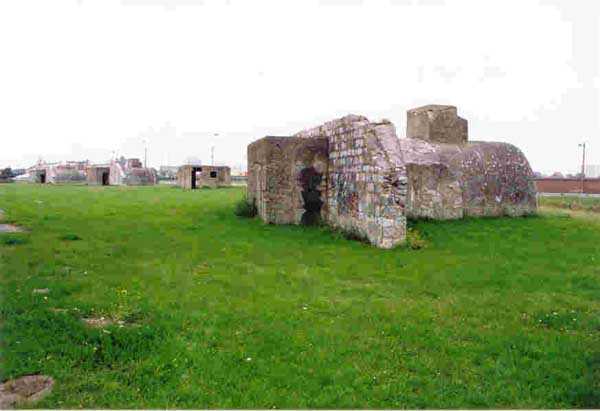


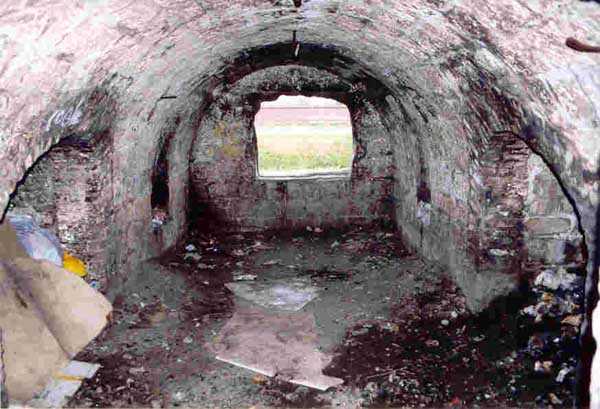
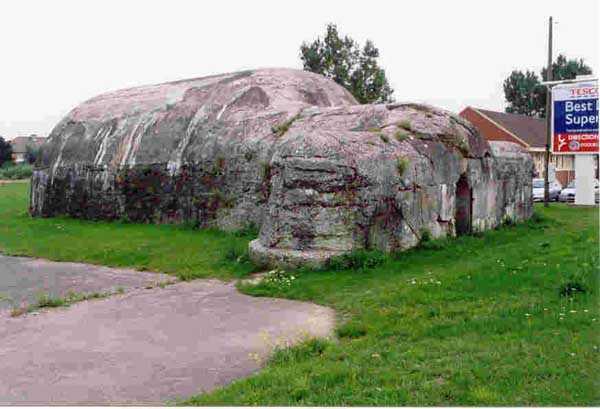
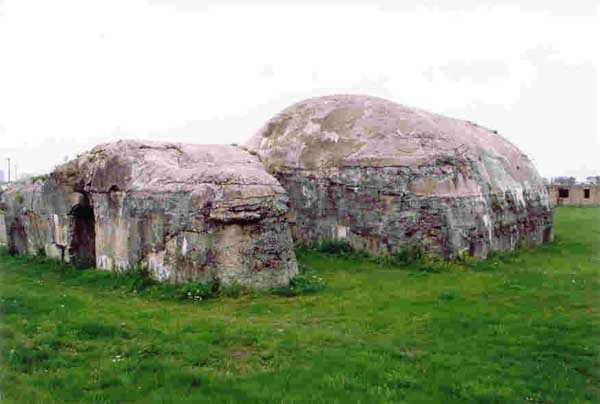


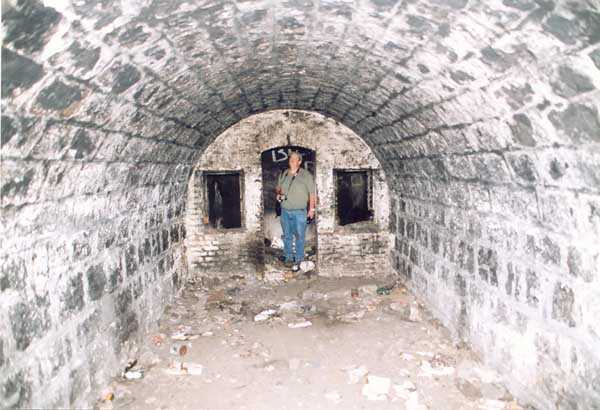
Dept 62 (Pas-de-Calais). Ancienne place que l'on projeta de moderniser avec la construction des forts détachés de Coquelles (batterie), des Noires Mottes (deux ouvrages distincts), du Mont de Couple, de Saint-Inglevert, de Guines, de Coulogne et de Marck, ainsi que par la batterie de Fort Lapin. De ces projets, seul celui de Fort Lapin fut mené à son terme. Les autres ouvrages devaient être tournés vers l'ouest et le sud (hormis Coulogne et Marck). Ce faisant, ils auraient assuré la protection de l'ouest du dispositif des inondations qui auraient été tendues pour protéger l'ensemble Calais - Dunkerque, avec le fort de Watten en pointe sud. Un autre projet, resté sans suite également, mentionne la construction d'un fort à Nielles, entre Coquelles et Guines. De 1883 à 1887, l'enceinte a été agrandie. Sur le front de mer, en plus des batteries de la Digue et de l'Estran, on a installé au bastion I 2 canons de 24 c et 4 autres de 95 mm, au bastion II 4 canons de 24 c (+ 4 de 95), au bastion XI 4 canons de 24 c et 4 de 95 mm et, au bastion XII, 3 pièces de 14 c mle 93 et 4 autres canons de 95 mm (selon d'autres sources 2 x 27 c et 2 x 95 mm ou encore 4 x 95 mm, 2 x 14c & 2 x 155 mm). Ces 4 bastions disposaient de leur propre magasin à poudre. Dans une proposition d'armement datant de 1888, on trouve citée, en plus, une batterie à la place d'armes n° 1 avec 2 x 24 c et 2 x 95 mm. Des projecteurs agissant vers le large étaient placés à Sangatte, au fort Lapin, sur le môle de la gare maritime, au fort Vert, un autre entre fort Lapin et le bastion XI (sémaphore des Baraques), aux bastions I & XII. Plusieurs vieilles composantes furent déclassées le 1 octobre 1888, à savoir les redoutes des Crabes, du Vivier, des Salins, l'antique redoute de Bernard-Street et le fort Nieulay. Les autres bastions, numérotés de III à X, garantissaient la cité du côté des terres. Au bastion III nous trouvions 6 pièces d'artillerie, 6 abris pour, chacun, 30 hommes et un magasin à poudre, bétonné d'une capacité de 80.000 kg. Ces chiffres sont pour les bastions IV, V, VI et VIII de 4 et 4 ; pour le VII de 4 et 5, pour les 9 et X de 6 et 6. Les bastions IV à X ont, chacun, un magasin à munitions bétonné ; seul le X possédait en sus un magasin à poudre bétonné d'une capacité de 70 tonnes. Calais a bien changé aujourd'hui. Des batteries du front de mer, il ne reste rien sinon les vestiges du fort Risban et ceux du fort Lapin. Les bastions III et IV laissent encore deviner leurs contours. Seul le bastion V montre encore ses quatre traverses-abris (en 2 modèles) et l'imposant massif bétonné de son magasin à munitions dont le local de stockage n'est que de 7 x 3 m. Toutes les terres de couvertures des organes de ce bastion ont été retirées ce qui en fait un lieu passablement didactique, mais combien de temps résistera-t-il à la pression urbaine ? La citadelle de la cité, bien que transformée en terrain sportif n'en a pas moins conservé ses remparts et certains organes tels la porte de Neptune, la porte de Boulogne, des magasins aux vivres (1821), des fours à pains 1 magasin à poudre mle 1874, une caserne à l'épreuve pour 218 hommes,… Sur les murs, nous pouvons voir des chronogrammes témoignant de restaurations en 1855. Proche des magasins aux vivres, à droite de la porte de Neptune, un magasin à poudre fut aménagé entre 1875 et 1880. La ville abrite encore et aussi sa gigantesque citerne militaire construite en 1691 en élévation, d'une capacité de 1800 m³. Enfin, il serait bien regrettable d'aller à Calais sans aller faire un tour du côté du fort Nieulay.
Dept 62 (Pas-de-Calais). Ehemalige Festung, die man mit dem Bau der abgesetzten Forts von Coquelles (Batterie), der Noires Mottes (zwei separate Werke), des Mont de Couple, von Saint-Inglevert, von Guines, von Coulogne und von Marck modernisieren wollte, sowie durch die Batterie von Fort Lapin. Von diesen Projekten wurde nur das von Fort Lapin zu Ende geführt. Die anderen Werke sollten nach Westen und Süden ausgerichtet sein (außer Coulogne und Marck). Damit hätten sie den Schutz des Westens des Überschwemmungssystems gewährleistet, das zum Schutz des gesamten Bereichs Calais - Dünkirchen eingerichtet worden wäre, mit dem Fort Watten an der Südspitze. Ein anderes, ebenfalls nicht verwirklichtes Projekt, erwähnt den Bau eines Forts in Nielles, zwischen Coquelles und Guines. Von 1883 bis 1887 wurde die Umwallung erweitert. An der Seefront wurden zusätzlich zu den Batterien der Digue und des Estran am Bastion I 2 Kanonen 24 cm und 4 weitere 95 mm installiert, am Bastion II 4 Kanonen 24 cm (+ 4 von 95), am Bastion XI 4 Kanonen 24 cm und 4 von 95 mm und am Bastion XII 3 Geschütze 14 cm Mle 93 und 4 weitere Kanonen 95 mm (nach anderen Quellen 2 x 27 cm und 2 x 95 mm oder 4 x 95 mm, 2 x 14 cm & 2 x 155 mm). Diese 4 Bastionen verfügten über ihr eigenes Pulvermagazin. In einem Bewaffnungsvorschlag von 1888 wird zusätzlich eine Batterie am Waffenplatz Nr. 1 mit 2 x 24 cm und 2 x 95 mm zitiert. Scheinwerfer, die zur See wirkten, waren in Sangatte, im Fort Lapin, auf dem Molen des Seebahnhofs, im Fort Vert, einem anderen zwischen Fort Lapin und Bastion XI (Semaphor des Baraques), an den Bastionen I & XII platziert. Mehrere alte Komponenten wurden am 1. Oktober 1888 außer Dienst gestellt, nämlich die Redouten des Crabes, du Vivier, des Salins, die alte Redoute von Bernard-Street und das Fort Nieulay. Die anderen Bastionen, nummeriert von III bis X, sicherten die Stadt zur Landseite. Am Bastion III fanden wir 6 Artilleriegeschütze, 6 Unterstände für jeweils 30 Mann und ein betoniertes Pulvermagazin mit einer Kapazität von 80.000 kg. Diese Zahlen sind für die Bastionen IV, V, VI und VIII 4 und 4; für VII 4 und 5, für 9 und X 6 und 6. Die Bastionen IV bis X haben jeweils ein betoniertes Munitionsmagazin; nur X besaß zusätzlich ein betoniertes Pulvermagazin mit einer Kapazität von 70 Tonnen. Calais hat sich heute sehr verändert. Von den Batterien der Seefront bleibt nichts außer den Überresten des Forts Risban und denen des Forts Lapin. Die Bastionen III und IV lassen noch ihre Umrisse erahnen. Nur Bastion V zeigt noch seine vier Traversen-Unterstände (in 2 Modellen) und den imposanten betonierten Block seines Munitionsmagazins, dessen Lagerraum nur 7 x 3 m misst. Alle Erdabdeckungen der Organe dieses Bastions wurden entfernt, was ihn zu einem ziemlich didaktischen Ort macht, aber wie lange wird er dem städtischen Druck standhalten? Die Zitadelle der Stadt, obwohl in ein Sportgelände umgewandelt, hat dennoch ihre Wälle und bestimmte Organe wie das Neptuntor, das Boulogne-Tor, Proviantmagazine (1821), Brotöfen, 1 Pulvermagazin Mle 1874, eine bombensichere Kaserne für 218 Mann,… bewahrt. An den Mauern können wir Chronogramme sehen, die von Restaurierungen im Jahr 1855 zeugen. In der Nähe der Proviantmagazine, rechts des Neptuntors, wurde zwischen 1875 und 1880 ein Pulvermagazin eingerichtet. Die Stadt beherbergt auch noch ihren gigantischen militärischen Zisternenbau, der 1691 im Aufgehenden errichtet wurde, mit einem Fassungsvermögen von 1800 m³. Schließlich wäre es sehr bedauerlich, nach Calais zu gehen, ohne einen Abstecher zum Fort Nieulay zu machen.
Dept 62 (Pas-de-Calais). Voormalige vesting die men wilde moderniseren met de bouw van de losstaande forten van Coquelles (batterij), van de Noires Mottes (twee aparte werken), van de Mont de Couple, van Saint-Inglevert, van Guines, van Coulogne en van Marck, evenals door de batterij van Fort Lapin. Van deze projecten werd alleen dat van Fort Lapin voltooid. De andere werken moesten naar het westen en zuiden gericht zijn (behalve Coulogne en Marck). Daarmee zouden ze de bescherming van het westen van het overstromingssysteem hebben verzekerd dat zou zijn opgezet om het geheel Calais - Duinkerken te beschermen, met het fort van Watten aan de zuidpunt. Een ander project, eveneens zonder gevolg, vermeldt de bouw van een fort in Nielles, tussen Coquelles en Guines. Van 1883 tot 1887 werd de omwalling vergroot. Aan het zeefront werden, naast de batterijen van de Digue en de Estran, in bastion I 2 kanonnen van 24 cm en 4 andere van 95 mm geïnstalleerd, in bastion II 4 kanonnen van 24 cm (+ 4 van 95), in bastion XI 4 kanonnen van 24 cm en 4 van 95 mm en, in bastion XII, 3 stukken van 14 cm mle 93 en 4 andere kanonnen van 95 mm (volgens andere bronnen 2 x 27 cm en 2 x 95 mm of 4 x 95 mm, 2 x 14 cm & 2 x 155 mm). Deze 4 bastions beschikten over hun eigen kruitmagazijn. In een bewapeningsvoorstel uit 1888 wordt bovendien een batterij op de wapenplaats nr. 1 geciteerd met 2 x 24 cm en 2 x 95 mm. Projectoren werkend naar zee waren geplaatst in Sangatte, in fort Lapin, op de pier van het zeestation, in fort Vert, een andere tussen fort Lapin en bastion XI (semafoor des Baraques), aan bastions I & XII. Verschillende oude componenten werden buiten dienst gesteld op 1 oktober 1888, namelijk de redoutes des Crabes, du Vivier, des Salins, de oude redoute van Bernard-Street en het fort Nieulay. De andere bastions, genummerd van III tot X, waarborgden de stad aan de landzijde. In bastion III vonden we 6 artilleriestukken, 6 schuilplaatsen voor elk 30 man en een gebetonneerd kruitmagazijn met een capaciteit van 80.000 kg. Deze cijfers zijn voor de bastions IV, V, VI en VIII 4 en 4; voor VII 4 en 5, voor 9 en X 6 en 6. De bastions IV tot X hebben elk een gebetonneerd munitiemagazijn; alleen X bezat bovendien een gebetonneerd kruitmagazijn met een capaciteit van 70 ton. Calais is vandaag erg veranderd. Van de batterijen van het zeefront blijft niets over behalve de overblijfselen van het fort Risban en die van fort Lapin. De bastions III en IV laten nog hun contouren vermoeden. Alleen bastion V toont nog zijn vier traverse-schuilkelders (in 2 modellen) en de imposante gebetonneerde massa van zijn munitiemagazijn waarvan de opslagruimte slechts 7 x 3 m is. Alle aarddekkingen van de organen van dit bastion zijn verwijderd, wat het een behoorlijk didactische plaats maakt, maar hoe lang zal het weerstand bieden aan de stedelijke druk? De citadel van de stad, hoewel omgevormd tot sportterrein, heeft niettemin haar wallen en bepaalde organen behouden zoals de Porte de Neptune, de Porte de Boulogne, proviandmagazijnen (1821), broodovens, 1 kruitmagazijn mle 1874, een bomvrije kazerne voor 218 man,… Op de muren kunnen we chronogrammen zien die getuigen van restauraties in 1855. Dicht bij de proviandmagazijnen, rechts van de Porte de Neptune, werd tussen 1875 en 1880 een kruitmagazijn ingericht. De stad herbergt ook nog haar gigantische militaire citerne gebouwd in 1691 in opgaand werk, met een capaciteit van 1800 m³. Ten slotte zou het zeer te betreuren zijn naar Calais te gaan zonder een uitstapje naar fort Nieulay te maken.
Dept 62 (Pas-de-Calais). Former stronghold which was planned to be modernized with the construction of the detached forts of Coquelles (battery), of the Noires Mottes (two separate works), of the Mont de Couple, of Saint-Inglevert, of Guines, of Coulogne and of Marck, as well as by the battery of Fort Lapin. Of these projects, only that of Fort Lapin was completed. The other works were to be oriented towards the west and south (except Coulogne and Marck). In doing so, they would have ensured the protection of the west of the flooding system which would have been set up to protect the whole Calais - Dunkirk, with the fort of Watten at the southern tip. Another project, also not followed up, mentions the construction of a fort at Nielles, between Coquelles and Guines. From 1883 to 1887, the enclosure was enlarged. On the sea front, in addition to the batteries of the Digue and the Estran, at bastion I 2 guns of 24 cm and 4 others of 95 mm were installed, at bastion II 4 guns of 24 cm (+ 4 of 95), at bastion XI 4 guns of 24 cm and 4 of 95 mm and, at bastion XII, 3 pieces of 14 cm Mle 93 and 4 other guns of 95 mm (according to other sources 2 x 27 cm and 2 x 95 mm or 4 x 95 mm, 2 x 14 cm & 2 x 155 mm). These 4 bastions had their own powder magazine. In an armament proposal dating from 1888, a battery at the parade ground no. 1 with 2 x 24 cm and 2 x 95 mm is additionally cited. Projectors acting towards the open sea were placed at Sangatte, at fort Lapin, on the mole of the maritime station, at fort Vert, another between fort Lapin and bastion XI (Baraques semaphore), at bastions I & XII. Several old components were decommissioned on October 1, 1888, namely the redoubts of Crabes, du Vivier, des Salins, the ancient redoubt of Bernard-Street and the fort Nieulay. The other bastions, numbered from III to X, guaranteed the city on the land side. At bastion III we found 6 artillery pieces, 6 shelters for, each, 30 men and a concreted powder magazine with a capacity of 80,000 kg. These figures are for bastions IV, V, VI and VIII 4 and 4; for VII 4 and 5, for 9 and X 6 and 6. Bastions IV to X each have a concreted ammunition magazine; only X additionally possessed a concreted powder magazine with a capacity of 70 tonnes. Calais has changed a lot today. Of the sea front batteries, nothing remains except the remains of fort Risban and those of fort Lapin. Bastions III and IV still hint at their outlines. Only bastion V still shows its four traverse-shelters (in 2 models) and the imposing concreted mass of its ammunition magazine whose storage room is only 7 x 3 m. All the earth coverings of the organs of this bastion have been removed, making it a fairly didactic place, but how long will it resist urban pressure? The citadel of the city, although transformed into a sports ground, has nonetheless preserved its ramparts and certain organs such as the Porte de Neptune, the Porte de Boulogne, food stores (1821), bread ovens, 1 powder magazine Mle 1874, a proof barracks for 218 men,… On the walls, we can see chronograms testifying to restorations in 1855. Near the food stores, to the right of the Porte de Neptune, a powder magazine was set up between 1875 and 1880. The town also still houses its gigantic military cistern built in 1691 in elevation, with a capacity of 1800 m³. Finally, it would be a great pity to go to Calais without taking a trip to fort Nieulay.
Dept 62 (Pas-de-Calais). Bývalá pevnost, kterou se plánovalo modernizovat výstavbou samostatných fortů Coquelles (baterie), Noires Mottes (dvě samostatná díla), Mont de Couple, Saint-Inglevert, Guines, Coulogne a Marck, stejně jako baterií Fort Lapin. Z těchto projektů byl dokončen pouze ten Fort Lapin. Ostatní díla měla být orientována na západ a jih (kromě Coulogne a Marck). Tím by zajistila ochranu západu zaplavovacího systému, který by byl zřízen k ochraně celého Calais - Dunkerque, s fortem Watten na jižním cípu. Další projekt, také nerealizovaný, zmiňuje stavbu fortu v Nielles, mezi Coquelles a Guines. V letech 1883 až 1887 byl areál rozšířen. Na námořní frontě byly kromě baterií Digue a Estran nainstalovány na bastionu I 2 děla 24 cm a 4 další 95 mm, na bastionu II 4 děla 24 cm (+ 4 95), na bastionu XI 4 děla 24 cm a 4 95 mm a na bastionu XII 3 kusy 14 cm Mle 93 a 4 další děla 95 mm (podle jiných zdrojů 2 x 27 cm a 2 x 95 mm nebo 4 x 95 mm, 2 x 14 cm & 2 x 155 mm). Tyto 4 bastiony měly vlastní prachový sklad. V návrhu výzbroje z roku 1888 je navíc citována baterie na cvičišti č. 1 s 2 x 24 cm a 2 x 95 mm. Reflektory působící na moře byly umístěny v Sangatte, ve fortu Lapin, na molu námořní stanice, ve fortu Vert, další mezi fortem Lapin a bastionem XI (semafor Baraques), na bastionech I & XII. Několik starých součástí bylo vyřazeno 1. října 1888, jmenovitě reduty Crabes, du Vivier, des Salins, stará reduta Bernard-Street a fort Nieulay. Ostatní bastiony, číslované III až X, zajišťovaly město na pevninské straně. Na bastionu III jsme našli 6 dělostřeleckých kusů, 6 úkrytů pro každý 30 mužů a betonový prachový sklad s kapacitou 80 000 kg. Tato čísla jsou pro bastiony IV, V, VI a VIII 4 a 4; pro VII 4 a 5, pro 9 a X 6 a 6. Bastiony IV až X mají každý betonový muniční sklad; pouze X navíc vlastnil betonový prachový sklad s kapacitou 70 tun. Calais se dnes hodně změnil. Z baterií námořní fronty nezbylo nic kromě pozůstatků fortu Risban a těch z fortu Lapin. Bastiony III a IV stále naznačují své obrysy. Pouze bastion V stále ukazuje své čtyři traversové úkryty (ve 2 modelech) a impozantní betonovou masu svého muničního skladu, jehož skladovací místnost je pouze 7 x 3 m. Všechny zemní kryty orgánů tohoto bastionu byly odstraněny, což z něj činí poměrně didaktické místo, ale jak dlouho odolá městskému tlaku? Citadela města, ačkoli přeměněna na sportovní areál, nicméně zachovala své hradby a určité orgány, jako je Porte de Neptune, Porte de Boulogne, sklady potravin (1821), pece na chléb, 1 prachový sklad Mle 1874, kasárna odolná pro 218 mužů,… Na zdech můžeme vidět chronogramy svědčící o restaurování v roce 1855. V blízkosti skladů potravin, vpravo od Porte de Neptune, byl mezi lety 1875 a 1880 zřízen prachový sklad. Město také stále hostí svou obrovskou vojenskou cisternu postavenou v roce 1691 v nadzemním provedení, s kapacitou 1800 m³. Nakonec by byla velká škoda jet do Calais bez výletu k fortu Nieulay.
Cité dans : Zitiert in : Geciteerd in: Cited in: Citováno v: Mont de Couple (fort du), Fort Lapin (batterie de), Noires Mottes (fort des), Gravelines (place de), Saint-Inglevert (fort de), Marck (fort de), Nielles (fort de), 62 Pas de Calais, Guînes (fort de), Watten (fort de), Coquelles (batterie de)
